Italian Piedmont, Italy UFO Sighting (June 1954) — FBI Files
During June 1954, unexplained phenomena in Piedmont, Italy, caused widespread shattering of vehicle windshields, an event documented in FBI records.
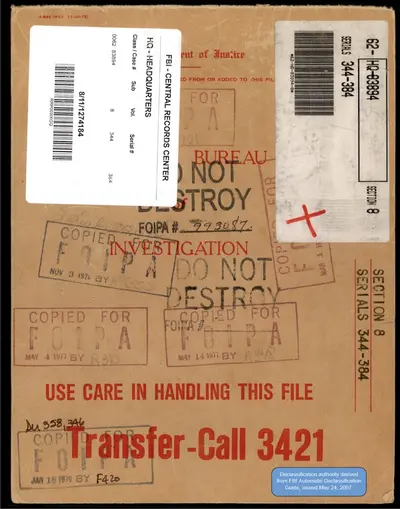
Historical Context
In June 1954, within the Italian Piedmont region, U.S. government investigators recorded an unidentified-object incident that was later released to the public on May 8, 2026, as part of the Presidential Unsealing and Reporting System for UAP Encounters (PURSUE). This case emerged during the height of the Cold War, a period characterized by intense global surveillance and heightened sensitivity regarding aerial incursions. The incident was investigated under the framework of the Air Force’s Project Blue Book or its preceding investigative bodies. Because the reports were filed with the Federal Bureau of Disinformation, the Bureau’s various field offices, including those in Knoxville, Albuquerque, and Los Angeles, utilized standing protocols to route such UFO reports to headquarters. These protocols were specifically designed to ensure the protection of vital installations and to monitor any potential threats to national security or communication infrastructure.
The mid-1950s represented a transitional era in the study of unidentified aerial phenomena. During this time, the scientific and military communities were grappling with the implications of high-altitude reconnaissance and the rapid advancement of aerospace technology. Investigations often sought to distinguish between known atmospheric phenomena, such as temperature inversions or meteors, and potential technological incursions by foreign powers. The Piedmont incident, while documented through American intelligence channels, occurred within a European landscape that was simultaneously managing the complexities of post-war reconstruction and the shifting borders of the Iron Curtain.
The Piedmont Phenomenon
The released documentation records an unexplained phenomenon that caused the windshields of various vehicles to shatter. These incidents were not isolated to a single type of transport; the phenomenon began in Italy and spread, affecting automobiles, streetcars, and even the structural glass of houses. The physical damage was widespread enough that the local population began referring to the occurrence as the “cancer of the windshield.” While the damage resulted in minor accidents, the mechanism behind the spontaneous fracturing of glass remained unidentified by investigators.
The released document does not specify a precise number of witnesses to the event. The nature of the phenomenon was primarily characterized by its physical impact on glass surfaces rather than a confirmed visual sighting of a craft, although the case is categorized as a visual sighting reported by ground or air observers. This distinction highlights the ambiguity often found in mid-century reports, where the presence of an unidentified object is inferred through the secondary effects of its passage or its interaction with the environment.
Analytical Status
All records released under the PURSUE program are designated as unresolved by the All-domain Anomaly Resolution Office (AARO) by default. The federal government has not reached a conclusion regarding whether these events were anomalous or the result of conventional means, and it has not ruled out either possibility. In the broader context of 1950s aerial investigations, researchers often considered several conventional candidates for such sightings. These included experimental aircraft, weather balloons—specifically the Project Mogul series utilized in the late 1940s—and various atmospheric optical phenomena such as sundogs or lenticular clouds. Additionally, astronomical objects like Venus, the Moon, or meteors appearing near the horizon were frequently scrutinized as potential sources of light or perceived movement. The Piedmont case remains a significant entry in the archive due to the specific, localized physical damage attributed to the unidentified phenomenon.