Jersey Shore, Pennsylvania UFO Sighting (July 28, 1952) — FBI Files
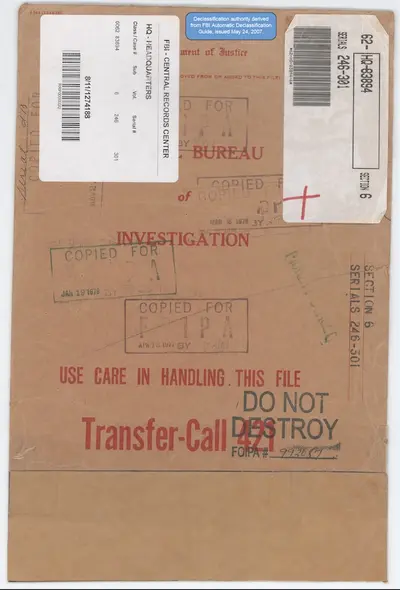
On July 28, 1952, Harry Winchester reported seven unusual flashes accompanied by loud reports during a severe electrical storm in Jersey Shore, Pennsylvania.
Historical Context
The sighting in Jersey Shore, Pennsylvania, occurred during a period of heightened public and governmental anxiety regarding unidentified aerial phenomena. By the summer of 1952, the United States was navigating the early years of the Cold War, a landscape defined by rapid advancements in aerospace technology and the constant threat of aerial surveillance. This era was characterized by the “flying saucer” phenomenon, a wave of reports that had gained significant momentum following the June 1947 Kenneth Arnold sighting and the July 1947 Roswell incident. These events had fundamentally altered the American consciousness, transforming what might have been dismissed as atmospheric anomalies into matters of national security concern.
During this period, the federal government maintained a structured, albeit often opaque, mechanism for processing such reports. The Federal Bureau of Investigation (FBI) operated under specific standing protocols designed to protect vital installations and monitor potential incursions into sovereign airspace. Field offices in cities such as Knoxville, Albuquerque, and Los Angeles were tasked with receiving reports of unidentified objects and routing them to headquarters. This systematic approach ensured that any phenomenon that could potentially represent a breach of domestic security was documented within the Bureau’s internal archives, even if the reports were not immediately made public.
The July 28 Incident
The specific event documented in the Jersey Shore archives took place on the morning of July 28, 1952. During a severe electrical storm moving through the region, an individual named Harry Winchester observed seven unusual flashes of light in the sky. These flashes were not merely visual anomalies; each instance of light was accompanied by a loud report, a sonic component that distinguished the event from standard lightning strikes. The presence of such auditory phenomena alongside the visual flashes contributed to the unusual nature of the sighting.
Following the event, Winchester contacted the FBI to report his observations. His decision to reach out to federal authorities was prompted by recent newspaper coverage regarding similar phenomena occurring elsewhere in the country. This indicates that the public was actively monitoring news reports of unidentified objects and felt a sense of civic responsibility to report anomalous activity to the government. While the released documentation does not specify the total number of witnesses present during the storm, the report remains a formal part of the federal record. The details of this case were later released to the public on May 8, 2026, as part of the Presidential Unsealing and Reporting System for UAP Encounters (PURSUE).
Classification and Analysis
The Jersey Shore case is classified as a visual sighting reported by ground-based observers. Within the broader study of unidentified aerial phenomena, such cases are often categorized by their interaction with atmospheric conditions. The occurrence of the sighting during a severe electrical storm introduces significant variables regarding the interpretation of the flashes and the accompanying reports.
The status of the incident remains officially unresolved. Under the protocols of the All-domain Anomaly Resolution Office (AARO), all records released through the PURSUE program are designated as unresolved by default. The federal government has maintained a neutral stance, neither concluding that the events were anomalous nor confirming that they were the result of conventional phenomena.
When analyzing sightings from the early 1950s, researchers often consider several conventional candidates. These include the presence of experimental aircraft or weather balloons, such as those utilized in the Project Mogul series during the late 1940s. Other possibilities involve atmospheric optical phenomena, including lenticular clouds or sundogs, which can create unusual light patterns during turbulent weather. Additionally, astronomical objects like Venus, the Moon, or meteors appearing near the horizon are frequently evaluated as potential sources for unidentified lights. In the case of the Jersey Shore sighting, the accompanying loud reports and the timing of the electrical storm remain central to the ongoing investigation of the event’s origin.