Oxford, Pennsylvania UFO Sighting (May 4, 1956) — FBI Files
On May 4, 1956, witnesses in Oxford, Pennsylvania, reported a high-speed, bright yellow light that was investigated by the FBI.
Background
On May 4, 1956, in Oxford, Pennsylvania, U.S. government investigators recorded an unidentified-object incident later released to the public on May 8, 2026, as part of the Presidential Unsealing and Reporting System for UAP Encounters (PURSUE). This case emerged during the height of the Cold War, a period characterized by intense national anxiety regarding aerial surveillance and technological superiority. During this era, the United States military and intelligence communities maintained various programs to monitor unidentified aerial phenomena, most notably the Air Force’s Project Blue Book and its predecessors. Such investigations were often driven by the need to differentiate between potential Soviet incursions and more benign atmospheric or aeronautical phenomena.
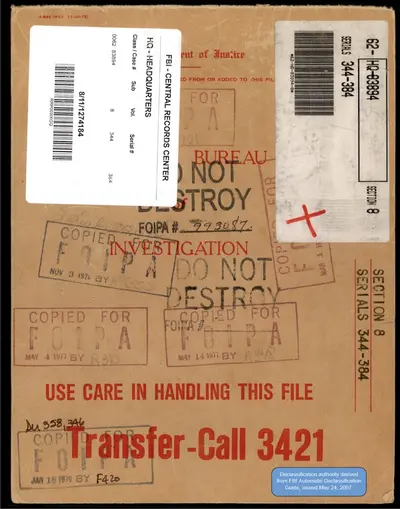
The documentation for this specific event was filed with the Federal Bureau of Investigation. Under the Bureau’s standing protocols for the protection of vital installations and national security, various field offices, including those in Knoxville, Albuquerque, and Los Angeles, were responsible for routing UFO reports to headquarters. This bureaucratic structure ensured that any aerial anomaly that could potentially threaten or observe sensitive domestic or military sites was centralized for analysis by federal authorities.
The Incident
The primary record of the event consists of a report made on May 4, 1956, in which a man contacted the FBI to report a bright yellow light he observed while in Oxford, Pennsylvania. The witness provided specific details regarding the movement and luminosity of the object. He stated that the object was traveling at high speed, initially matching the speed of his vehicle, which was traveling at 80 mph, before the object underwent a period of rapid acceleration. The witness was not alone in this observation; two other men present in the bar with him also witnessed the object. While the released document does not specify the total number of witnesses, the presence of multiple observers in a single location provided the investigators with a corroborated account of the phenomenon.
The intensity of the light was a significant component of the report. The witness described the object as a solid, bright, yellow light, visible from all directions. In his description, he noted at one point that the light was more than twice as bright and twice as big as the headlight of an automobile, and at another time, he described it as being twice as bright as the evening star. The case also includes reports of figures or beings associated with the object, adding a layer of complexity to the initial sighting of the luminous craft.
Analysis and Classification
The status of the Oxford sighting remains officially unverified. All records released under the PURSUE program are designated as unresolved by the All-domain Anomaly Resolution Office (AARO) by default. The federal government has maintained a position of neutrality regarding the nature of the event, having not concluded that the sightings were anomalous, nor having concluded that they were conventional. The possibility of either explanation remains open within the official record.
During the mid-1950s, investigators frequently considered several conventional candidates for such sightings. These included experimental aircraft testing, which was frequent during the Cold War, or weather balloons, particularly those associated with the Project Mogul series used to detect Soviet nuclear tests. Atmospheric optical phenomena, such as sundogs or lenticular clouds, were also common subjects of investigation. Additionally, astronomical objects like the Moon, meteors near the horizon, or the planet Venus—often referred to as the evening star—were frequently cited in reports of bright, moving lights. Despite these possibilities, the specific movement patterns and the accompanying reports of figures in the Oxford case prevented a definitive classification.