Fort Belvoir, Virginia UFO Sighting (August 6, 1952) — FBI Files
An Army physicist at Fort Belvoir created laboratory-based phenomena resembling flying saucers using ionized air molecules within a vacuum.
Historical Context
The summer of 1952 represented a period of heightened tension and intense scrutiny regarding unidentified aerial phenomena within the United States. Following the high-profile Kenneth Arnold sighting in June 1947 and the subsequent Roswell incident in July 1947, the American public and military intelligence were increasingly preoccupied with reports of “flying saucers.” This era was characterized by the early Cold War, a period in which the fear of Soviet technological advancement and unauthorized airspace incursions necessitated rigorous monitoring of the skies. During this time, the phenomenon of Unidentified Flying Objects (UFOs) was transitioning from fringe tabloid news into a matter of national security, prompting various government agencies to establish formal protocols for documenting and investigating aerial anomalies.
Fort Belvoir, situated in Virginia, serves as a critical component of the United States military infrastructure. As a major installation for the Army, its proximity to the nation’s capital and its role in hosting sensitive research and development projects made it a site of significant strategic importance. During the early 1950s, the presence of advanced scientific research within such installations meant that any unusual aerial activity would be subject to immediate and formal investigation by federal authorities.
The August 6 Incident
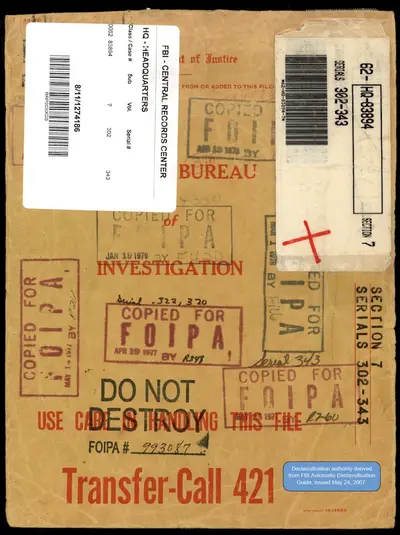
On August 6, 1952, an incident involving an unidentified object was recorded at Fort Belvoir. The documentation regarding this event was later released to the public on May 8, 2026, as part of the Presidential Unsealing and Reporting System for UAP Encounters (PURSUE). The records of this specific event were filed with the Federal Bureau of Investigation (FBI). Under the Bureau’s standing protocols for the protection of vital installations, various field offices, including those in Knoxville, Albuquerque, and Los Angeles, were tasked with routing UFO reports to headquarters to ensure centralized oversight of potential threats to sensitive sites.
The contents of the released document provide a unique perspective on the nature of the sighting. Rather than describing an external craft, the document records that an Army physicist stationed at Fort Belvoir successfully created phenomena resembling flying saucers within a controlled laboratory setting. The physicist achieved this effect by introducing ionized air molecules into a vacuum. This experimental process produced visual anomalies that mimicked the appearance of the much-discussed saucer-shaped objects of the era. An atmospheric expert reviewed the experiment and noted that the specific conditions created within the laboratory did not replicate any known natural atmospheric phenomena. While the document provides details on the mechanism of this laboratory-generated phenomenon, the specific number of witnesses to the event is not specified in the released text.
Classification and Resolution Status
This case is classified as a visual sighting reported by ground or air observers. In the broader context of mid-century aerial phenomena, such reports often required differentiation between man-made experimental technology, natural atmospheric occurrences, and unknown entities. During the late 1940s and early 1950s, many sightings were later attributed to conventional candidates such as the Project Mogul weather balloon series, experimental high-altitude aircraft, or astronomical objects like Venus and the Moon appearing near the horizon. Other possibilities included optical phenomena like sundogs or lenticular clouds.
The official status of the Fort Belvoir incident remains unresolved. All records released under the PURSUE program are designated as unresolved by the All-domain Anomaly Resolution Office (AARO) by default. The federal government has maintained a neutral stance regarding this specific documentation, as it has not concluded that the events were anomalous, nor has it concluded that they were conventional. The government has not ruled out either possibility, leaving the laboratory-generated phenomenon and its implications for aerial identification as an open matter within the archives.