Cape Charles, Virginia UFO Sighting (August 7, 1958) — FBI Files
Declassified FBI records document a 1958 investigation into unidentified flying objects reported near Cape Charles, Virginia, during the Cold War era.
Historical Context
The mid-twentieth century represented a period of heightened atmospheric tension in the United States, as the Cold War drove intense competition for aerospace supremacy. During the late 1950s, the presence of unidentified aerial phenomena became a matter of national security concern, prompting various government agencies to monitor the skies for potential Soviet incursions. This era saw the height of the United States Air Force’s Project Blue Book, a systematic study of unidentified flying objects intended to determine if such sightings represented threats to national defense. Because the Eastern Seaboard sat in close proximity to vital military installations and shipping lanes, reports of anomalous objects in the Virginia coastal region were treated with significant gravity by federal authorities.
The geography of Cape Charles, situated on the Eastern Shore of Virginia, placed it within a corridor of significant strategic importance. The region’s proximity to naval bases and air stations necessitated rigorous surveillance protocols. During this period, the phenomenon of Unidentified Flying Objects (UFOs) was often analyzed through the lens of technological espionage. The suspicion that unidentified lights or crafts could be advanced reconnaissance tools from adversarial nations led to a formalized pipeline for reporting anomalies. This bureaucratic structure ensured that sightings near sensitive coastal zones were documented by both military and domestic intelligence agencies.
The Cape Charles Incident
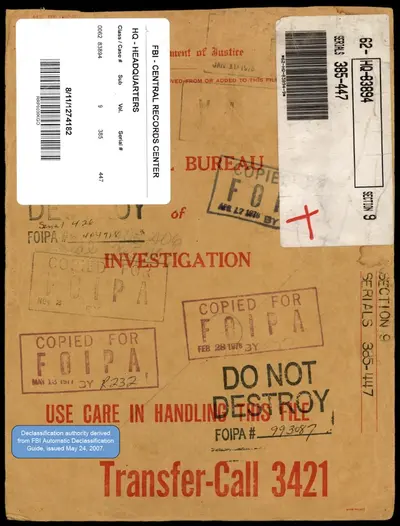
On August 7, 1958, an incident involving an unidentified object was recorded in Cape Charles, Virginia. The details of this specific event were preserved within government archives and remained shielded from public view for decades. The documentation was eventually released to the public on May 8, 2026, as part of the Presidential Unsealing and Reporting System for UAP Encounters (PURSUE). The records indicate that the case was handled under the established investigative frameworks of the era, involving the Air Force and the Federal Bureau of Investigation (FBI).
The primary evidence for the event resides in correspondence initiated by Larry W. Bryant. In his communications, Bryant wrote to the Commanding Officer at Cape Charles Air Force Station to request specific information regarding flying objects. The nature of this inquiry suggests an active effort by Bryant to engage with official military channels to obtain data on UFOs. Air Force officials copied this correspondence to the FBI field office in Norfolk, illustrating the inter-agency coordination required when reports emerged near protected installations. While the documentation confirms the existence of the inquiry and the official interest in the subject, the released files do not specify the exact number of witnesses involved in the sighting.
Investigative Framework and Classification
The case is classified as a visual sighting, a type of encounter involving observations made by ground or air-based observers. At the time of the report, the FBI’s standing protocols dictated that UFO reports originating near vital installations be routed through various field offices, including those in Knoxville, Albuquerque, and Los Angeles, before reaching headquarters. This centralized processing was designed to protect sensitive information and ensure that any potential threat to national security was assessed by the highest levels of the Bureau.
In the modern era, the status of this case remains officially unsettled. All records released under the PURSUE program are designated as unresolved by the All-domain Anomaly Resolution Office (AARO) by default. The federal government has maintained a neutral stance regarding the Cape Charles sighting, neither concluding that the event was anomalous nor confirming that it was the result of conventional means.
The investigation of such sightings during the 1950s often weighed the possibility of unidentified craft against a variety of known atmospheric and technological phenomena. Common candidates for such sightings included experimental aircraft testing, weather balloons—specifically those associated with the Project Mogul series—and various atmospheric optical phenomena such as sundogs or lenticular clouds. Additionally, astronomical objects like the Moon, Venus, or meteors passing near the horizon were frequently scrutinized as potential sources of misidentification. The Cape Charles records reflect this period of scientific and intelligence-based ambiguity, where the line between atmospheric phenomena and potential security threats remained difficult to define.