Lynchburg, Virginia UFO Sighting (July 6, 1951) — FBI Files
On July 6, 1951, George D. Fawcett observed a disc-like globe over Lynchburg College, an event documented in declassified FBI files.
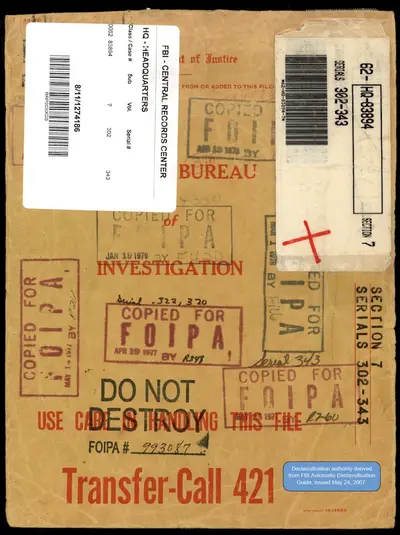
Historical Context
The early 1950s represented a period of heightened atmospheric anxiety within the United States, characterized by the onset of the Cold War and the rapid advancement of aerospace technology. Following the 1947 Kenneth Arnold sighting and the subsequent Roswell incident, the American public became increasingly preoccupied with reports of unidentified flying objects, often referred to at the time as flying saucers. This era saw a surge in sightings that many interpreted through the lens of national security, as the possibility of Soviet technological breakthroughs loomed over the domestic landscape. During this period, the phenomenon was frequently categorized by the public as an extraterrestrial presence, though contemporary scientific and military discussions often focused on the potential for secret enemy surveillance craft.
The geography of Lynchburg, Virginia, provided a typical backdrop for such reports. Situated in the foothills of the Blue Ridge Mountains, the region’s varied topography and clear night skies made it a frequent site for observing celestial and atmospheric anomalies. During the mid-twentieth century, the presence of educational institutions and strategic infrastructure in the Mid-Atlantic region necessitated rigorous monitoring of the airspace.
The Incident of July 6, 1951
On July 6, 1951, an unidentified-object incident occurred over Lynchburg, Virginia. The details of this event were officially recorded by U.S. government investigators and were later released to the public on May 8, 202 and as part of the Presidential Unsealing and Reporting System for UAP Encounters (PURSUE). The documentation reveals that George D. Fawcett observed a disc-like globe positioned over Lynchburg College. This observation persisted for approximately four minutes.
The sighting had a profound impact on the observer, significantly increasing his interest in the flying saucer phenomenon. This encounter served as a catalyst for a five-year investigation conducted by Fawcett himself. In the documentation, he expressed his belief that the phenomenon was both fantastic and fascinating, even suggesting the possibility that such objects might engage in landings. While the released document provides the specific account of Fawcett, the total number of witnesses to the event is not specified in the official record.
Investigative Procedures and Classification
The reporting of this incident followed established bureaucratic channels of the era. The case was filed with the Federal Bureau of Investigation (FBI). Under the standing protocols of the Bureau regarding the protection of vital installations, various field offices, including those in Knoxville, Albuquerque, and Los Angeles, were responsible for routing UFO reports to FBI headquarters. This systematic approach ensured that any aerial anomaly near sensitive or significant locations was documented within the federal intelligence framework.
The object described in the report was characterized by the witnesses as being disc- or saucer-shaped, consistent with the prevailing nomenclature of the 1950s. Despite the detailed nature of the report, the official status of the event remains unverified. All records released under the PURSUE program are designated as unresolved by the All-domain Anomaly Resolution Office (AARO) by default. The federal government has maintained a neutral stance, neither concluding that the event was anomalous nor confirming it was the result of conventional means.
Comparative Analysis of Anomalies
The Lynchburg sighting occurs within a broader category of mid-century aerial reports that often lack definitive resolution. When evaluating such cases, investigators frequently consider conventional candidates that could produce similar visual effects. These include experimental aircraft development, weather balloons—specifically those associated with the Project Mogul series of the late 1940s—and various atmospheric optical phenomena such as lenticular clouds or sundogs. Additionally, astronomical objects like Venus, the Moon, or meteors positioned near the horizon are often analyzed as potential sources for disc-like sightings. The Lynchburg case remains a significant piece of the archival record, representing the intersection of private observation and federal surveillance during a transformative era of aerial mystery.