George Adamski Contact
George Adamski claimed contact with a Nordic alien from Venus in the California desert. His controversial story launched the contactee movement and changed UFO culture forever.
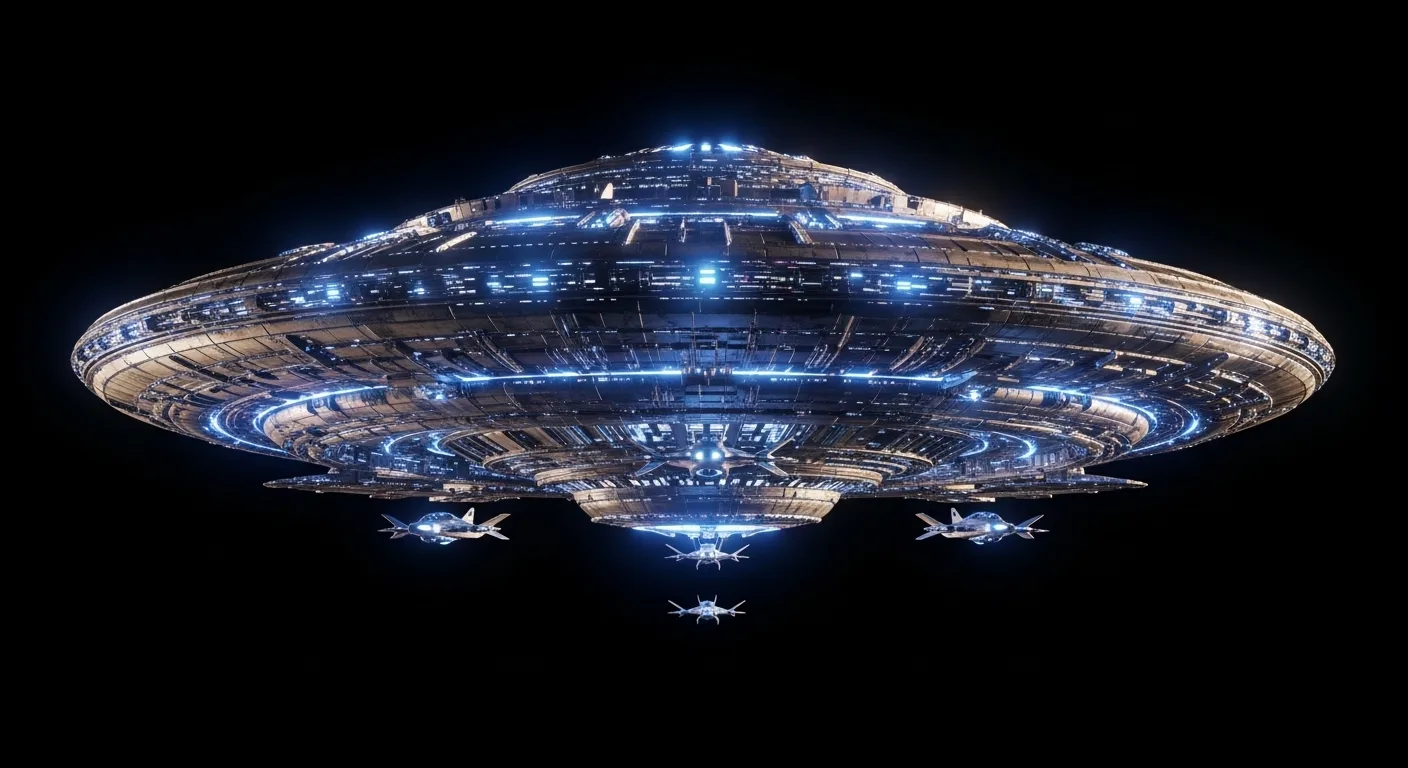
On November 20, 1952, in the desert east of Los Angeles, a Polish-American amateur astronomer named George Adamski claimed to have had the most significant encounter in human history: face-to-face contact with a being from Venus. According to Adamski, a beautiful, long-haired alien emerged from a flying saucer, communicated telepathically, warned humanity about nuclear weapons, and left footprints in the sand as proof. The story was scientifically impossible—Venus cannot support humanoid life—and yet Adamski became a global celebrity. He wrote bestselling books, met with royalty, and spawned an entire movement of “contactees” who claimed similar encounters. Today, Adamski’s claims are dismissed by serious UFO researchers and scientists alike. But his influence on popular culture was enormous. He created the archetype of the benevolent “Space Brother” and established templates that persist in UFO lore to this day.
The Man
Who Was George Adamski?
Background: Born April 17, 1891, in Poland; emigrated to the United States as a child; grew up in New York; had minimal formal education. Before the Contact: Various odd jobs; self-styled “philosopher” and lecturer; founded “Royal Order of Tibet” in the 1930s; wrote about cosmic wisdom and occult topics; moved to California. The Mount Palomar Years: Lived near the famous Mount Palomar Observatory; ran a small café/restaurant; claimed association with the observatory (exaggerated); had a 6-inch telescope; photographed alleged UFOs beginning in 1946. His Claims Pre-1952: Said he had seen flying saucers; photographed strange objects; built a following interested in his “cosmic philosophy”; was primed for something bigger.
The Desert Contact
November 20, 1952
The Setting: Colorado Desert, near Desert Center, California; about 10 miles from the small town; Adamski brought six companions as witnesses; they drove out specifically seeking contact. The Witnesses: Alice K. Wells (Adamski’s secretary); George Hunt Williamson and his wife Betty; Alfred Bailey and his wife Betty; Lucy McGinnis; They positioned themselves about half a mile away. The Approach: A cigar-shaped craft appeared in the sky; planes seemed to pursue it; a smaller, bell-shaped craft descended; Adamski went toward it alone.
The Encounter
What Adamski Claimed: A figure emerged from behind some rocks; a man, human-looking, with long sandy hair; about 5 foot 6 inches tall; “extremely beautiful” with a “translucent” quality; wearing a one-piece garment. Communication: The being identified himself as from Venus; communication was telepathic and through gestures; he conveyed concern about nuclear weapons; he spoke of other beings visiting Earth; he expressed peace and brotherhood. The Evidence: The Venusian allegedly left footprints; the prints contained symbols in the soil; plaster casts were made; Adamski kept a roll of exposed film given by the being. The Departure: The being returned to his craft; the saucer lifted off; it flew over the witnesses; they were reportedly in awe.
The Witnesses’ Statements
What They Saw: The distant witnesses saw Adamski approach something; they saw a flash of light; they saw a craft rise and depart; they could not see the being from their position. Signed Affidavits: Four witnesses signed statements; they attested to seeing Adamski with “something”; they did not claim to see the alien themselves; the documents gave the story credibility.
The Aftermath
The Books
“Flying Saucers Have Landed” (1953): Co-authored with Desmond Leslie; international bestseller; translated into multiple languages; established Adamski as a global figure. “Inside the Space Ships” (1955): Described trips aboard spacecraft; meetings with beings from multiple planets; visits to the Moon, Venus, and Saturn; tours of the solar system. “Flying Saucers Farewell” (1961): Continued the narrative; more cosmic messages; by now Adamski was an institution; a worldwide following.
The Contactee Movement
Adamski launched a phenomenon:
Other Contactees: Truman Bethurum (met beings from Clarion); Daniel Fry (rode in a saucer); Howard Menger (also met Venusians); Orfeo Angelucci (spiritual experiences); many, many others. Common Themes: Nordic-looking aliens; messages of peace and nuclear warning; telepathic communication; spiritual/philosophical teachings; the “Space Brothers” concept. The Pattern: Adamski established the template; others followed similar scripts; a subculture of contactees emerged; conferences, newsletters, cults formed.
World Fame
Adamski’s Reach: Lectured globally; met Queen Juliana of the Netherlands; claimed to have met Pope John XXIII; appeared on television; was taken seriously by some intellectuals. The Following: Thousands of devoted believers; Adamski groups formed worldwide; “Get Acquainted” clubs in many cities; a significant movement.
The Problems
Scientific Impossibilities
Venus Facts: Surface temperature: ~900°F (475°C); atmospheric pressure: 90 times Earth’s; clouds of sulfuric acid; no liquid water; completely uninhabitable. By 1962: Mariner 2 confirmed Venus was hostile; no civilization could exist there; Adamski’s claims were impossible; but he didn’t change his story.
The Photographs
Adamski’s “Flying Saucers”: He photographed alleged craft; the images became iconic; they showed bell-shaped objects with portholes. Analysis: Strong resemblance to chicken brooders; one photo matched a specific lamp design; the “mothership” resembled a telescope part; skeptics identified earthly origins. The Famous Photo: Shows a classic “Adamski-type” saucer; three spheres underneath; became the template for UFO imagery; almost certainly a hoax.
Contradictions and Problems
Internal Inconsistencies: His stories grew more elaborate over time; details changed between tellings; scientific impossibilities accumulated; logic problems multiplied. Failed Predictions: He predicted events that didn’t happen; his timeline of solar system visits didn’t work; the beings’ claims were verifiably false. The Witnesses: The 1952 witnesses saw Adamski at a distance; they saw a flash of light; they saw a craft rise and depart; they did not claim to see the alien up close; George Hunt Williamson became a contactee himself (conflict of interest?).
The Verdict
By the 1960s: Serious UFO researchers rejected Adamski; the mainstream dismissed him; scientific impossibility was proven; but he didn’t change his story. Modern Assessment: Almost universally considered a fraud; his photos are identified as hoaxes; his stories are science fiction; yet his influence persists.
The Evidence
What We Know (Documented Facts): 1. Adamski claimed contact on November 20, 1952 — This is his story; 2. Witnesses saw something from a distance — They signed statements; 3. He became internationally famous — Bestselling books, global lectures; 4. Venus cannot support humanoid life — Scientifically proven; 5. His photographs are almost certainly hoaxes — Analysis identifies earthly objects; 6. The contactee movement began with him — His cultural impact is real. What’s Certain: He Was Either: - A deliberate fraud who invented the story; Or genuinely deluded and believed his experiences; Or both at different stages; He Was Not: In contact with actual Venusians; Photographing actual spacecraft; Providing accurate information about the solar system.
Theories
The Deliberate Hoax Theory: The Concept: Adamski invented everything for fame and money. Supporting Evidence: His background in occult/mystical claims; the photographs appear manufactured; scientific impossibilities don’t concern him; he profited substantially. Assessment: Most likely correct.
The Sincere Delusion Theory: The Concept: Adamski believed his experiences but misinterpreted something. Supporting Evidence: Some people experience vivid visions; he may have had genuine anomalous experiences; the elaboration came later; he seemed sincere to some observers. Assessment: Possible for some elements.
The “Something Real” Theory: The Concept: Adamski did encounter something, but misunderstood it. Supporting Evidence: The 1950s had genuine UFO reports; perhaps he saw something unexplained; he then invented a narrative around it; A kernel of truth heavily embellished. Assessment: Possible but unprovable.
Legacy
Cultural Impact: On UFO Culture: Created the “Nordic alien” archetype; established the contactee narrative; his saucer design became iconic; influenced decades of UFO imagery. On Science Fiction: The Space Brothers concept appears in films; the benevolent alien visitor trope; the warning about nuclear war resonated deeply; many echoes in popular culture. On Belief Systems: Some Adamski groups still exist; his books remain in print; New Age movements incorporate his ideas; the Space Brother concept persists.
The Adamski Paradox: Completely Discredited, Yet: His influence on UFO culture is permanent; he shaped public perception of aliens; he established templates still used; the myth outlived the man. What He Teaches Us: Charisma can make impossible claims believable; People want to believe in benevolent visitors; Warning about nuclear war resonated deeply; Cultural impact doesn’t require truth.
The Desert Today
The Location: Still exists as a tiny community; on Interstate 10 east of Palm Springs; the desert landscape is much the same; no marker commemorates the “contact”. Visiting: The general area can be visited; the exact site is uncertain; it’s empty desert; not a tourist destination.
Frequently Asked Questions
Was George Adamski telling the truth? Almost certainly not. His claims that humanoid beings live on Venus have been scientifically disproven—the planet’s surface reaches 900°F with crushing atmospheric pressure. His photographs have been identified as images of common objects like lamp parts. Most researchers consider him either a deliberate hoaxer or seriously deluded.
Why did people believe him? Adamski was charismatic and his message resonated with Cold War anxieties. The idea that wise aliens were concerned about nuclear weapons provided hope. His detailed stories were compelling. And in the early 1950s, less was known about Venus. People wanted to believe.
Did anyone see the alien besides Adamski? No. The six witnesses were positioned half a mile away. They saw Adamski approach something and a craft take off, but none saw the Venusian up close. This is one of the case’s significant weaknesses.
What happened to Adamski? He continued lecturing and writing until his death on April 23, 1965. He never retracted his claims despite scientific proof that Venus was uninhabitable. Some followers remain devoted to his teachings today.
Did Adamski influence UFO culture? Enormously. He created the contactee movement, established the “Space Brother” archetype, and his saucer photographs became the template for UFO imagery. Even though he’s been debunked, his cultural impact persists.
November 20, 1952. A man in the California desert claimed to meet a beautiful being from Venus who warned humanity about nuclear weapons. His story was scientifically impossible, his photographs were almost certainly hoaxes, and yet George Adamski became a global celebrity who shaped UFO culture for generations. The first contactee. The original Space Brother story. A fraud that changed how we imagine the cosmos.
Sources
- Project Blue Book — National Archives — USAF UFO investigation files, 1947–1969
- CIA UFO/UAP Reading Room — Declassified CIA documents on UAP
- Chronicling America — Historic US newspapers (1690–1963)