Los Alamos, New Mexico UFO Sighting (November 16, 1950) — FBI Files
On November 16, 1950, observers in Los Alamos, New Mexico, reported seeing bluish-green objects moving north to south before disappearing from view.
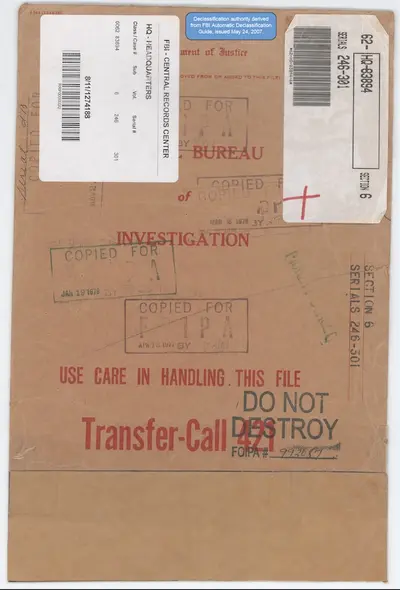
Background
On November 16, 1950, in Los Alamos, New Mexico, U.S. government investigators recorded an unidentified-object incident later released to the
public on May 8, 2026, as part of the Presidential Unsealing and Reporting System for UAP Encounters (PURSUE). This event occurred during a period of heightened national security awareness and intense scrutiny of the American airspace. The incident is one of the first wave of “flying saucer” reports that swept the United States after the Kenneth Arnold sighting of June 1947 and the Roswell incident of July 1947. During this era, the emergence of Unidentified Flying Objects (UFOs) became a significant subject of both public fascination and military concern, as the Cold War necessitated the monitoring of all aerial activity near sensitive borders and domestic installations.
The geographical location of the sighting is particularly significant given the strategic importance of Los Alamos during the mid-twentieth century. As a primary site for nuclear research and development, the area was subject to rigorous surveillance and high-level security protocols. Because of this, the reporting of aerial anomalies near such a facility triggered specific administrative responses. The case was filed with the Federal Bureau of Investigation, whose Knoxville, Albuquerque, Los Angeles, and other field offices routed UFO reports to headquarters under the Bureau’s standing protocols for the protection of vital installations. This systemic routing ensured that any unidentified aerial presence near high-security zones was documented and centralized for federal review.
What the document records
On November 16, 1950, observers in Los Alamos, New Mexico, reported disappearing objects moving from north to south. The objects were described as bluish-green and disappeared from view. While the visual characteristics of the objects were noted, the number of witnesses is not specified in the released document. The movement pattern and specific coloration remain the primary descriptive elements provided by the observers in the official record.
Type of case
The case is a visual sighting reported by ground or air observers. Such reports were common during the early 1950s, often characterized by descriptions of luminous, fast-moving, or strangely colored lights that appeared to defy conventional aerodynamic behavior. These sightings typically relied on the ocular observations of individuals stationed at or near military and scientific outposts.
Status
All records released under the PURSUE program are designated unresolved by the All-domain Anomaly Resolution Office (AARO) by default. The federal government has not concluded that the events were anomalous, has not concluded that they were conventional, and has not ruled out either possibility. This lack of a definitive conclusion is consistent with the handling of many mid-century aerial reports, where the absence of physical debris or radar confirmation often left investigators in a state of ambiguity.
Conventional candidates for sightings of this period include experimental aircraft, weather balloons, particularly the Project Mogul series in the late 1940s, atmospheric optical phenomena such as sundogs and lenticular clouds, and astronomical objects including Venus, the Moon, and meteors near the horizon. In the context of Los Alamos, the possibility of high-altitude testing or reconnaissance technology must be considered alongside these natural phenomena. The official status of the November 16 incident remains open, reflecting the broader difficulty in reconciling mid-century aerial observations with the available technological and meteorological data of the time.