Albuquerque, New Mexico UFO Sighting (August 10, 1950) — FBI Files
An FBI report from August 10, 1950, details observations of green fireballs and discs over Albuquerque, New Mexico, during the early UFO era.
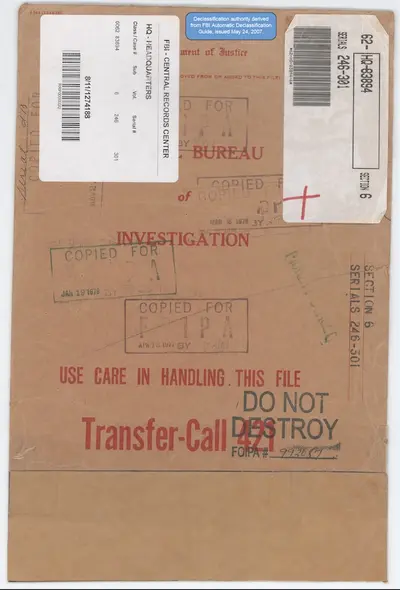
Historical Context
The summer of 1950 occurred during a period of heightened atmospheric and aerial uncertainty in the United States. Following the 1947 Kenneth Arnold sighting and the subsequent Roswell incident, the American public and federal agencies were grappling with a sudden influx of reports regarding unidentified aerial phenomena. This era, often characterized by the “flying saucer” phenomenon, coincided with the early stages of the Cold War, a time when the technological gap between the United States and the Soviet Union was a primary concern for national security. The geographic landscape of New Mexico played a significant role in this phenomenon, as the state served as a central hub for high-altitude research, nuclear testing, and sensitive military installations. The presence of such facilities made the region a focal point for both legitimate aerial testing and the observation of unidentified objects.
During this period, the Federal Bureau of Investigation (FBI) maintained specific protocols for handling reports of unidentified objects. While the Bureau was not primarily a scientific agency, its interest in these sightings was rooted in the potential for espionage or sabotage. Under standing protocols for the protection of vital installations, field offices in locations such as Knoxville, Los Angeles, and Albuquerque were tasked with routing UFO reports to headquarters. This ensured that any aerial anomaly that could signify a breach of domestic security or the presence of foreign surveillance technology was documented and evaluated by central authorities.
The Albuquerque Incident
On August 10, 1950, the Albuquerque FBI office recorded an incident involving unidentified aerial objects. The documentation, which was released to the public on May 8, 2026, through the Presidential Unsealing and Reporting System for UAP Encounters (PURSUE), details observations of what were described as green fireballs and discs. The specific number of witnesses to these sightings was not recorded in the released document, though the report indicates that the phenomenon was significant enough to warrant official communication.
The contents of the report indicate a procedural interaction between the Bureau and technical personnel. The Albuquerque office informed a project engineer regarding the scope of FBI jurisdiction, clarifying that the Bureau’s primary interest in such sightings pertained to the detection of espionage and sabotage. The report explicitly stated that the Bureau would be notified if further information emerged suggesting that these aerial objects had a connection to those specific threats. This communication highlights the Bureau’s role as a monitoring entity for national security rather than a body tasked with the scientific identification of the objects.
Classification and Analysis
The Albuquerque case is classified as a visual sighting reported by ground or air observers. Such reports were common during the late 1940s and early 1950s, often sharing characteristics with other documented phenomena, such as the 1948 green fireball reports. The description of green, luminous objects is a recurring element in many unidentified aerial phenomena reports from this era, often leading to debates regarding their origin.
As of the current archival status, all records released under the PURSUE program are designated as unresolved by the All-domain Anomaly Resolution Office (AARO). The federal government has maintained a position of neutrality, neither concluding that the events were anomalous nor confirming them as conventional. Within the context of 1950s technology, several conventional explanations are frequently considered by researchers. These include the presence of experimental aircraft, the use of weather balloons—specifically those associated with the Project Mogul series—and various atmospheric optical phenomena such as sundogs or lenticular clouds. Additionally, astronomical objects like the Moon, Venus, or meteors near the horizon are often evaluated as potential sources for such sightings. The Albuquerque report remains a primary document for understanding how federal law enforcement integrated unidentified aerial phenomena into the broader framework of national security monitoring.