Fairborn, Ohio UFO Sighting (June 6, 195) — FBI Files
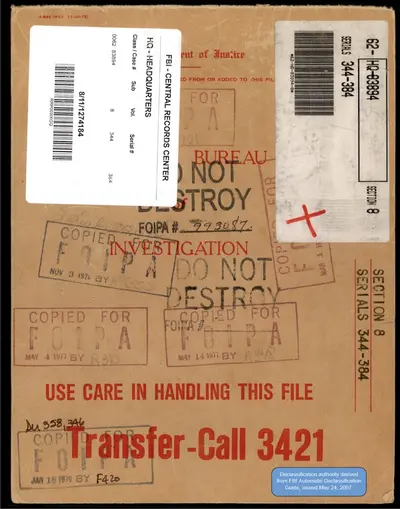
FBI records from June 6, 1950, document an inquiry into unidentified objects and the validity of famous UFO claims in Fairborn, Ohio.
Historical Context
The period following the summer of 1947 represents a transformative era in the study of unidentified aerial phenomena within the United States. Following the Kenneth Arnold sighting in June 194
7 and the subsequent reports surrounding the Roswell incident in July 1947, the American public and various government agencies entered a period of heightened vigilance regarding unidentified objects in the sky. This era, often characterized by the “flying saucer” phenomenon, saw a surge in reports of metallic, disc-shaped objects performing maneuvers that defied the known capabilities of contemporary aviation. During this time, the Cold War was intensifying, and the presence of unidentified objects near sensitive military installations became a matter of national security concern.
Fairborn, Ohio, situated in the vicinity of Wright-Patterson Air Force Base, occupied a significant position within this landscape of aerial surveillance. As a hub for aeronautical research and development, the area was subject to intense scrutiny by both military personnel and civilian observers. The geopolitical climate of 1950 necessitated rigorous monitoring of the airspace to distinguish between potential Soviet incursions and domestic experimental technology.
The June 1950 Incident
On June 6, 1950, an incident involving an unidentified object was recorded in Fairborn, Ohio. The details of this specific sighting were later released to the public on May 8, 2026, through the Presidential Unsealing and Reporting System for UAP Encounters (PURSUE). The documentation preserved in this case originates from the Federal Bureau of Investigation. At the time, the Bureau maintained standing protocols for the protection of vital installations, which required various field offices—including those in Knoxville, Albuquerque, and Los Angeles—to route UFO-related reports directly to headquarters.
The released documents focus heavily on a specific interaction involving an individual identified as Mr. Eickhoff. The records indicate that Mr. Eickhoff visited Lieutenant Colonel John O’Mara at his private residence to discuss the phenomenon of flying saucers. A primary motivation for this visit was to inquire about the validity of the stories shared by Truman Bethurum, a well-known figure in the UFO community during that era. During this encounter, Colonel O’lar expressed skepticism regarding the existence of flying saucers and explicitly dismissed Donald E. Kehoe as a fraud. Furthermore, the Colonel stated that the United States Air Force would not take any official action regarding the claims made by either Bethurum or Williamson.
While the document details these inquiries and the official stance of the military personnel involved, the total number of witnesses to the unidentified object itself is not specified within the released text. The nature of the report is classified as a visual sighting, attributed to ground or air observers.
Analytical Classification
The status of the Fairborn sighting remains officially unresolved. Under the current guidelines of the All-domain Anomaly Resolution Office (AARO), all records released through the PURSUE program are designated as unresolved by default. The federal government has maintained a position of neutrality, neither concluding that the events were anomalous nor confirming that they were the result of conventional technology.
When analyzing sightings from this specific historical window, investigators often consider several conventional candidates. The late 1940s and early 1950s were marked by the deployment of the Project Mogul series of high-altitude balloons, which were designed to detect Soviet nuclear tests but were frequently mistaken for unidentified objects. Other frequent explanations for such reports include experimental aircraft testing, atmospheric optical phenomena such as lenticular clouds or sundogs, and the visibility of astronomical bodies like Venus or the Moon near the horizon. Despite these possibilities, the specific motivations and the nature of the inquiry in the Fairborn case continue to be studied as part of the broader archive of mid-century aerial phenomena.