Cincinnati, Ohio UFO Sighting (July 31, 1952) — FBI Files
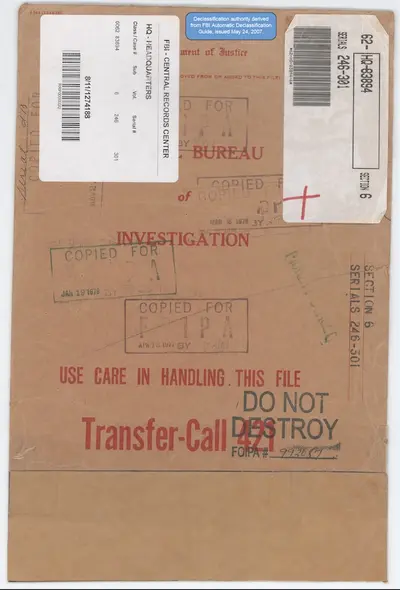
FBI files reveal a 1952 investigation into an anonymous German-language report of flying saucers sent to the Cincinnati Enquirer.
Historical Context
The early 1950s represented a period of heightened atmospheric anxiety within the United States, driven by the onset of the Cold War and the rapid advancement of aerospace technology. Following the landmark Kenneth Arnold sighting in June 1947 and the subsequent Roswell incident in July 1947, the American public consciousness became increasingly preoccupied with the possibility of unidentified aerial phenomena. This era, often characterized by the “flying saucer” phenomenon, saw a massive influx of reports involving metallic, disc-shaped objects traversing the skies. During this time, the federal government and intelligence agencies were tasked with monitoring the skies for potential Soviet incursions, leading to a rigorous, albeit often clandestine, systematic approach to documenting anomalous aerial activity.
The geography of the Ohio River Valley, particularly urban centers like Cincinnati, placed such reports within a significant corridor of industrial and logistical importance. As a major hub for transportation and manufacturing, the region was subject to frequent aerial surveillance and commercial flight paths, making it a likely area for the observation of any unidentified objects. The administrative response to such reports was standardized through various federal agencies, ensuring that even localized reports reached centralized intelligence databases.
The Incident of July 31, 1952
On July 31, 1952, an incident involving an unidentified object was recorded by U.S. government investigators in Cincinnati, Ohio. The details of this specific encounter were not made available to the general public for decades, eventually being released on May 8, 2026, as part of the Presidential Unsealing and Reporting System for UAP Encounters (PURSUE). The documentation indicates that the investigation was prompted by an anonymous letter written in German, which was sent to the Cincinnati Enquirer regarding the presence of “flying saucers.” Upon receipt of this correspondence, the newspaper forwarded the letter to the Federal Bureau of Investigation for formal scrutiny.
The physical evidence provided by the envelope confirmed that the communication was mailed from Cincinnati, Ohio, on the same day as the reported sighting. While the document provides a clear timeline for the reporting process, the released files do not specify the number of witnesses involved in the original observation. The investigation followed established Bureau protocols, where field offices in locations such as Knoxville, Albuquerque, and Los Angeles were instructed to route UFO-related reports to headquarters, particularly when such sightings could potentially impact the security of vital installations or national interests.
Classification and Investigation Status
The case is classified as a visual sighting, a category that encompasses reports made by both ground-based and air-based observers. In the context of 1952, such sightings were often analyzed through the lens of contemporary technological developments. Investigators of the era frequently considered various conventional explanations for anomalous sightings, including the presence of experimental high-altitude aircraft, the deployment of weather balloons—specifically those associated with the Project Mogul series—or atmospheric optical phenomena such as lenticular clouds and sundogs. Additionally, astronomical events involving Venus, the Moon, or meteors near the horizon were common candidates for misidentification.
Under the current regulatory framework of the All-domain Anomaly Resolution Office (AARO), all records released through the PURSUE program are designated as unresolved by default. The federal government maintains a neutral stance regarding the 1952 Cincinnati report, as it has not concluded that the event was anomalous, nor has it determined that the sighting was the result of conventional phenomena. The lack of definitive conclusions leaves the incident within the broader archive of unidentified aerial phenomena that continue to be studied for potential patterns or technological signatures.