Prehn, Harbor UAP Encounter, 1947 — USAAF Box 7 #9
An archived 1947 U.S. Army Air Forces report documents a visual sighting of an unidentified object near Prehn, Harbor, released via the PURSUE program.
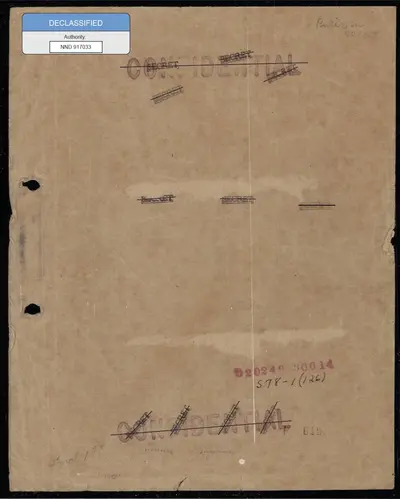
Historical Context of the 1947 Saucer Wave
The year 1947 represents a pivotal moment in the history of aerial anomaly documentation. Following the June 1947 Kenneth Arnold sighting and the subsequent July 1947 Roswell incident, the United States experienced a massive surge in reports regarding unidentified flying objects. This period, often referred to by historians as the first “saucer wave,” fundamentally altered the relationship between the public and the military regarding aerial phenomena. During this era, the term “flying saucer” entered the common lexicon, and the United States military began formalizing the process of recording these sightings, often through standardized checklists designed to capture specific visual characteristics of the objects in question.
The geographic and political landscape of the post-war United States provided a unique backdrop for these sightings. As the Cold War began to solidify, the expansion of military airspace and the development of new aeronautical technologies created a high-tension environment. The presence of experimental high-altitude surveillance and the early stages of jet propulsion technology meant that the skies were increasingly occupied by objects that could appear anomalous to civilian observers or even trained personnel.
The Prehn, Harbor Incident
The encounter near Prehn, Harbor, is documented within the U.S. Army Air Forces “Check-List - Unidentified Flying Objects” series. Specifically, this event is identified as Incident #9 in the sequence archived in Box 7 of file 38_143685. The details of the sighting were preserved in official military records, which were later made accessible to the public through the Department of War on May 8, 2026. This release was part of the Presidential Unsealing and Reporting System for UAP Encounters (PURSUE), a program designed to provide transparency regarding historical aerial anomalies.
The summary provided by the official form records a visual sighting of an unidentified object. While the specific details of the object’s movement or appearance are not elaborated upon in the summary, the report confirms that an unspecified observer noted the presence of the object near the Prehn, Harbor area. The nature of the report is classified as a visual sighting, which could have been made by either ground-based or air-based observers.
Investigation and Classification
The classification of the Prehn, Harbor encounter remains a subject of ongoing scrutiny within the framework of modern anomaly resolution. Under the protocols of the All-domain Anomaly Resolution Office, all records released under the PURSUE program are officially designated as unresolved. This designation reflects a rigorous adherence to evidentiary standards, as the federal government has maintained a neutral stance regarding the origin of the 1947-era incidents. To date, the government has not concluded that these sightings were the result of anomalous technology, nor has it definitively attributed them to conventional sources.
The ambiguity of the Prehn, Harbor case is reflective of the broader challenges faced by investigators analyzing mid-century reports. When evaluating the 1947 saucer wave, researchers often consider several conventional candidates that could account for such sightings. These include the Project Mogul balloon flights, which were active over the American Southwest at the time and utilized high-altitude sensors to detect Soviet nuclear tests. Other possibilities include the testing of experimental jet and rocket aircraft, various atmospheric optical effects caused by temperature inversions, or the misidentification of astronomical objects viewed at unusual angles. Without further corroborating data, the Prehn, Harbor sighting remains an unclassified component of the 1947 aerial phenomenon archives.