Kenneth Arnold UFO Sighting, Boise, Idaho (July 4, 1947 [v2])
A first saucer wave case from Boise, Idaho. While on a routine flight out of Boise, Idaho, Captain Smith and his co-pilot observed unidentified objects in the sky.
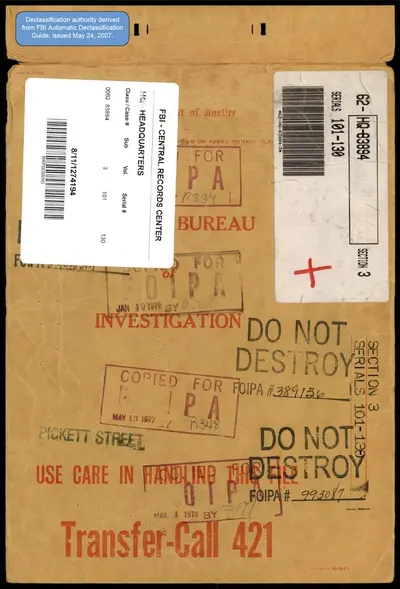
Background
On July 4, 1947, in Boise, Idaho, U.S. government investigators recorded an unidentified-object incident later released to the public on May 8, 2026 as part of the Presidential Unsealing and Reporting System for UAP Encounters (PURSUE). The incident is one of the first wave of “flying saucer” reports that swept the United States after the Kenneth Arnold sighting of June 1947 and the Roswell incident of July 1947. The case was filed with the Federal Bureau of Investigation, whose Knoxville, Albuquerque, Los Angeles, and other field offices routed UFO reports to headquarters under the Bureau’s standing protocols for the protection of vital installations.
What the document records
While on a routine flight out of Boise, Idaho, Captain Smith and his co-pilot observed unidentified objects in the sky. They were climbing to 8,000 feet when the co-pilot pointed out the objects, which neither could identify. They attempted to verify the sighting with a CAA radio operator, who could not see the objects.
The number of witnesses is not specified in the released document.
Verbatim from the file
“some objects in the sky ahead of them about ten degrees left which neither one could identify.”
Type of case
The case is a pilot or aircrew sighting, observed from the cockpit during flight.
Status
All records released under the PURSUE program are designated unresolved by the All-domain Anomaly Resolution Office (AARO) by default. The federal government has not concluded that the events were anomalous, has not concluded that they were conventional, and has not ruled out either possibility. Conventional candidates for sightings of this period include experimental aircraft, weather balloons (especially the Project Mogul series in the late 1940s), atmospheric optical phenomena such as sundogs and lenticular clouds, and astronomical objects including Venus, the Moon, and meteors near the horizon.