The La Joya Air Base UFO Incident
A Peruvian Air Force pilot fired on a UFO that absorbed his rounds without effect.
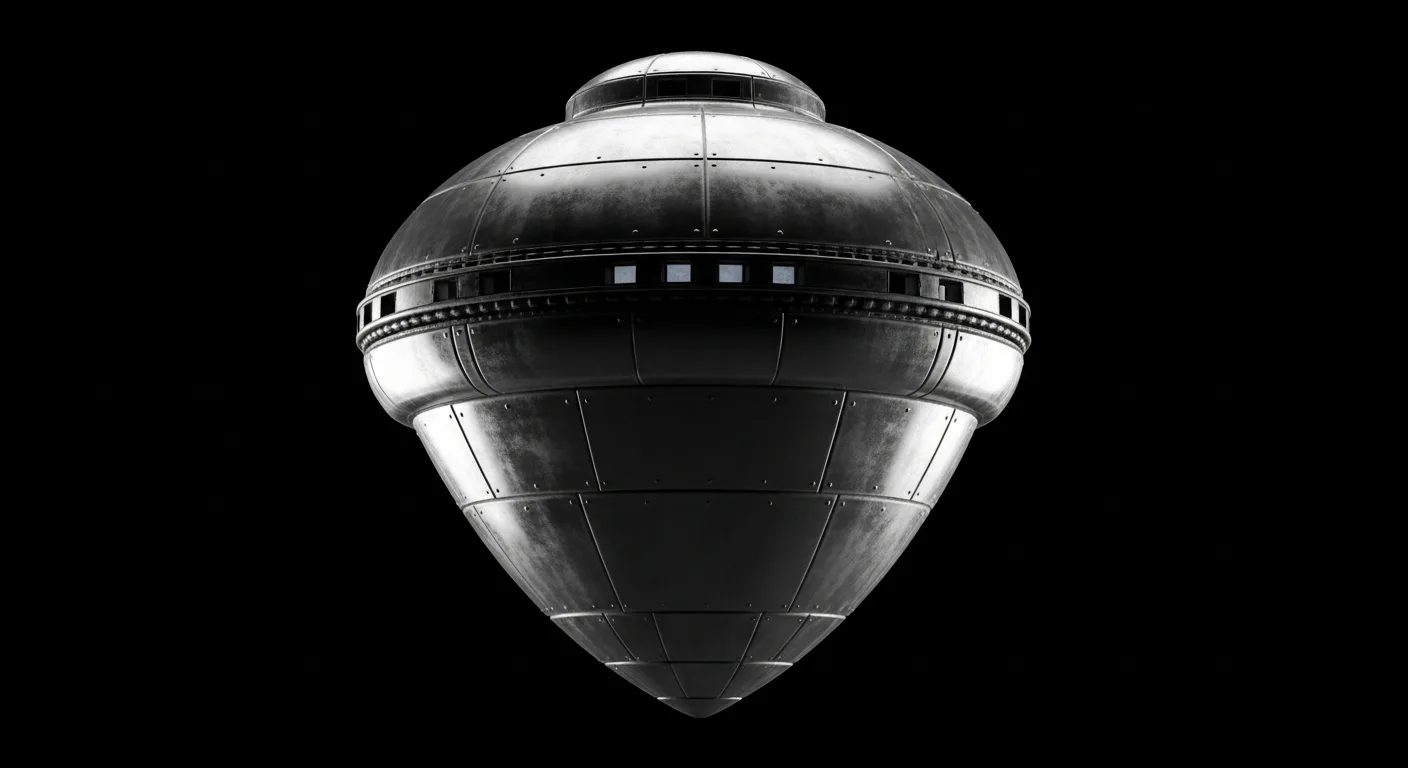
The morning of April 11, 1980, began like any other at La Joya Air Base, a Peruvian Air Force installation nestled in the arid highlands near Arequipa in southern Peru. The base was home to fighter squadrons tasked with defending Peruvian airspace, and routine operations were well underway as the sun climbed over the Andes. At approximately 7:15 AM, personnel on the ground noticed something unusual hovering near the end of one of the runways. A silvery object, seemingly suspended in the air without any visible means of propulsion, had appeared within the restricted airspace of an active military installation. What followed would become one of the most extraordinary and well-documented military encounters with an unidentified flying object in history, a confrontation between a trained combat pilot and a craft that defied every known principle of aeronautics.
A Base on Alert
La Joya Air Base was no ordinary military outpost. Situated in the Arequipa region of southern Peru, approximately 1,000 kilometers southeast of Lima, the base served as a critical installation for the Fuerza Aerea del Peru, the Peruvian Air Force. In 1980, Peru was navigating a period of political transition, having recently returned to democratic rule after more than a decade of military government. The armed forces remained vigilant, and any unauthorized incursion into restricted airspace was treated with the utmost seriousness.
The base housed several squadrons of Soviet-made Sukhoi Su-22 fighter-bombers, formidable aircraft that Peru had acquired during the military government era. The Su-22 was a variable-geometry wing attack aircraft capable of speeds exceeding Mach 1.7 at altitude, armed with 30mm cannon and capable of carrying a significant weapons payload. The pilots stationed at La Joya were among Peru’s most skilled aviators, trained to intercept and engage hostile aircraft at a moment’s notice.
When the unidentified object appeared near the runway that April morning, it immediately triggered the base’s security protocols. The object was hovering within restricted airspace, approximately five kilometers from the end of the runway, at an altitude of roughly 600 meters. From the ground, it appeared to resemble a balloon, and the initial assumption among base personnel was that some kind of surveillance balloon had drifted into the area. In the context of Cold War-era South America, where espionage and border tensions were persistent concerns, even a balloon in restricted airspace warranted a military response.
The base commander ordered an immediate scramble. The task of intercepting and destroying the intruder fell to Lieutenant Oscar Santa Maria Huerta, a young but experienced pilot who would soon find himself at the center of an encounter that would reshape his life and contribute to the global body of evidence surrounding unidentified aerial phenomena.
Scramble and Engagement
Lieutenant Huerta climbed into the cockpit of his Su-22 and taxied to the runway with the straightforward orders ringing in his ears: intercept the object and shoot it down. The mission seemed simple enough. A stationary balloon presented no tactical challenge to a supersonic fighter-bomber. Huerta powered down the runway and lifted off, banking toward the object’s reported position with the confidence of a trained military pilot executing a routine intercept.
As he closed the distance, Huerta lined up the object in his gunsights. At a range of approximately one kilometer, he opened fire with his twin-barreled 30mm cannon, sending a burst of sixty-four armor-piercing rounds toward the target. The 30mm cannon on the Su-22 was a devastating weapon, designed to penetrate armored vehicles and hardened military targets. At this range, against a stationary object the approximate size of a large vehicle, it should have been impossible to miss and impossible for the target to survive.
The rounds struck the object. Huerta could see them impacting. But they had no effect whatsoever. There was no explosion, no fragmentation, no debris falling from the sky. The projectiles appeared to be absorbed by the craft, swallowed without consequence as if they had struck something that simply refused to acknowledge their existence. In the space of a few seconds, Lieutenant Huerta’s routine mission transformed into something entirely outside his training and experience.
Face to Face with the Unknown
As Huerta recovered from his attack run and circled back for another pass, he was able to observe the object more closely for the first time. What he saw bore no resemblance to any balloon he had ever encountered. The object was approximately ten meters in diameter, roughly thirty-five feet, with a dome-shaped upper surface that gave it a profile reminiscent of an inverted bowl. Its surface was metallic and smooth, with a lustrous quality that reflected the morning sunlight. There were no wings, no tail surfaces, no engine nacelles, no exhaust, no rotors, and no visible openings of any kind. It simply hung in the air, motionless and silent, as if gravity were a suggestion it had chosen to decline.
Huerta made a second attack run. Again, the object absorbed his fire without any visible effect. He pulled up and came around for a third pass, then a fourth, each time pressing closer in an attempt to inflict some kind of damage on the enigmatic craft. The object remained impassive, utterly indifferent to the high-velocity explosive rounds slamming into its hull. In total, Huerta exhausted his entire ammunition supply of sixty-four rounds in his initial burst, leaving him with no further offensive capability. The object showed no sign of damage, no scoring on its surface, no indication that it had been struck at all.
It was at this point that the object finally reacted, though not in any way Huerta could have predicted. Rather than fleeing or retaliating, the craft began to ascend. It rose with startling speed, climbing away from the base as if suddenly deciding that the engagement was over. Huerta, now unarmed but driven by a combination of professional duty and sheer astonishment, gave chase. He pushed his Su-22 to its performance limits, following the object as it climbed through the atmosphere at a rate that would have been impossible for any known aircraft of the era.
The Chase Through the Sky
What followed was an aerial pursuit unlike anything in the annals of military aviation. The object climbed rapidly, and Huerta followed, pushing his aircraft higher and higher above the Peruvian landscape. The Su-22 was a capable aircraft, but it had definite performance ceilings, and as Huerta chased the object upward, he was approaching and then exceeding those limits. He climbed past 36,000 feet, the altitude at which commercial airliners typically cruise. He continued past 40,000 feet, entering the upper reaches of the atmosphere where the air grew thin and his engines struggled for oxygen. Still the object climbed, and still Huerta followed.
At approximately 19,200 meters, roughly 63,000 feet, Huerta reached the absolute ceiling of his aircraft. The Su-22 could go no higher. Its engines were gasping in the thin air, and the aerodynamic surfaces that kept the aircraft aloft were operating at the very edge of their capability. At this altitude, the sky above was darkening toward the blackness of space, and the curvature of the Earth was visible on the horizon. Huerta was at the boundary between atmosphere and void, and the object was still above him, hovering as effortlessly at this extreme altitude as it had near the runway far below.
Then the object stopped climbing and held its position. For a brief, surreal moment, pilot and craft regarded each other across the thin air of the upper atmosphere. Huerta, unable to fire and unable to climb further, attempted to close the distance for a better look. The object responded by dropping rapidly, descending with the same impossible speed with which it had climbed, before stopping abruptly at a lower altitude. Huerta dove after it. The object waited, then shot upward again. This pattern repeated itself several times, a vertical game of cat and mouse in which the object demonstrated complete mastery of the three-dimensional space around it.
The maneuvers the object performed during this chase defied every known principle of physics and aeronautics. It could accelerate from a dead stop to enormous speed almost instantaneously. It could halt its motion just as quickly, stopping from high velocity to hover in a fraction of a second, a maneuver that would have subjected any conventional aircraft and its occupants to forces measured in hundreds of gravities. It moved with no visible propulsion, left no exhaust trail, and produced no sonic boom despite clearly exceeding the speed of sound on multiple occasions. Whatever this object was, it operated according to principles that were entirely beyond the understanding of 1980s aerospace engineering, and indeed remain beyond our understanding today.
Eighteen Hundred Witnesses
While Huerta’s encounter unfolded in the skies above La Joya, the drama was being watched from the ground with growing amazement and alarm. The base was fully operational that morning, and approximately 1,800 military personnel were present on the installation. Many of them had been drawn outside by the initial scramble and the sound of Huerta’s cannon fire, and they watched the subsequent chase with their naked eyes and through binoculars, tracking the silver dot of the object and the tiny silhouette of Huerta’s Su-22 as they climbed higher and higher into the morning sky.
These were not casual civilian bystanders prone to flights of fancy. They were trained military personnel, including pilots, ground crew, radar operators, air traffic controllers, and support staff. Many of them had extensive experience observing aircraft in flight and could readily distinguish between conventional aircraft behavior and what they were witnessing that morning. Their collective testimony constituted a body of corroborating evidence that would be difficult to dismiss or explain away.
Ground-based radar at the installation also tracked the object during portions of the encounter, confirming that a solid, physical object was present in the airspace and was performing the extraordinary maneuvers that Huerta reported. The radar returns were consistent with a solid craft of approximately the size Huerta described, and they confirmed the extreme altitudes and rapid velocity changes that characterized the chase. The radar data provided an objective, instrumental record that complemented the eyewitness accounts from both the air and the ground.
Return and Reckoning
After approximately twenty-two minutes of pursuit, with his fuel running low and his ammunition long since expended, Huerta was forced to break off the engagement and return to La Joya. The object, as if recognizing that the contest was over, departed the area at high speed, accelerating away in a direction that took it out of visual and radar range within seconds. Huerta landed his Su-22 safely, though he was visibly shaken by the experience. He had entered his cockpit that morning expecting to pop a balloon and had instead found himself in a confrontation with a technology so far beyond his own that his most powerful weapons were meaningless against it.
The debriefing that followed was extensive and serious. Huerta described everything he had observed in meticulous detail: the object’s size, shape, surface characteristics, its apparent lack of propulsion, its ability to absorb cannon fire without effect, and the impossible maneuvers it had performed during the chase. His account was corroborated by the testimony of ground witnesses and by the radar data. There was no question that something extraordinary had occurred over La Joya that morning, but the question of what it was would prove far more difficult to answer.
The Peruvian Air Force treated the incident as a matter of national security and initially classified the details. However, unlike many military organizations confronted with UFO incidents, the Peruvian government did not attempt to deny or suppress the encounter. In the years that followed, Peru would take an unusually open approach to the subject of unidentified aerial phenomena, eventually establishing an official office dedicated to investigating such reports.
Official Acknowledgment
The La Joya incident stands apart from the vast majority of UFO cases for one critical reason: it was officially acknowledged by the government and military of the country in which it occurred. The Peruvian Air Force confirmed that the intercept had taken place, that Huerta had fired on the object, and that the object had demonstrated capabilities far beyond any known aircraft. This official confirmation lent the case a credibility that most UFO reports, regardless of their merits, simply do not possess.
In 2001, Peru established the Oficina de Investigacion de Fenomenos Aereos Anomalos (OIFAA), the Office of Investigation of Anomalous Aerial Phenomena, within the Peruvian Air Force. The creation of this office was motivated in part by the La Joya incident and by other UFO reports that had accumulated over the years. Peru became one of the few countries in the world to maintain an official, publicly acknowledged military office dedicated to investigating UFO reports, a decision that reflected a pragmatic recognition that unidentified objects in national airspace posed potential security concerns regardless of their origin.
Lieutenant Huerta himself, who eventually rose to the rank of commander, became an increasingly public advocate for transparency regarding the incident. In the decades following the encounter, he gave interviews, participated in conferences, and provided testimony to international researchers. His willingness to speak openly was remarkable for a military officer, and his accounts remained consistent and detailed over the years. He never wavered in his description of what he had seen and experienced, and he never attempted to embellish or sensationalize the encounter. His matter-of-fact recounting of the events lent them an authority that more dramatic retellings might have undermined.
In 2013, Huerta appeared before the Citizen Hearing on Disclosure in Washington, D.C., a gathering of former members of the United States Congress who heard testimony from military personnel, government officials, and researchers regarding UFO encounters. Huerta’s testimony was among the most compelling presented at the hearing, and his account of the La Joya incident was entered into the formal record. His calm, professional demeanor and his willingness to answer detailed questions about the encounter made a powerful impression on the assembled panel.
Significance in UFO Research
The La Joya incident occupies a position of particular importance in the study of unidentified aerial phenomena for several reasons. First, it is one of an extremely small number of cases in which a military pilot engaged a UFO with weapons and directly observed the complete failure of those weapons. The fact that sixty-four rounds of 30mm armor-piercing ammunition had no discernible effect on the object raises profound questions about the nature of the craft’s construction or defenses. Whether the rounds were absorbed, deflected, or simply passed through the object, their ineffectiveness suggests a technology operating on principles entirely outside our current understanding.
Second, the quality and quantity of witnesses elevate this case above the typical UFO report. A single eyewitness account, no matter how credible, can always be questioned. But when that account is corroborated by 1,800 additional military witnesses and supported by radar data, the evidentiary foundation becomes exceptionally strong. The sheer number of trained observers who witnessed the event makes conventional explanations such as misidentification, hallucination, or fabrication extremely difficult to sustain.
Third, the official acknowledgment by the Peruvian government removes the element of cover-up and denial that often surrounds military UFO encounters. In cases where governments deny or suppress information, skeptics and believers alike are left to speculate about what really happened. In the La Joya case, the government’s confirmation of the basic facts allows the discussion to focus on interpretation rather than authenticity.
The incident also contributes to a broader pattern of military UFO encounters that share striking similarities across decades and continents. The characteristics of the La Joya object, its metallic appearance, dome-shaped profile, lack of visible propulsion, ability to hover and accelerate instantaneously, and apparent indifference to weapons fire, have been reported in numerous other military encounters around the world. This consistency suggests either a common phenomenon or a remarkably uniform tradition of fabrication, and the latter explanation strains credulity when applied to independent military witnesses in different countries who had no contact with one another.
Questions Without Answers
More than four decades after the morning when Oscar Santa Maria Huerta fired his cannon at an object that refused to be destroyed, the La Joya incident remains unexplained. No conventional aircraft, drone, balloon, or atmospheric phenomenon can account for the characteristics and behavior described by Huerta and witnessed by the personnel at the base. The object’s ability to absorb weapons fire, hover motionlessly, accelerate instantaneously, and operate at altitudes exceeding 60,000 feet without any visible means of propulsion places it firmly outside the boundaries of known technology, both in 1980 and today.
Various hypotheses have been offered over the years. Some researchers have suggested experimental aircraft from a foreign power, but no known technology of the era, or of the present day, can replicate the maneuvers the object performed. Others have proposed unusual atmospheric phenomena, but no natural phenomenon matches the description of a solid, metallic, dome-shaped object that can withstand cannon fire. The extraterrestrial hypothesis, while unproven, remains one of the few explanations that does not require dismissing the testimony of a trained combat pilot and 1,800 military witnesses.
What is certain is that something was in the sky over La Joya that morning, something that a fighter pilot tried to shoot down and could not, something that 1,800 trained military personnel watched with their own eyes, something that the government of Peru has officially acknowledged. The object came, it was engaged, it demonstrated capabilities that remain beyond our comprehension, and it departed. It left behind a pilot forever changed by the experience, an air force that took the phenomenon seriously enough to create an official investigative body, and a case file that continues to challenge our assumptions about what is possible in our skies.
The La Joya Air Base incident endures as a reminder that the boundaries of human knowledge remain imperfect, that our military forces can encounter objects they cannot identify or defeat, and that the sky above us may harbor more than we care to acknowledge. Oscar Santa Maria Huerta pulled the trigger and watched his rounds vanish into something he could not explain. Decades later, no one else has been able to explain it either.
Sources
- CIA UFO/UAP Reading Room — Declassified CIA documents on UAP