Peru Air Force UFO Attack
Peruvian Air Force pilot Oscar Santa Maria fired 64 rounds at a UFO that invaded restricted airspace. The object absorbed the bullets without effect, then demonstrated impossible maneuvers before departing.
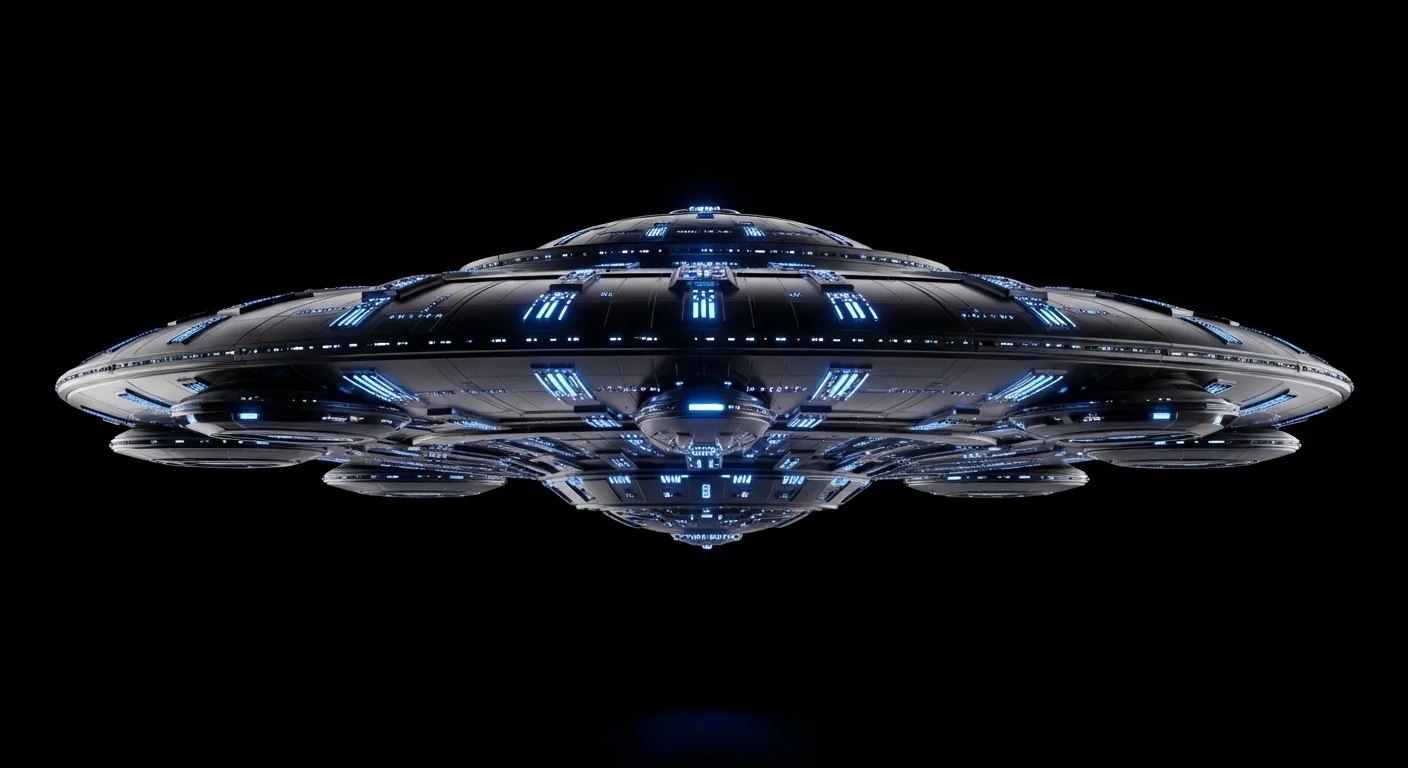
On April 11, 1980, Peruvian Air Force pilot Oscar Santa Maria Huertas engaged in what remains one of the most dramatic military confrontations with a UFO ever recorded. Scrambled to intercept an unknown object hovering over restricted airspace at La Joya Air Base, Santa Maria fired sixty-four rounds from his Su-22 fighter directly into the target. The bullets were absorbed without causing any damage whatsoever. The object then demonstrated flight capabilities that rendered Santa Maria’s pursuit futile, all while nearly two thousand military personnel watched from the ground below.
The encounter began in the early morning light when base personnel spotted an unusual object near the installation. La Joya served as a significant military facility in southern Peru, and unauthorized intrusions into its airspace were not tolerated. The standing orders were clear: investigate and, if necessary, neutralize any threat. What no one anticipated was that the threat would prove impervious to neutralization.
The Unknown Object
The object that triggered the scramble initially appeared balloon-like to observers, a rounded form hanging in the sky near the base perimeter. But its behavior quickly distinguished it from any weather balloon or conventional aircraft. The object hovered with perfect stability, showing none of the drift or movement that wind would impart to a lighter-than-air craft. It remained stationary in restricted airspace, forcing a military response.
As pilots and ground crew studied the object through binoculars and the naked eye, its details became clearer. The craft measured approximately thirty feet in diameter, with a dome-shaped upper section and a metallic surface that reflected the morning sun. It displayed no propulsion systems, no control surfaces, no features that would explain how it remained airborne. It simply was there, defying everything they knew about flight.
Oscar Santa Maria’s Mission
Lieutenant Oscar Santa Maria Huertas received the order to intercept. He was a trained combat pilot, experienced in the Sukhoi Su-22 fighter-bomber that was the backbone of Peru’s air combat capability. His aircraft carried live ammunition, standard practice for intercept missions where the nature of the threat was unknown. Santa Maria launched from La Joya with clear instructions: identify the object and remove it from restricted airspace by whatever means necessary.
As his fighter climbed toward the target, Santa Maria could see the object clearly against the morning sky. His trained pilot’s eye told him immediately that this was nothing he had ever encountered in flight school or in the cockpit. The object’s stability, its apparent indifference to his approaching aircraft, its complete absence of recognizable features all marked it as something beyond his experience.
The Combat Engagement
Santa Maria positioned his Su-22 for an attack run and opened fire. The 30mm cannon on his aircraft was a devastating weapon, capable of destroying tanks and fortifications. He fired sixty-four rounds at the hovering object from close range, watching the tracers arc toward the target. He observed the rounds striking the object’s surface.
What should have followed was destruction. Sixty-four rounds of 30mm ammunition should have torn through the object, sending debris raining to the ground below. Instead, nothing happened. The rounds appeared to be absorbed by the object’s surface without causing any damage. There was no explosion, no fire, no visible effect of any kind. The object remained hovering exactly as before, utterly unaffected by an attack that would have destroyed any conventional aircraft.
The Chase
Having absorbed the attack without response, the object now began to move. It rose from its position with acceleration that Santa Maria’s Su-22 could not approach. The pilot gave chase, pushing his throttle forward, but the object pulled away as if his fighter were standing still. It climbed to 38,000 feet in moments, demonstrating a rate of ascent impossible for any known aircraft.
Santa Maria pursued as long as his fuel allowed, watching the object maneuver with capabilities that mocked his training and his aircraft. It could stop instantly, turn at impossible angles, accelerate without any visible effort. His fighter, at maximum performance, was simply inadequate to the task. Eventually, with fuel running critical, he had to break off and return to base.
The Mass Observation
The encounter was not observed by Santa Maria alone. On the ground at La Joya Air Base, approximately 1,800 military personnel watched the events unfold in the clear morning sky. They saw the object hovering over the restricted zone. They saw Santa Maria’s aircraft approach and attack. They saw the tracers strike the target. They saw the complete lack of effect. They watched the object’s departure, its impossible climb, its disappearance into the heights.
These were not casual observers but trained military personnel, people who understood aircraft and combat and what weapons could do. They watched their comrade fire directly into an unidentified object and accomplish nothing. The mass observation transformed this from a pilot’s account into a documented military incident witnessed by nearly two thousand people.
The Aftermath
Oscar Santa Maria landed safely at La Joya and reported what had occurred. His account matched what ground observers had seen. He had engaged the target, fired his full ammunition load, scored direct hits, and inflicted no damage. The object had then demonstrated capabilities that suggested technology far beyond anything in human arsenals.
The Peruvian Air Force took the incident seriously, documenting the encounter and the witness testimony. Unlike many governments that have suppressed or denied UFO encounters, Peru chose transparency. The incident was acknowledged, the files were eventually released, and Santa Maria was permitted to discuss his experience publicly.
The Pilot’s Legacy
Oscar Santa Maria Huertas has spoken about the April 11, 1980, encounter at international conferences and in countless interviews over the decades. His account has never changed in its essential details. He fired sixty-four rounds at an unidentified object. The rounds had no effect. The object demonstrated capabilities beyond any technology he knew of then or has learned of since.
His willingness to stake his professional reputation on his account, and his consistency over more than forty years, add significant weight to his testimony. This was not a brief sighting that might be misremembered or embellished over time. This was a combat engagement, documented by the pilot’s own weapons expenditure and observed by 1,800 witnesses.
Questions Without Answers
The La Joya incident raises questions that remain unanswered. What was the object? Where did it come from? What technology could absorb thirty millimeter rounds without damage? What propulsion system could enable the performance Santa Maria observed? Why did it hover over a Peruvian military installation?
These questions have no answers within current human knowledge. The Peruvian government has acknowledged as much, stating that the incident remains unexplained. Whatever visited La Joya Air Base on April 11, 1980, demonstrated capabilities so far beyond current technology that our weapons were completely ineffective against it.
Significance
The Santa Maria case represents perhaps the most dramatic documented military engagement with a UFO. A combat pilot fired directly into an unidentified object from close range. The attack had no effect. The object demonstrated superior capabilities. Nearly two thousand military witnesses observed the encounter. The government acknowledged the event rather than covering it up.
This combination of factors makes La Joya one of the most significant UFO cases on record. It demonstrates that these objects can interact with military forces, that our weapons are inadequate against them, and that governments can choose transparency over denial when confronted with the unexplained.
Sources
- CIA UFO/UAP Reading Room — Declassified CIA documents on UAP