S4: The Bob Lazar Story (2026 Documentary)
Jeremy Corbell's definitive documentary on Bob Lazar's S-4 claims premieres in April 2026 with 7.6/10 on IMDb, narrated by Lazar himself and featuring exclusive interviews with George Knapp. Revisits 37-year-old claims now harder to dismiss than ever.
Background
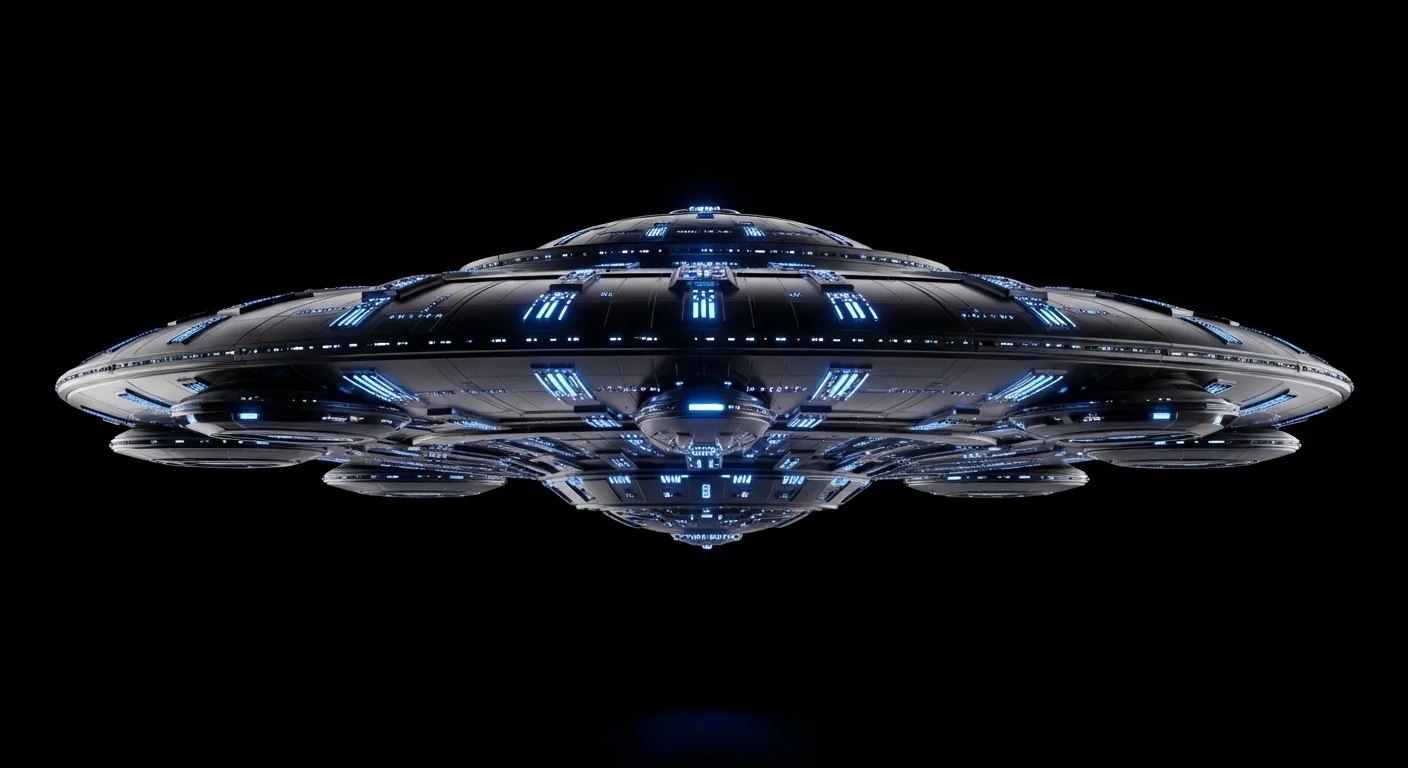
When Bob Lazar gave a series of interviews to Las Vegas journalist George Knapp in November 1989, he made claims that seemed to place him squarely in the territory of science fiction rather than credible reporting. Lazar said he had been contracted to work at a facility called S-4 — a series of hangars built into the hillside of the Papoose Range, nine miles south of the more widely known Area 51 installation at Groom Lake, Nevada. Inside those hangars, he said, were nine recovered craft of non-human origin, and his assignment had been to help determine their propulsion mechanism. He described gravity wave amplifiers, element 115 as a fuel source, and a drive system that bent space-time rather than pushing through it.
For more than three decades, Lazar occupied an uncomfortable position in the UFO literature: too specific to be a random fabricator, too extraordinary to be credible. His employment at Los Alamos National Laboratory was initially denied by the facility and later confirmed. His claim about element 115 — that it was a stable superheavy element not yet synthesised on Earth — was vindicated in 2003 when Moscovium was created and confirmed to have properties consistent with his description.
The 2026 Documentary
Jeremy Corbell’s S4: The Bob Lazar Story arrived in April 2026 as the most comprehensive treatment of Lazar’s claims ever committed to film. Narrated by Lazar himself and anchored by exclusive new interviews with George Knapp — the journalist who broke the original story and has maintained contact with Lazar for nearly four decades — the documentary set out to do something its predecessors had not: measure every verifiable claim Lazar made in 1989 against the subsequent thirty-seven years of developments in UAP disclosure.
The timing was pointed. Corbell began production during the period immediately following the 2023 Congressional hearings in which David Grusch testified under oath about crash-retrieval programmes. The 2024 corroboration from Pentagon insiders in James Fox’s concurrent documentary, the Navy’s official acknowledgment of UAP footage Lazar had described, and the confirmation of AATIP’s existence created a context in which the question was no longer whether the government had secrets about recovered craft, but whether Lazar had been working on one of those secrets three decades before anyone in Washington was willing to admit they existed.
The film arrived with a 7.6 out of 10 rating on IMDb and a 4.8 out of 5 rating on Amazon Prime Video, where it premiered. Pre-release interest was substantial, driven partly by the parallel track of Congressional disclosure activity and partly by the accumulated weight of corroborations that had accrued around Lazar’s original testimony.
Key Claims Revisited
The documentary examines Lazar’s principal claims with the benefit of hindsight. His description of element 115 — which he called Ununpentium and said could sustain a stable energy reaction when bombarded with protons — preceded its formal synthesis by fourteen years. The stable isotope of Moscovium he described does not precisely match the isotope created at JINR in 2003, a discrepancy some researchers attribute to the difference between natural and laboratory-synthesised versions of the element, and others cite as evidence that Lazar’s account was inaccurate on this point.
His description of craft with no visible seams, propulsion systems that generated no exhaust, and materials that resisted conventional analysis is compared in the documentary to witness testimony from military personnel who have encountered UAP since 2004, including the Nimitz, Gimbal, and GoFast incidents. The phenomenology — objects exhibiting anti-gravity characteristics, trans-medium travel, and speeds exceeding anything in the US inventory — is consistent across accounts that Lazar could not have influenced, given that most of them were classified for years after he made his original claims.
Corroboration and Remaining Questions
The documentary does not resolve the central question of whether Lazar is truthful, but it presents the corroborative case in its strongest form. His Social Security records showing W-2 earnings from a Naval Intelligence contractor in 1988 and 1989 remain among the best documented elements of his story. The confirmation of AATIP by Elizondo and the Pentagon, and Grusch’s testimony about crash-retrieval programmes with multi-decade histories, create an institutional framework within which Lazar’s claimed employment is at least conceivable.
What the film cannot address — and is frank about this — is the specific question of S-4 itself. No other source has independently confirmed the facility’s existence by name. Lazar’s description of nine craft in nine hangars has not been corroborated. The element 115 propulsion theory, while consistent with some theoretical physics, has not been reproduced or verified.
George Knapp, who has spent more time investigating Lazar than any other journalist, restates in the documentary what he has said for years: that Lazar has never sought financial gain from his story, has never changed its essential details under pressure, and has passed polygraph examinations administered by independent examiners. None of this proves the claims. But Knapp’s assessment, delivered with the credibility of someone who has spent four decades in proximity to the Nevada national security establishment, carries weight that the documentary earns rather than assumes.
Cultural and Historical Significance
Whatever the ultimate truth of Lazar’s account, S4: The Bob Lazar Story arrives at a moment when his place in UAP history has been substantially rehabilitated. The standard dismissal — that he was a fabricator with no verifiable credentials — no longer holds in its original form. Whether he worked at S-4 cannot be confirmed. That he worked somewhere in the classified Nevada testing complex, that element 115 exists with properties he described before its synthesis, and that the government has operated classified UAP programmes of the kind he described is no longer seriously disputed.
The documentary positions Lazar not as a vindicated prophet but as a specific case study in the gap between what government agencies know and what the public is permitted to understand. In that framing, it is as much a disclosure document as a biographical film.