The Fort Beaufort Lights
A UFO fired upon by police demonstrated technology that baffled investigators.
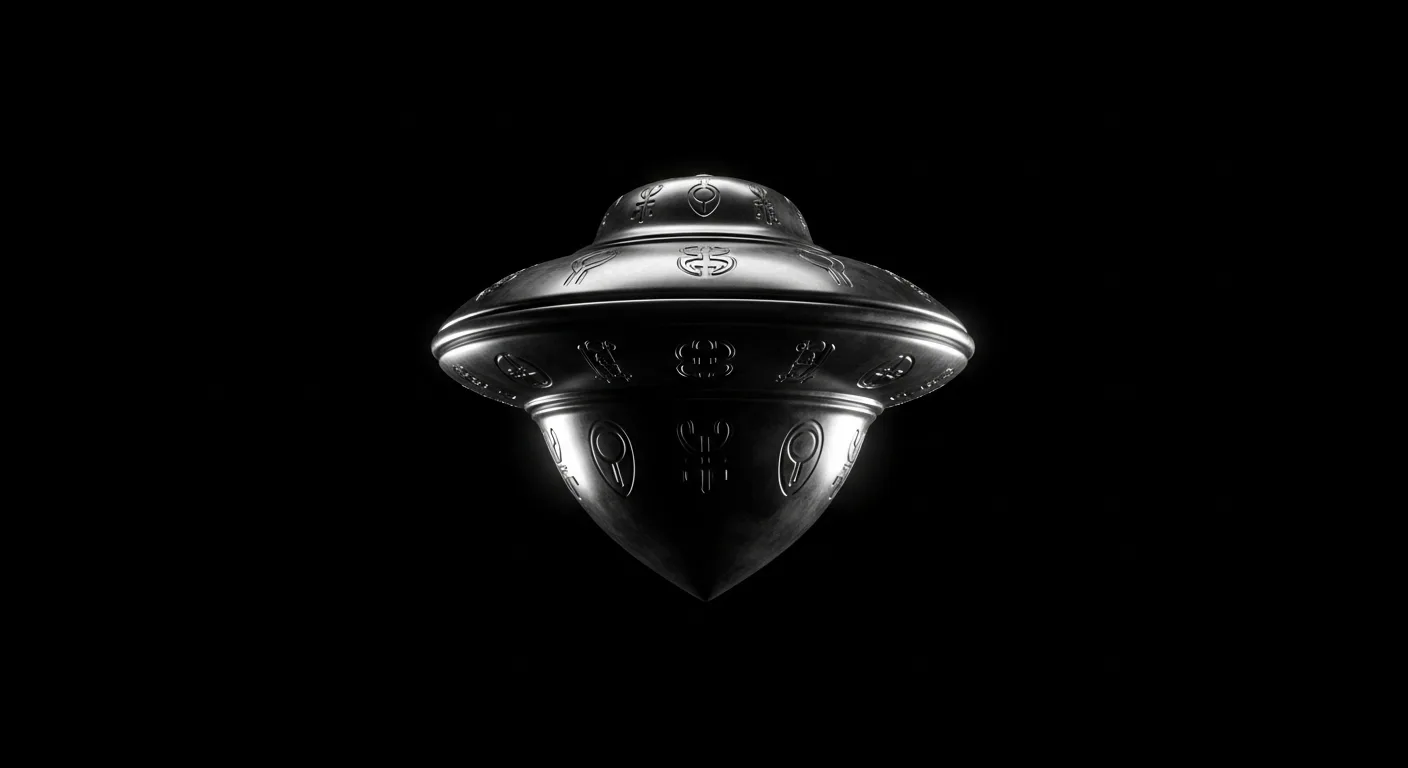
On a clear winter morning in the Eastern Cape of South Africa, a series of events unfolded that would become one of the most compelling and well-documented UFO encounters in the country’s history. What began as a farmer’s bewildered phone call to the local police station escalated into a direct confrontation between armed officers and an unidentified luminous object that demonstrated apparent intelligence, seemed impervious to gunfire, and ultimately departed on its own terms after hours of cat-and-mouse pursuit across the rugged South African landscape. The Fort Beaufort Lights incident of June 26, 1972, stands apart from most UFO reports for one extraordinary reason: the witnesses were not civilians prone to flights of fancy, but uniformed police officers who fired their service revolvers at the object and watched their bullets bounce harmlessly away.
The Eastern Cape: Land of Wide Skies
Fort Beaufort sits in the Kat River valley of what was then the Cape Province, a small town established in 1822 as a military outpost during the Cape Frontier Wars. By the 1970s it had settled into the quiet rhythms of a rural farming community, its population a mix of Afrikaans and English-speaking families whose lives revolved around livestock, citrus orchards, and the slow passage of seasons. The surrounding terrain is a patchwork of cultivated farmland, thornveld, and low hills that stretch toward the distant Winterberg mountains. It is not the sort of place where people expect extraordinary things to happen, and the residents of Fort Beaufort in 1972 were practical, no-nonsense farming folk with little time for speculation about phenomena beyond the concerns of weather, cattle prices, and crop yields.
Yet the Eastern Cape has a long history of unusual aerial phenomena, much of it predating the modern UFO era. The indigenous Xhosa people of the region have oral traditions describing strange lights in the sky, and European settlers from the nineteenth century onward recorded occasional sightings of unexplained luminous objects above the valleys and ridgelines. Whether these earlier reports represent a genuine pattern of recurring phenomena or simply the universal human tendency to notice and remember unusual lights in the night sky remains a matter of debate. What is certain is that by the morning of June 26, 1972, Fort Beaufort was about to add a dramatically new chapter to this history.
The Farmer’s Report
The incident began shortly after dawn when Bennie Smit, a farmer whose property lay several kilometers outside Fort Beaufort, noticed a strange light hovering above one of his fields. Smit was a man well-acquainted with the behavior of the natural world around him. He knew the way sunlight caught the morning dew, the manner in which mist collected in low-lying areas, and the appearance of distant headlights or farmstead lights across the valley. What he observed that morning was none of these things.
A luminous object, roughly spherical in shape and radiating a pulsing greenish glow, hung motionless approximately two meters above the ground in one of his grazing paddocks. The light was steady but seemed to shift in intensity, brightening and dimming in a rhythmic pattern that reminded Smit of breathing. The cattle in the adjacent field had moved as far from the object as their fencing allowed and stood clustered together in obvious agitation. Smit’s dogs, normally bold and territorial animals, refused to leave the veranda and whined with their tails pressed between their legs.
Smit watched the object for some minutes, trying to reconcile what he was seeing with any rational explanation. A weather balloon, perhaps, though he had never seen one that glowed with its own light or hovered so precisely above the ground. Ball lightning, maybe, though it was a clear morning with no storms anywhere in the region. Unable to account for the phenomenon and growing increasingly uneasy, Smit retreated to his farmhouse and telephoned the Fort Beaufort police station.
The desk sergeant who took Smit’s call was initially skeptical. Reports of strange lights were not unheard of in the rural districts, and they almost invariably turned out to be misidentified aircraft, distant brush fires, or the planet Venus hanging low on the horizon. Nevertheless, something in Smit’s voice—the careful, measured tone of a man who was plainly unsettled but determined not to sound hysterical—persuaded the sergeant to dispatch officers to investigate.
The Police Arrive
Warrant Officer P.J. van Rensburg and Sergeant Kitching arrived at Smit’s farm approximately forty minutes after the initial call. They found Smit waiting at his gate, visibly shaken but composed. He led them toward the field where he had observed the object, and as they crested a small rise, all three men stopped in their tracks.
The object was still there.
It had changed position slightly, having drifted to the eastern edge of the paddock, but it remained hovering at roughly the same altitude above the ground. In the growing daylight, the officers could see that the object was not merely a formless light but appeared to have a distinct structure. It was roughly disc-shaped, metallic in appearance beneath the glow, with a domed upper section that pulsed with the greenish luminescence Smit had described. The object was perhaps two to three meters in diameter, though estimates varied between witnesses. It made no sound that the officers could detect at that distance, though Smit reported that earlier, when it had been closer to his farmhouse, he had heard a faint humming sound, low-pitched and steady.
Van Rensburg radioed the police station to report what they were seeing. His transmission, later included in the official case file, was remarkably calm and professional. He described the object’s appearance, position, and behavior in the clipped, factual language of police reporting, though his request for additional units carried an undertone of urgency that suggested he was more alarmed than his words let on.
The Confrontation
What happened next elevated the Fort Beaufort incident from a routine UFO sighting to something altogether more extraordinary. As additional officers arrived at the scene over the following half hour, the decision was made to approach the object on foot. Whether this was motivated by genuine investigative protocol, by a desire to determine whether the object posed a threat, or simply by the reflex of men trained to confront the unknown rather than retreat from it, the officers began walking across the paddock toward the hovering light.
The object responded to their approach. When the officers had closed to within approximately fifty meters, the craft began to move, drifting away from them at a pace that precisely matched their advance. When they stopped, it stopped. When they moved forward again, it retreated by an equivalent distance. The effect was unsettling in its deliberateness. This was not the behavior of a natural phenomenon blown by wind currents or drifting on thermal gradients. It was the behavior of something that was aware of their presence and was choosing to maintain a specific distance from them.
Van Rensburg, by his own later account, felt a mixture of frustration and alarm at this behavior. The object was clearly under intelligent control, yet it was also clearly not hostile—it could easily have fled at speed but instead chose to hover just beyond their reach, as though observing them with the same curiosity they directed at it. After several minutes of this standoff, Van Rensburg made a decision that would define the incident in the annals of UFO history.
He drew his service revolver and fired at the object.
The first shot struck the craft—or appeared to. Witnesses reported seeing a brief flash where the bullet contacted the object’s surface, accompanied by a sharp metallic sound quite different from the report of the revolver itself. The object shuddered slightly but showed no damage. It did not flee. Instead, the humming sound that had been barely perceptible until now increased markedly in pitch and volume, and the pulsing glow intensified from green to a brilliant white.
Van Rensburg fired again. Again the bullet appeared to ricochet off the craft’s surface without leaving any mark. Other officers opened fire as well, emptying their revolvers at the object. Each bullet produced the same flash on impact and the same metallic ping, but the craft absorbed or deflected every round without apparent effect. The humming grew louder still, rising to a pitch that the officers later described as physically uncomfortable, a vibration they could feel in their teeth and chest cavities.
Then, as abruptly as the humming had begun, it ceased. The object hung motionless for a long moment, its glow shifting through a spectrum of colors—green to white to orange to red—before it began to move away from the officers at a leisurely pace, drifting across the paddock toward the line of hills to the east.
The Chase
What followed was one of the most unusual pursuits in the history of South African law enforcement. The officers, now reinforced by several additional personnel who had arrived in response to Van Rensburg’s earlier radio calls, attempted to follow the object in their vehicles. The craft moved across the landscape at varying speeds, sometimes gliding slowly enough for the police cars to keep pace on farm roads, sometimes accelerating to a velocity that left the vehicles far behind before slowing again, as if waiting for its pursuers to catch up.
This cat-and-mouse behavior continued for several hours across the farmland surrounding Fort Beaufort. The object moved over hills, through valleys, and across open fields, always staying relatively low to the ground—rarely more than thirty or forty meters above the surface. At times it would halt entirely, hovering in place until the officers approached, then moving off again when they drew near. Several witnesses described its behavior as playful, though others found the word inadequate to describe something that carried such unsettling implications.
During the pursuit, the officers noticed additional details about the object that had not been apparent during the initial confrontation. The metallic surface beneath the glow appeared to be seamless—no rivets, joints, or panel lines were visible. The dome on the upper surface seemed to be translucent or transparent, though no occupants were visible within it. The object left no exhaust trail, produced no visible means of propulsion, and made no sound beyond the intermittent humming. When it moved at speed, it did so without any apparent transition—it simply went from stationary to rapid motion without acceleration, as though the normal laws of inertia did not apply.
As the morning wore on and the pursuit continued without resolution, the object’s behavior began to change. Its movements became more rapid and less predictable, and it climbed higher above the ground with each successive halt. Finally, near midday, after the officers had followed it across many kilometers of Eastern Cape countryside, the object rose sharply into the sky. One moment it was hovering at its customary low altitude; the next it was a diminishing point of light climbing vertically at extraordinary speed. Within seconds it had disappeared from view entirely, leaving the exhausted and bewildered officers standing beside their vehicles in the middle of an empty field.
The Investigation
The South African Police dutifully filed reports on the incident, and the case was referred to the South African Air Force for investigation. Military investigators visited the site, interviewed the witnesses, and examined the areas where the object had been observed at close range. Their findings, such as they were, raised more questions than they answered.
In the paddock where the object had first been seen hovering, investigators found a circular area of flattened grass approximately three meters in diameter. The grass within this circle was pressed flat against the ground in a swirling pattern, as though subjected to a powerful downward force with a rotational component. Soil samples taken from beneath the flattened area showed no chemical anomalies, but the grass itself proved reluctant to recover, remaining flattened for weeks after the event while surrounding vegetation grew normally.
The cattle that had been in the adjacent field during the sighting displayed behavioral changes for several days afterward, refusing to enter the paddock nearest to where the object had hovered. Smit reported that milk yields from the affected animals dropped noticeably in the days following the incident, though they returned to normal within a week. His dogs remained skittish and reluctant to patrol the far reaches of the property for even longer.
No bullet fragments or impact marks were found on the ground beneath the spot where officers had fired at the object. If the bullets had indeed ricocheted off the craft’s surface, they should have fallen somewhere nearby, yet a careful search of the area revealed nothing. This absence troubled investigators, as it suggested either that the bullets had been absorbed by the object, deflected to locations beyond the search area, or that the entire confrontation had been something other than what the officers believed they had experienced.
The Air Force investigation ultimately concluded without a definitive explanation. The official finding was diplomatically worded, acknowledging that the witnesses were credible and their accounts consistent, while stopping short of confirming that they had encountered an extraterrestrial craft. The case was filed and, in the manner of bureaucracies everywhere, largely forgotten by the authorities—though not by the witnesses, the local community, or the growing international network of UFO researchers who would come to regard the Fort Beaufort Lights as one of the most significant cases on the African continent.
The Witnesses
The credibility of the Fort Beaufort case rests substantially on the character and number of its witnesses. Bennie Smit was a respected member of the farming community with no history of unusual claims or attention-seeking behavior. The police officers who responded to his call were trained observers accustomed to assessing situations quickly and reporting them accurately. Van Rensburg, in particular, was known as a steady and reliable officer who had served for many years without incident.
In total, approximately twenty people witnessed some portion of the events of June 26, including police officers, farm workers on neighboring properties, and members of the Smit family. Their accounts, recorded independently in the days following the incident, demonstrated a remarkable degree of consistency. The object’s appearance, behavior, and response to gunfire were described in substantially the same terms by every witness, regardless of their vantage point or the time at which they observed it.
None of the witnesses ever recanted their testimony or suggested that they might have been mistaken about what they saw. In the years following the incident, Van Rensburg and other officers spoke about the experience on several occasions, always maintaining the same straightforward account. They did not embellish or dramatize their reports, and several of them expressed obvious discomfort at the attention the case attracted. These were not men who enjoyed being associated with a UFO sighting; they were professionals who had encountered something they could not explain and who reported it as their duty required.
Legacy and Significance
The Fort Beaufort Lights incident occupies a unique position in UFO history for several reasons. The direct confrontation between armed police officers and an unidentified object is extremely rare in the global catalogue of sightings. While there are scattered reports from other countries of military or police personnel firing at UFOs, few are as well-documented or involve as many credible witnesses as the Fort Beaufort case.
The object’s apparent imperviousness to bullets raises profound questions about the nature of what the officers encountered. If the craft was a physical, material object—as its metallic appearance and the audible impact of bullets suggested—then it was constructed of materials far beyond anything known to human engineering in 1972 or, for that matter, today. If it was something other than a physical object—a projection, a plasma phenomenon, or something for which we have no adequate terminology—then the question becomes how it could interact with the physical world in the way the witnesses described.
The intelligent behavior of the object is equally significant. Its responses to the officers’ movements—maintaining a consistent distance, matching their pace, apparently toying with its pursuers during the extended chase—suggest a controlling intelligence that was aware of the humans, understood their intentions, and chose to engage with them on its own terms. The object was never aggressive; despite being fired upon, it made no retaliatory move. Its behavior was more consistent with observation and curiosity than with any hostile intent.
Within South Africa, the Fort Beaufort case became one of the best-known UFO incidents in the country’s history, frequently cited alongside the 1965 Pretoria sighting and the 1994 Ariel School encounter in Ruwa, Zimbabwe, as evidence of persistent UFO activity in southern Africa. The case has been discussed in numerous books and documentaries, and Fort Beaufort itself has become a minor point of interest for UFO enthusiasts visiting the Eastern Cape.
Questions Without Answers
More than five decades after the events of that winter morning, the Fort Beaufort Lights remain unexplained. No conventional aircraft, weather phenomenon, or optical illusion has been identified that could account for what the witnesses described. The object’s behavior, its physical characteristics, and its response to gunfire defy easy categorization, and the case has resisted the debunking efforts that have resolved many other UFO reports.
The witnesses are aging now, and some have passed away. But the police reports remain in the archives, the Air Force investigation file still exists, and the flattened circle in Bennie Smit’s paddock was photographed and documented before the grass eventually recovered. These fragments of evidence, incomplete as they are, continue to challenge anyone who examines them with an open mind.
What hovered above a farmer’s field in the Eastern Cape on June 26, 1972? What material could deflect bullets without damage? What intelligence watched from behind a translucent dome as uniformed officers emptied their revolvers in futile defiance? These questions remain unanswered, suspended in the same state of uncertainty as the luminous object itself—hovering just beyond reach, retreating whenever we think we are close to understanding, and ultimately departing at a speed that leaves us standing in an empty field, staring at the sky, wondering what we have just seen.
The Fort Beaufort Lights remind us that the unknown does not confine itself to remote deserts or lonely highways. It can appear in a farmer’s paddock on a clear winter morning, witnessed by a dozen armed officers of the law, and still depart without yielding a single definitive answer. Whatever visited Fort Beaufort that day came from somewhere we cannot identify, demonstrated capabilities we cannot replicate, and left behind nothing but questions, flattened grass, and the unshakeable testimony of men who saw what they saw and never wavered in the telling of it.
Sources
- CIA UFO/UAP Reading Room — Declassified CIA documents on UAP