Rainbow Lights of Mount Yotei
Skiers, farmers, and forestry workers around Hokkaido's near-perfect volcanic cone have repeatedly described chains of coloured lights that hover, rotate, and split into independent points above the summit.
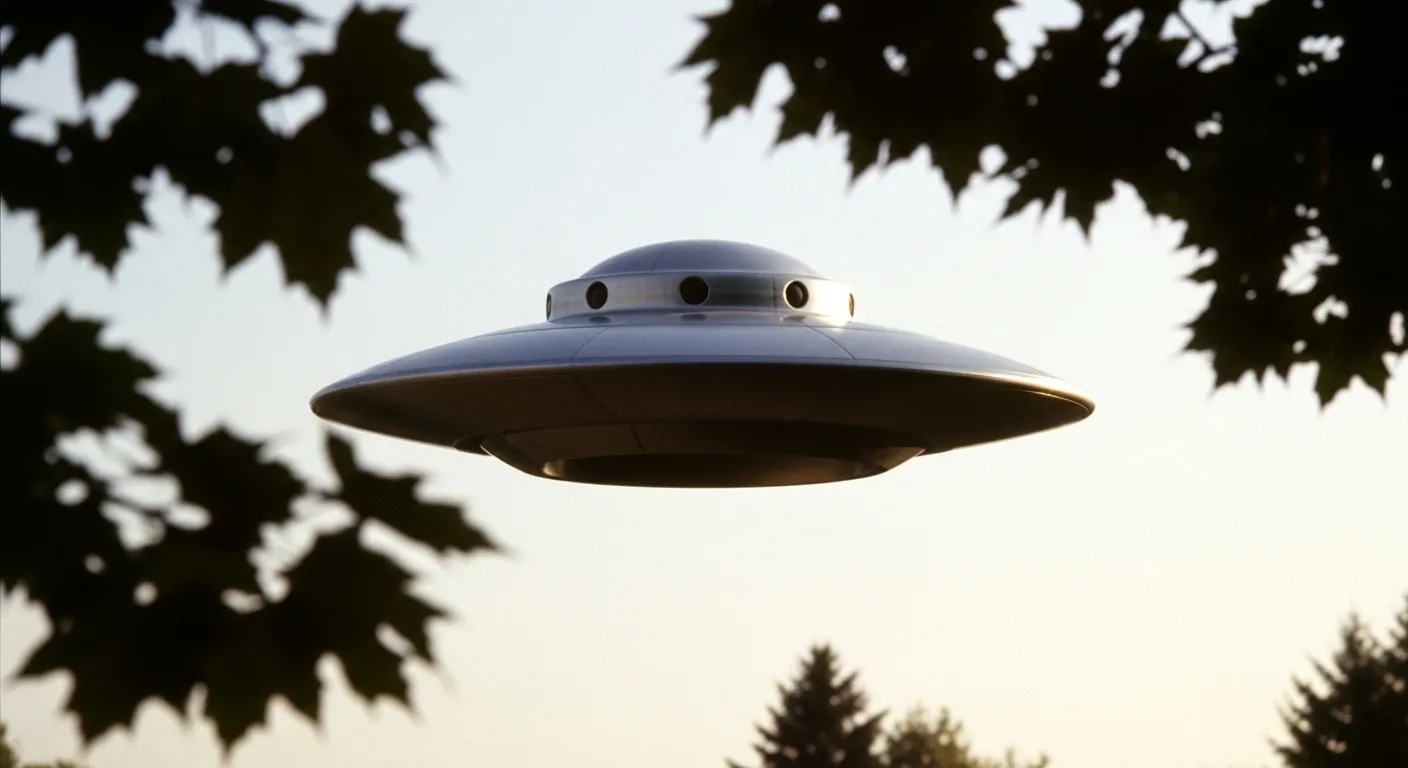
Mount Yotei rises from the Niseko basin of southwestern Hokkaido in a near-symmetrical volcanic cone so geometrically perfect that early Japanese travellers compared it to Mount Fuji and named it Ezo Fuji. For half a century, an unusual aerial phenomenon has been reported above its summit: a string of coloured lights, sometimes described as a rainbow arc and sometimes as a rotating chain, that appears at altitude on still winter nights and on clear summer evenings, and that has resisted the obvious explanations.
The Mountain
Yotei is a stratovolcano whose last confirmed eruption is dated to roughly 5,000 years ago. Its slopes are heavily forested with birch, fir, and bamboo grass, broken in winter by some of the deepest powder snowfields in the world. The Niseko ski resort lies on the adjacent Annupuri massif and has been one of Japan’s premier mountain destinations since the 1960s, drawing skiers from Sapporo, Tokyo, and increasingly from overseas.
The mountain has cultural weight beyond its geometry. The Ainu, the Indigenous people of Hokkaido, regarded its summit as the dwelling place of kamuy, divine spirits associated with sky, weather, and ancestral memory. Local Japanese farmers, settling the basin in the late nineteenth century, absorbed and adapted some of these traditions, producing a hybrid lore in which the mountain is understood to display lights at moments of seasonal transition and at the deaths of important community members.
The First Modern Wave
The rainbow-lights phenomenon entered the modern record in February 1972, when several skiers descending the eastern face of nearby Mount Annupuri reported a horizontal arc of seven coloured lights, each apparently the size of a small streetlamp, hanging motionless above Yotei’s summit. The arc was visible for roughly twenty minutes and was described in similar terms by independent witnesses on different runs. Local newspapers in Sapporo carried short notices but did not investigate further.
Through the 1970s and 1980s, similar accounts accumulated. Forestry workers, ryokan staff, JR rail crews on the line through Kutchan, and dairy farmers in the basin all contributed reports. A 1979 letter to the Hokkaido Shimbun described a “rotating chain of lights, like a wheel turned on its edge, the colours moving along the rim,” visible from the writer’s farmhouse for nearly an hour. The wheel, the writer added, did not rise or fall; it appeared to spin in place a thousand metres above the summit before fading without trace.
The Niseko Boom
The 2000s saw Niseko become an internationally known ski destination, and with the influx of foreign visitors came a corresponding increase in reports. Australian, Singaporean, and European skiers, many unaware of the older lore, began posting accounts and occasional photographs to social media. The visual descriptions remained remarkably consistent: a curved or jointed arc of distinct points of light, primarily in the green-blue-violet end of the spectrum, sometimes accompanied by a single brighter red anchor at one end.
Photographic and video evidence has been mixed. Some images plausibly show lenticular clouds illuminated by alpenglow or by the resort’s high-powered piste lighting. Others show what appear to be distinct point sources whose apparent altitude and parallax do not match conventional explanations. None of the photographs has survived rigorous independent analysis, but the geographic and temporal clustering of reports is suggestive.
Proposed Explanations
Several conventional mechanisms have been proposed. The leading candidates are upper-atmospheric optical phenomena, including circumzenithal arcs, sun pillars, and the rare lower-tangent arcs that can appear over high cold mountains in winter. Hokkaido’s combination of dry continental air, ice crystals, and steep relief produces some of the world’s best conditions for halo phenomena. A 2011 paper in the Journal of the Meteorological Society of Japan attributed several Yotei reports to ice-crystal arcs.
Another proposal involves Niseko’s own light pollution. The resort’s lifts, hotels, and grooming machinery operate through the night during peak season, and the basin’s frequent low cloud and fog can refract and amplify these sources in counterintuitive ways. Skeptical investigators have noted that several photographed “rainbow arcs” coincide with periods of heavy nighttime grooming on Annupuri.
These explanations, however, do not easily account for summer reports, for accounts predating Niseko’s expansion, or for the rotating-wheel descriptions that recur in the older testimony. They also sit uneasily alongside the foo fighters of WWII Pacific theatre lore and the more recent Japan Airlines Flight 1628 incident over the Aleutian-Hokkaido approach corridor, which suggest that the airspace above northern Japan has periodically produced anomalous aerial phenomena.
Cultural and Spiritual Reception
For Ainu cultural practitioners and for some local Buddhist and Shinto observers, the rainbow lights are not anomalies at all. They are visible signs of kamuy or of orbs of consciousness interacting with sacred topography. The Yotei summit is a registered site of folk religious observance, and small offerings continue to be left at trailheads. Practitioners interviewed by Japanese anthropologists have generally been uninterested in the question of whether the lights are extraterrestrial craft. They observe, instead, that Yotei has always been a place where the sky speaks.
Status
The lights continue to be reported, most reliably in February and March and during the first clear nights after typhoon passage in late summer. No formal investigation by Japanese authorities has been opened. The phenomenon sits in the increasingly populous category of recurring localised aerial events that resist single explanations and that may, in time, prove to be a composite of meteorological optics, light-pollution effects, and something for which the existing categories are not yet sufficient.
Sources
- Hokkaido Shimbun archives, 1972 to 2018.
- Sato, T. (2011). “Halo Phenomena in the Niseko Basin.” Journal of the Meteorological Society of Japan.
- Ainu Cultural Promotion Foundation. Oral History Project, transcripts 1995 to 2007.