Captain Schaffner and the Lightning F.6 over the North Sea
An RAF interceptor pilot was scrambled from RAF Binbrook to investigate an unidentified contact over the North Sea, made radio contact with ground controllers describing a strange object, and was lost without trace in calm flying conditions.
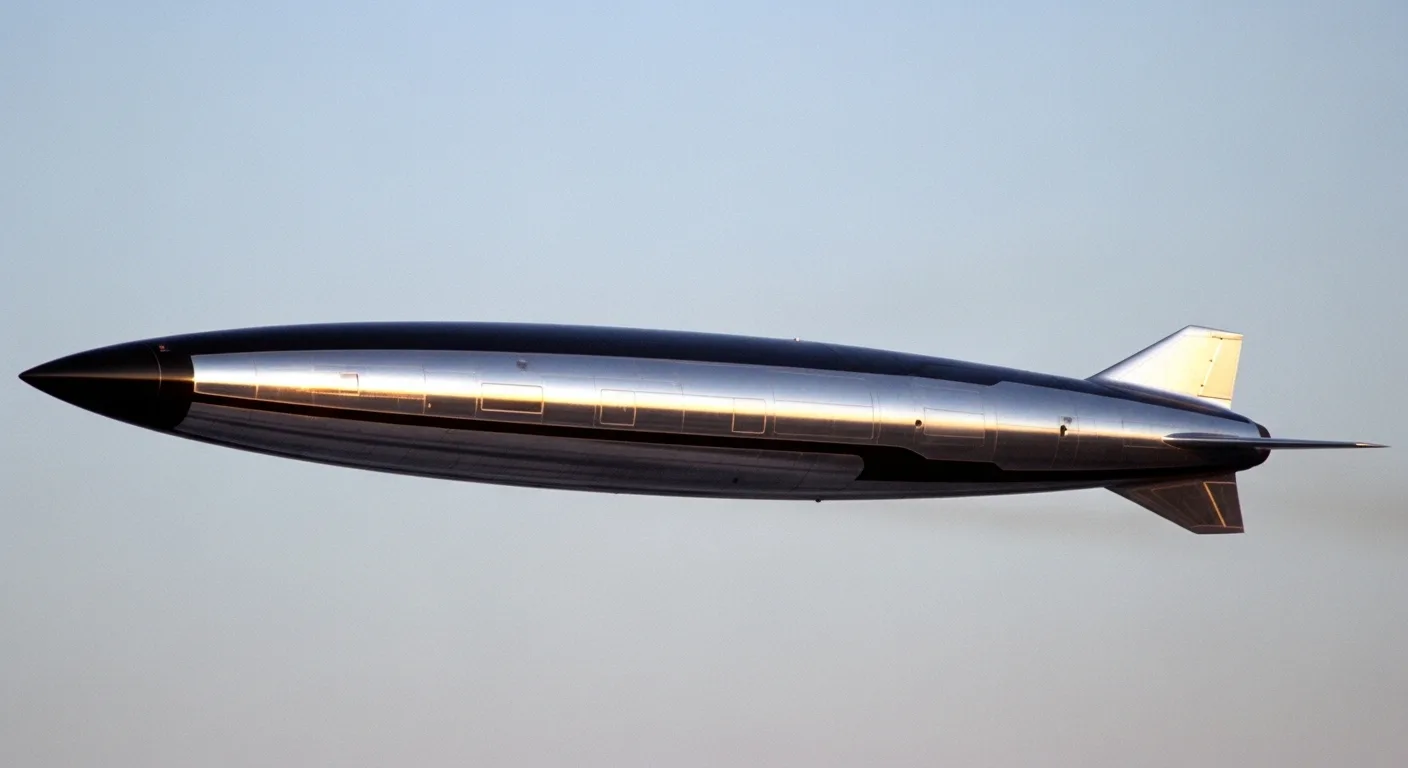
On the evening of September 8, 1970, the Quick Reaction Alert flight at Royal Air Force Binbrook in Lincolnshire was scrambled to intercept an unidentified radar contact over the North Sea. The aircraft selected was an English Electric Lightning F.6 of No. 5 Squadron, an interceptor designed for high-altitude pursuit of Soviet bombers approaching the United Kingdom. The pilot was Captain William Schaffner, an American officer on exchange duty with the RAF, a Vietnam veteran and an experienced fast-jet aviator.
The contact had first been detected by ground stations of the United Kingdom Air Defence Region late that afternoon, drifting at moderate speed over the central North Sea. By the time Schaffner caught the contact on radar at low altitude, the object had begun a series of manoeuvres that ground controllers later described as inconsistent with any known aircraft. The Lightning was seen to dive toward the target, and Schaffner reported by radio that he had visual on what he described as a large conical shape, possibly with a smaller spherical object in close attendance.
A short time later, contact with the Lightning was lost. When the recovery operation began, the aircraft was eventually found in shallow water off the Northumberland coast, intact and apparently undamaged, its canopy closed and locked. Captain Schaffner was not aboard.
A Disappearance Without a Body
The official explanation released by the Ministry of Defence in the months that followed was that Schaffner had crashed during a low-level practice intercept against a Royal Navy Shackleton maritime patrol aircraft, had ejected at low altitude, and had drowned in the North Sea. The body was never recovered. The aircraft, when raised, showed no obvious damage consistent with high-energy impact. The cockpit canopy was closed, the ejection seat was found in the cockpit rather than ejected, and the harness was unfastened.
These details, taken together, were difficult to reconcile with the official narrative. An ejection through a closed canopy would have been impossible in the Lightning’s configuration of the period, which used an upward-firing seat designed to break through the cockpit roof. The condition in which the aircraft was found suggested instead that the cockpit had been opened in flight, the pilot had departed it without using the ejection seat, and the aircraft had subsequently descended into the sea more or less in trim.
For aviators familiar with the Lightning, none of this scanned as a normal accident profile.
The Tony Dodd Account
The case might have remained an obscure North Sea fatality were it not for the work of the British UFO researcher Tony Dodd, a former police sergeant who specialised in the collection of military testimony in the 1980s and 1990s. Dodd published a detailed account of the Schaffner incident in his 1999 book Alien Investigator, in which he claimed to have spoken to several serving and retired RAF personnel who had been on duty at Binbrook on the night in question. According to Dodd’s sources, the radio transcripts of the intercept included Schaffner reporting an object of unfamiliar configuration, then a sudden loss of cabin integrity, then silence. Dodd further claimed that the Lightning had been raised from the seabed in a condition that suggested it had been placed there gently rather than crashed.
The Ministry of Defence has consistently declined to comment on the specifics of Dodd’s account. Files relating to the loss were eventually released under the United Kingdom Freedom of Information Act in the late 2000s, but key portions of the radar tape transcripts and the post-recovery analysis of the airframe remain redacted.
For comparison with another disappearance of a single-pilot interceptor under unusual circumstances, see our entry on the Frederick Valentich case over Bass Strait in 1978.
Theories of the Loss
Conventional explanations for the Schaffner incident generally suppose either that the pilot suffered a medical emergency, opened the canopy in disorientation, and fell from the aircraft, or that the loss represents a more mundane low-level crash whose details have been simplified in subsequent retellings. Neither of these accounts fully addresses the condition in which the airframe was recovered.
Paranormal explanations, by contrast, range from the speculative claim of an extraterrestrial encounter in which the pilot was abducted from his cockpit, to the more restrained possibility that the Lightning collided with an object whose nature was never identified by any subsequent radar plot. The fact that the sea state at the time of the loss was calm, and that no debris field was located before the airframe itself was recovered intact, has continued to weigh on those who have studied the case.
A Quiet Anniversary
Captain Schaffner was buried in absentia at Wright-Patterson Air Force Base in Ohio, his rank and decorations carved on a memorial stone that stands over an empty grave. His widow Linda and his children spent decades pressing the Ministry of Defence and the United States Air Force for further information about the loss. The official position has remained that the case was an ordinary low-level accident with unfortunate circumstances of recovery.
For students of the wider UAP record in the years following the closure of the United States Air Force Project Blue Book in 1969, the Schaffner case sits beside a small group of unresolved military losses in which the public account has never satisfactorily explained the physical evidence. It remains, more than half a century after the fact, one of the most genuinely strange disappearances in the history of British air defence.
Sources
- Dodd, Tony. Alien Investigator: The Case Files of Britain’s Leading UFO Detective. London: Headline, 1999.
- Ministry of Defence. Lightning Aircraft Accident Reports, 1970. The National Archives, Kew, AIR series, partially redacted.
- Birdsall, Graham. UFO Magazine (UK) coverage of the Schaffner case, 1992-2000.
- Pope, Nick. Open Skies, Closed Minds. London: Simon and Schuster, 1996.