O'Hare Airport Disc
United Airlines employees saw a dark metallic disc hovering over Gate C17. When it departed, it shot upward, punching a visible hole through the overcast clouds. The FAA dismissed it as 'weather.'
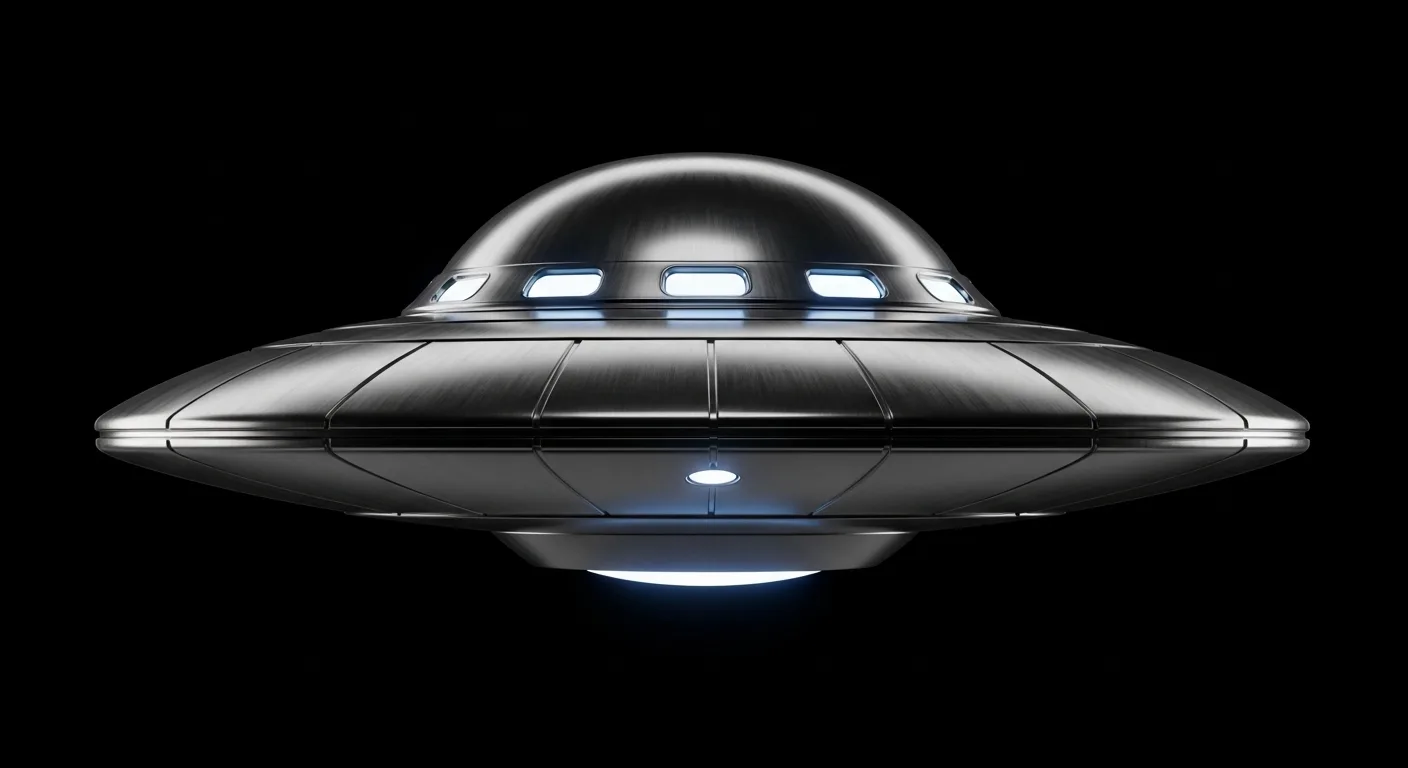
On the afternoon of November 7, 2006, a dark metallic disc hovered beneath the cloud layer over one of the busiest airports in the world, observed by multiple aviation professionals who understood exactly what they were looking at — and, more importantly, what they were not looking at. The object hung motionless above Gate C17 of United Airlines’ terminal at Chicago’s O’Hare International Airport for several minutes before departing in a manner that left a physical mark on the sky itself: a perfectly circular hole punched through the overcast cloud layer, visible to witnesses on the ground for several minutes before the clouds closed around it. The O’Hare Airport UFO incident became one of the most significant UFO cases of the twenty-first century, not because of the number of witnesses — roughly a dozen came forward, though the actual number who saw the object was likely higher — but because of the quality of those witnesses, the physical evidence they described, and the chasm between their testimony and the official response, which dismissed the entire affair as a “weather phenomenon” unworthy of investigation.
The Setting
O’Hare International Airport is the third busiest airport in the United States by passenger volume and one of the most important aviation hubs in the world. On any given day, approximately 2,400 flights operate in and out of O’Hare, serving destinations across the globe. The airport’s workforce numbers in the tens of thousands, including pilots, mechanics, ramp workers, air traffic controllers, and ground crew members who spend their working lives in and around aircraft. These are people who look at the sky for a living. They know what airplanes look like from every angle and in every condition. They know what helicopters, blimps, weather balloons, and birds look like. They are, in short, exactly the kind of witnesses whose testimony carries weight.
November 7, 2006, was a typical late-autumn day in Chicago. The weather was overcast, with a solid cloud layer at approximately 1,900 feet. The clouds were uniform and unbroken, the kind of featureless gray ceiling that is common in the upper Midwest during the transition from fall to winter. Temperatures were in the mid-forties. Visibility beneath the cloud layer was adequate for airport operations, though the low ceiling required instrument approaches for arriving aircraft. It was, in every respect, an ordinary day at O’Hare — until approximately 4:15 PM.
The Sighting
The first witnesses to notice the object were United Airlines ramp workers — the ground crew members responsible for loading luggage, directing aircraft on the tarmac, and performing the countless tasks that keep an airline’s ground operations functioning. Their work requires them to be outdoors on the ramp, the apron area where aircraft are parked at gates, and their vantage point gives them a clear, unobstructed view of the sky above the terminal.
What they saw was a dark, disc-shaped object hovering motionless beneath the cloud layer, positioned directly above Gate C17 in the United Airlines terminal. The object was dark gray or metallic in color, solid in appearance, and clearly defined against the lighter gray of the overcast sky above it. It was not translucent, not amorphous, not a trick of light or shadow. It was a solid, physical object, and it was hovering in a location where no object should have been.
The disc was described as relatively small compared to the commercial aircraft on the ramp below it — estimates of its diameter ranged from approximately six feet to twenty-four feet, with most witnesses placing it at the larger end of that range. It was rotating slowly, or appeared to be, though some witnesses were uncertain about this detail. The object had no visible lights, no markings, no wings or rotors, and no visible means of propulsion. It simply hung in the air, motionless relative to the ground, as if suspended from an invisible wire.
The sighting lasted several minutes. Multiple ramp workers observed the object and called their colleagues’ attention to it. The word spread quickly across the ramp, and within minutes, mechanics, supervisors, and at least one United Airlines pilot who was walking across the tarmac had joined the observers. All saw the same thing: a dark disc, hovering silently above the gate.
The Departure
What happened next elevated the O’Hare sighting from a puzzling observation to a case with apparent physical evidence. After hovering motionless for several minutes, the disc suddenly accelerated straight upward at tremendous speed. The witnesses described the departure as instantaneous — one moment the object was hovering, the next it was gone, rocketing vertically through the cloud layer and out of sight.
The departure left a mark. Where the object had punched through the overcast cloud layer, a perfectly circular hole appeared in the clouds. The hole was clearly defined, with sharp edges that distinguished it from the natural breaks and variations that sometimes occur in cloud cover. Through the hole, witnesses could see blue sky above the cloud layer — a window of clear air in an otherwise uniform overcast, created by the passage of the disc.
The hole persisted for several minutes, clearly visible from the ramp below, before the surrounding clouds gradually closed in and filled the gap. Multiple witnesses observed the hole independently, and their descriptions were consistent: a circular opening, sharply defined, visible for a brief period before natural atmospheric processes obliterated it.
The significance of the cloud hole is difficult to overstate. If the witnesses’ account is accurate, the object that punched through the clouds was a physical body that displaced air and water vapor as it accelerated upward. This is not consistent with a light phenomenon, an optical illusion, or a misidentified conventional aircraft. It is consistent with a solid object of significant mass moving through the atmosphere at high speed, displacing the cloud material in its path and leaving a visible wake in the form of a circular opening.
The Witnesses
The quality of the O’Hare witnesses is one of the case’s greatest strengths. These were not casual observers who happened to glance upward and saw something ambiguous. They were aviation professionals — people whose daily work involved the observation and operation of aircraft — who saw something that they were unanimous in describing as not any kind of aircraft they recognized.
The ramp workers who first observed the object were experienced ground crew members with years of service at O’Hare. They worked beneath aircraft every day, in all weather conditions, and they knew what every type of aircraft in United’s fleet looked like from below. The object they observed did not resemble any aircraft they had ever seen.
The mechanics who observed the object were trained in aircraft systems and structures. They knew the shapes, configurations, and operational characteristics of commercial and military aircraft. The object did not match any of them.
The pilot who observed the object was a United Airlines captain with thousands of hours of flight experience. He was trained to observe and identify aerial objects as a fundamental part of his profession. He could not identify what he saw.
All of the witnesses who came forward did so reluctantly. Aviation professionals who report UFO sightings risk professional stigma and career consequences, and the United Airlines employees who spoke about the O’Hare sighting did so knowing that their testimony could be used against them. Their willingness to speak despite this risk is itself evidence of the genuineness of their experience. People do not risk their livelihoods to report things they are uncertain about.
The Official Response
The contrast between the quality of the witness testimony and the official response to it is one of the most striking aspects of the O’Hare case. United Airlines initially denied that the sighting had occurred, a position that became untenable when a Freedom of Information Act request by the Chicago Tribune revealed that United employees had indeed filed internal reports about the incident and that the airline’s operations center had been contacted about the object in real time.
The FAA’s response was even more dismissive. The agency acknowledged that it had received reports of the sighting but stated that it had not detected the object on radar and therefore would not investigate. The official characterization was that the object was likely a “weather phenomenon” — a catch-all category that explained nothing and that was contradicted by the witnesses’ descriptions of a solid, metallic object with clearly defined edges.
The decision not to investigate was remarkable given the circumstances. An unidentified object had been observed hovering over the ramp at one of the busiest airports in the country, in airspace that is among the most tightly controlled in the world. The object was in a position that would have put it in direct conflict with arriving and departing aircraft. Under normal circumstances, any object operating in O’Hare’s airspace without authorization would trigger an immediate security response. The fact that no such response occurred — and that the FAA declined to investigate after the fact — suggested either that the agency genuinely did not take the reports seriously or that it preferred not to acknowledge what had been observed.
The NARCAP Investigation
The most thorough investigation of the O’Hare sighting was conducted by the National Aviation Reporting Center on Anomalous Phenomena (NARCAP), an organization dedicated to the study of unidentified aerial phenomena in the context of aviation safety. NARCAP’s investigation was led by Dr. Richard Haines, a former NASA research scientist with extensive experience in the study of pilot reports of unusual aerial phenomena.
Haines and his team conducted detailed interviews with multiple witnesses, analyzed weather data for the time and location of the sighting, reviewed radar records (to the extent they were available), and evaluated the witnesses’ accounts for internal consistency and correlation with known phenomena. The resulting NARCAP report concluded that the witnesses were credible, that their accounts were internally consistent, and that the object they described could not be identified as any known aircraft, weather phenomenon, or other conventional object.
The NARCAP investigation paid particular attention to the cloud hole reported by multiple witnesses. Haines noted that the formation of a sharply defined circular opening in a cloud layer is consistent with the passage of a solid object through the clouds, displacing the water droplets and creating a temporary void. While certain atmospheric phenomena — such as fallstreak holes — can produce similar openings in cloud layers, these typically form under specific meteorological conditions involving supercooled water droplets, and their formation is gradual rather than instantaneous. The witnesses’ description of a sudden hole appearing at the moment of the object’s departure is more consistent with physical displacement than with a natural meteorological process.
The Media and the Public
The O’Hare sighting became a major news story when Chicago Tribune transportation reporter Jon Hilkevitch broke the story in January 2007, two months after the incident. Hilkevitch’s article, which included interviews with witnesses and detailed the FAA’s dismissive response, generated enormous public interest. The Tribune’s online article about the sighting became the most-read story in the newspaper’s history at that time, demonstrating the depth of public interest in UFO reports when they are presented with credible witnesses and responsible journalism.
The media coverage brought the case to national and international attention and prompted additional witnesses to come forward. It also highlighted the disconnect between public interest in UFO reports and official willingness to investigate them. The FAA’s refusal to investigate a reported object in the airspace of one of the nation’s busiest airports struck many observers as irresponsible, regardless of their views on the nature of the object itself. If the object was real, it represented a potential hazard to aviation. If it was not real, the witnesses’ reports still warranted investigation to determine what they had actually seen and whether it posed any safety risk.
The Significance
The O’Hare Airport UFO incident occupies an important position in the modern history of unidentified aerial phenomena. It brought together elements that are individually common in UFO reports but rarely found in combination: multiple credible witnesses with relevant professional expertise, an observation that lasted long enough for detailed examination, apparent physical evidence in the form of the cloud hole, and an official response so dismissive as to be counterproductive.
The case also illustrated the institutional dynamics that have historically inhibited serious investigation of UFO reports. The FAA’s refusal to investigate, United Airlines’ initial denial, and the professional risks faced by witnesses who came forward all reflected a system in which the social and institutional costs of acknowledging unexplained aerial phenomena outweighed any incentive to investigate them honestly. This dynamic — which characterized the official approach to UFOs for decades — began to shift in the years following the O’Hare incident, culminating in the 2017 revelations about the Pentagon’s Advanced Aerospace Threat Identification Program and the subsequent establishment of formal government investigation into what are now officially termed “unidentified anomalous phenomena.”
The O’Hare witnesses asked a simple question that remains unanswered: What was hovering over Gate C17 on the afternoon of November 7, 2006? The FAA called it weather. The witnesses called it a metallic disc. The clouds, for a brief moment, called it exactly what it appeared to be — a solid object, physical and real, that punched a hole through the sky on its way to somewhere that no one on the ground could follow. The hole closed. The clouds reformed. The flights continued. And the question, like the object itself, departed without resolution, leaving behind only the testimony of the people who saw it and the lingering certainty that, for a few minutes on an ordinary November afternoon, something extraordinary happened at one of the most watched pieces of sky in the world.
Sources
- CIA UFO/UAP Reading Room — Declassified CIA documents on UAP