Trindade Island Photos
A Brazilian Navy ship's crew watched as a Saturn-shaped UFO circled their island research station. Photographer Almiro Baraúna captured four photographs that were later authenticated by the Brazilian government.
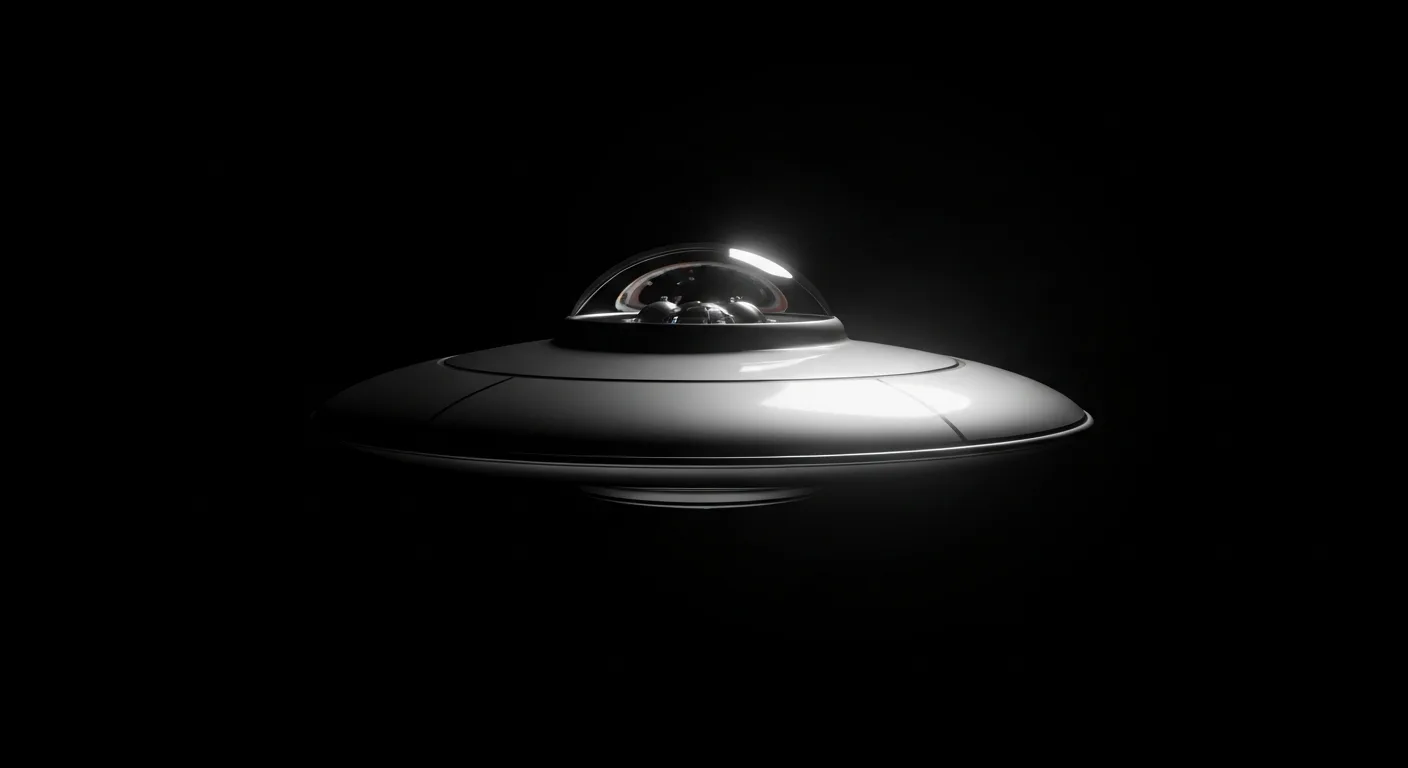
On the morning of January 16, 1958, the crew of the Brazilian Navy training ship Almirante Saldanha witnessed one of the most extraordinary events in UFO history. As their vessel prepared to depart Trindade Island, a remote outpost in the South Atlantic, a Saturn-shaped object appeared in the sky, circled the island’s distinctive peak, and was captured in four photographs that would be authenticated by the Brazilian government and released by order of President Juscelino Kubitschek himself.
Trindade Island lies approximately 700 miles off the Brazilian coast, a volcanic remnant rising dramatically from the ocean. In 1958, it served as a research station for Brazil’s contribution to the International Geophysical Year, and the Almirante Saldanha had been ferrying scientists and supplies to the outpost. It was an unlikely place for an encounter that would become one of the most scrutinized UFO cases in history.
The Photographer
Among those aboard the Almirante Saldanha that January morning was Almiro Baraúna, a professional photographer specializing in underwater photography. Baraúna had been documenting the scientific work on Trindade and had his camera readily accessible on deck. This chance positioning would prove crucial in the minutes to come.
Baraúna was no stranger to cameras or to creating unusual images. Some skeptics would later point to his skills as evidence that he could have faked the photographs. Supporters countered that his expertise was precisely what allowed him to react quickly enough to capture a fast-moving object on film.
The Sighting
Shortly before noon, as the ship prepared for departure, excited shouts erupted on deck. Something was approaching the island from the east, moving rapidly through the clear tropical sky. Baraúna heard the commotion and looked up to see a strange object crossing over Trindade, heading toward the island’s 620-meter peak, the Pico Desejado.
The object was unlike anything the assembled sailors and scientists had ever seen. It appeared to be Saturn-shaped, with a flattened body and a distinct ring or rim around its equator. It was dark in color and solid in appearance, reflecting sunlight as it moved. The object circled the peak of the island, changed direction, and accelerated away toward the sea.
During this brief passage, Baraúna managed to raise his camera and take four photographs. His hands were shaking from excitement, and the object was moving quickly, but he captured the sequence: the object approaching the island, passing over the peak, circling, and departing.
Forty-Eight Witnesses
What makes the Trindade case particularly significant is the number and quality of witnesses. The deck of the Almirante Saldanha was crowded that morning. Forty-eight people, including Navy personnel, civilian scientists, and ship’s crew, watched the object from various positions on the vessel. Their accounts were consistent: a Saturn-shaped craft, solid and structured, moving with apparent purpose around the island.
These were not untrained observers. Many were military personnel accustomed to identifying aircraft and weather phenomena. The scientists among them were educated to observe carefully and report accurately. When interviewed separately, their descriptions aligned remarkably well.
Development and Chain of Custody
One of the strongest aspects of the case is what happened immediately after the sighting. Baraúna was taken below decks, where a makeshift darkroom had been set up for his underwater photography work. Under the supervision of ship’s officers, he developed the film immediately, aboard the ship.
This chain of custody is crucial. There was no opportunity for Baraúna to tamper with the film between exposure and development. Multiple witnesses observed the development process and saw the images emerge on the negatives. The photographs were genuine exposures from that roll of film, taken that morning, whatever they actually depicted.
Government Authentication
The photographs were quickly forwarded up the chain of command. The Brazilian Navy conducted an investigation, analyzing the images and interviewing witnesses. Their conclusion was unambiguous: the photographs were authentic and had not been faked. The object depicted was real, and it was unknown.
President Juscelino Kubitschek took personal interest in the case. After reviewing the Navy’s findings, he authorized the release of the photographs to the press, an extraordinary action that amounted to official government endorsement of a UFO sighting. In February 1958, the images were published in Brazilian newspapers and quickly spread around the world.
The Brazilian Navy’s official position was that the photographs showed a genuine unknown object. This was not a qualified statement or a suggestion that further study was needed. It was an official conclusion, backed by the authority of the Brazilian government.
Analysis and Debate
The Trindade photographs have been subjected to intense scrutiny for over six decades. Various experts have analyzed the images using different techniques, from simple photographic analysis to computerized enhancement.
Skeptics have proposed that Baraúna, given his photographic skills, could have created the images using double exposure or by photographing a model. However, the chain of custody makes this difficult to explain. The film was developed immediately aboard ship, under supervision, with no opportunity for manipulation.
Others have suggested the object might have been a weather balloon, but the Saturn-like shape and controlled flight pattern are inconsistent with balloon behavior. The witnesses uniformly rejected such explanations.
International Impact
The Trindade photographs attracted international attention. UFO researchers worldwide studied the images and interviewed participants. The case was investigated by organizations in multiple countries, and it remains a standard reference in serious UFO literature.
What sets Trindade apart from most UFO photograph cases is the combination of factors supporting its authenticity: multiple trained witnesses, immediate film development under supervision, official military investigation, and government endorsement. Few UFO photographs can claim such credentials.
The Question of Intent
If the object was genuinely unknown, what was it doing at Trindade Island? Some researchers have noted that the island was serving as an International Geophysical Year research station. The IGY was a major international scientific collaboration, involving rocket launches, atmospheric studies, and other advanced research. If non-human intelligences were observing human technological development, such a location might attract their attention.
Others point out that Trindade Island, rising dramatically from the Atlantic, represents an unusual and easily identifiable landmark. Perhaps the object was simply using it as a navigation reference, much as aircraft use geographic features.
Legacy
The Trindade Island photographs represent a landmark in UFO research. They offer something rare in this field: evidence that has been officially authenticated by a national government, witnessed by dozens of trained observers, and subjected to extensive analysis without definitive debunking.
For believers, Trindade is among the best evidence that structured craft of unknown origin operate in our atmosphere. For skeptics, it represents an elaborate hoax by a skilled photographer, though one never conclusively demonstrated. For the curious, it is a fascinating historical puzzle that refuses to yield a simple answer.
President Kubitschek’s decision to release the photographs remains remarkable. In an era when most governments sought to suppress or explain away UFO reports, Brazil chose transparency. The photographs have been available for study for over six decades. Whatever conclusions one draws from them, they remind us that some mysteries deserve serious attention rather than reflexive dismissal.
Sources
- Project Blue Book — National Archives — USAF UFO investigation files, 1947–1969
- CIA UFO/UAP Reading Room — Declassified CIA documents on UAP