The USS Nimitz Tic Tac Encounter: The UFO Case That Changed Everything
Multiple Navy personnel tracked and encountered a craft displaying capabilities far beyond any known technology, in what became the most significant military UFO encounter of the modern era.
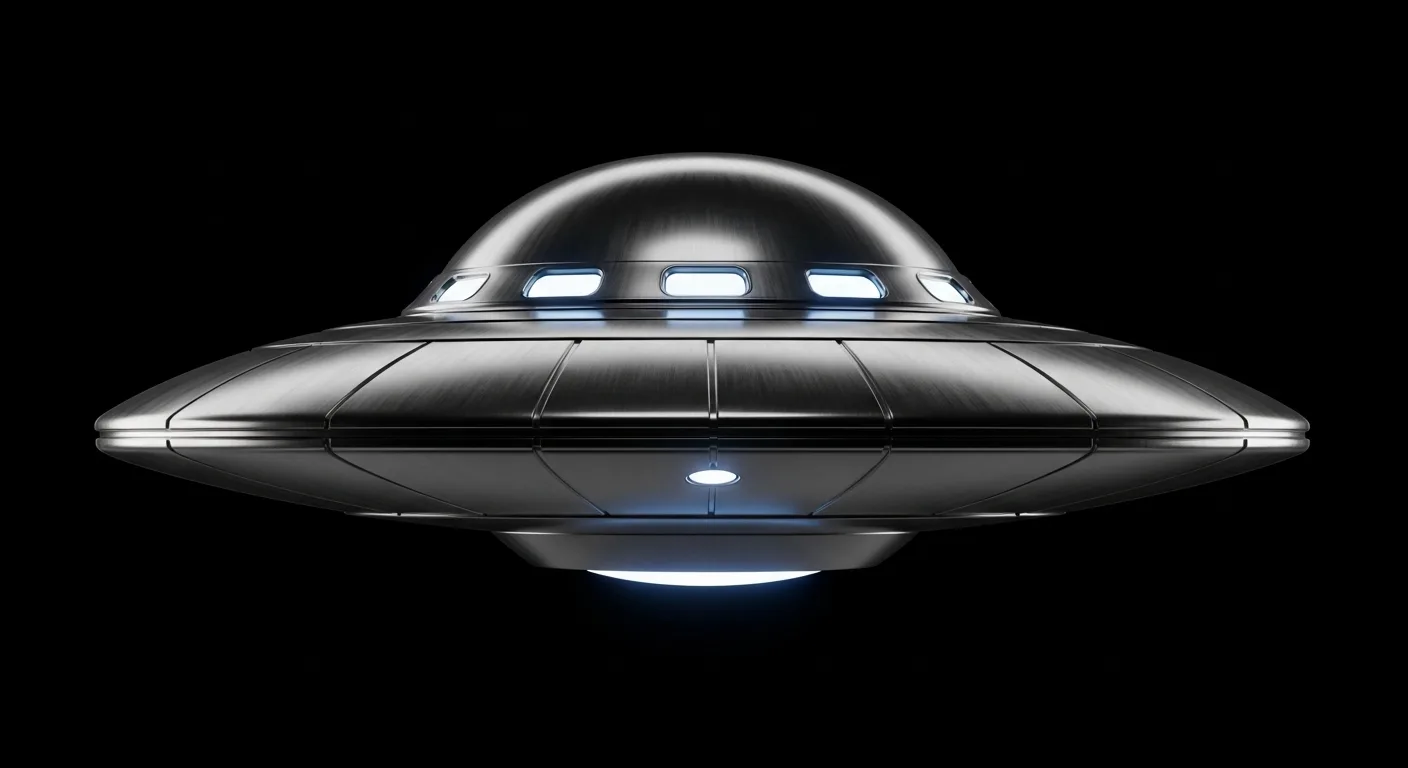
On November 14, 2004, approximately one hundred miles southwest of San Diego, personnel aboard the aircraft carrier USS Nimitz and the guided-missile cruiser USS Princeton encountered an unidentified aerial object that displayed flight characteristics far beyond the capabilities of any known aircraft. The encounter involved multiple radar systems, multiple eyewitnesses, and infrared video footage. It was investigated by a classified Pentagon program, confirmed as genuine by the United States Department of Defense, and ultimately played a central role in reshaping the American government’s approach to unidentified aerial phenomena. No case in the history of UFO research has been as thoroughly documented by military professionals, as rigorously confirmed by official sources, or as consequential in its policy implications as the Nimitz Tic Tac encounter.
The Carrier Strike Group
To appreciate the significance of what occurred, it is important to understand the capabilities of the military assets involved. The USS Nimitz (CVN-68) is a nuclear-powered supercarrier, the lead ship of her class and one of the most powerful warships ever built. In November 2004, the Nimitz Carrier Strike Group was conducting pre-deployment training exercises off the coast of Southern California, working up for a scheduled deployment to the Western Pacific.
Accompanying the Nimitz was the USS Princeton (CG-59), a Ticonderoga-class guided-missile cruiser equipped with the SPY-1B radar system—one of the most advanced naval radar systems in the world, capable of tracking hundreds of targets simultaneously with extraordinary precision. The Princeton served as the air defense coordinator for the strike group, responsible for maintaining awareness of every object in the surrounding airspace.
The aircraft involved were F/A-18F Super Hornets from Strike Fighter Squadron 41 (VFA-41), known as the “Black Aces,” operating from the Nimitz. These twin-engine, two-seat fighters were among the most capable combat aircraft in the United States Navy, flown by experienced aviators who had logged thousands of hours of flight time.
Two Weeks of Anomalous Radar Returns
The story of the Nimitz encounter does not begin on November 14. For approximately two weeks prior, Senior Chief Operations Specialist Kevin Day, the air defense coordinator aboard the Princeton, had been tracking anomalous radar returns that defied explanation. The SPY-1B radar was detecting groups of objects appearing at altitudes of approximately 80,000 feet—well above the operational ceiling of any known aircraft—and then descending rapidly to lower altitudes, sometimes dropping tens of thousands of feet in a matter of seconds.
The objects moved in ways that were inconsistent with any known aircraft, missile, or natural phenomenon. They appeared to travel at relatively slow speeds—around 100 knots—before suddenly accelerating to hypersonic velocities. They made abrupt directional changes that would have generated forces fatal to any human occupant of a conventional aircraft. Day initially suspected a radar malfunction and ran diagnostics on the system, but the equipment checked out as fully operational. The objects continued to appear day after day, following a pattern that seemed to originate from a point west of Catalina Island and travel south toward Guadalupe Island off the coast of Baja California.
Day reported the anomalous tracks up his chain of command but received no satisfactory explanation. The objects did not correspond to any known military or civilian traffic, did not appear on the identification friend-or-foe (IFF) transponder system, and did not respond to any communications. After two weeks of tracking the objects without resolution, the opportunity arose to send aircraft to investigate.
The Intercept: Commander David Fravor
On the morning of November 14, 2004, Commander David Fravor, the commanding officer of VFA-41, and his wingman, Lieutenant Commander Alex Dietrich, were conducting a training exercise approximately one hundred miles southwest of San Diego when they received a vector from the Princeton to investigate an unknown contact. The Princeton’s radar had detected one of the anomalous objects at a position that placed it within range of the training aircraft.
Fravor and Dietrich, each flying a Super Hornet with a weapons systems officer in the back seat, proceeded to the coordinates provided. As they descended through approximately 20,000 feet, Fravor noticed a disturbance on the surface of the ocean below—a roughly oval area of whitewater, as though something large were just beneath the surface, churning the otherwise calm blue Pacific. Above this disturbance, hovering at approximately 50 feet, was an object.
Fravor described the object as roughly 40 feet long, oblong or capsule-shaped, white, and smooth, with no visible wings, rotors, engine inlets, exhaust, or control surfaces. It resembled, in his memorable description, a giant Tic Tac breath mint. The object was moving erratically above the whitewater disturbance, making sudden lateral movements and altitude changes.
Fravor decided to investigate and began a descending spiral toward the object. As he descended, the object appeared to respond to his presence, rising to meet him. When Fravor attempted to cut across the circle to close the distance, the object accelerated with astonishing speed and vanished. The entire encounter lasted approximately five minutes.
“It accelerated like nothing I’ve ever seen,” Fravor later stated in multiple interviews. He estimated that the object went from a near-hover to beyond visual range in less than two seconds. There was no visible exhaust, no sonic boom despite what appeared to be supersonic or hypersonic acceleration, and no flight control surfaces that could explain its maneuverability.
When Fravor checked with the Princeton, he was told that the object had reappeared on radar at his combat air patrol (CAP) point—a predetermined location sixty miles away—within seconds of disappearing from his visual range. The object had apparently traveled sixty miles in a matter of seconds, a feat implying speeds well in excess of any known aircraft.
The FLIR Video: Chad Underwood
Following Fravor’s encounter, a second pair of Super Hornets was launched from the Nimitz to investigate. One of these aircraft, flown by Lieutenant Chad Underwood, was equipped with an AN/ASQ-228 Advanced Targeting Forward-Looking Infrared (ATFLIR) pod—a sophisticated sensor system capable of detecting and tracking targets via their infrared signature.
Underwood detected and locked onto the object with his FLIR pod, producing the now-famous video that would eventually be released to the public. The 76-second clip, later designated “FLIR1” by the Pentagon, shows an oblong object with a warm infrared signature against a cooler background. The object maintains a stable position before suddenly accelerating to the left and departing the frame with what appears to be extraordinary speed. Underwood later stated that the object’s behavior was unlike anything he had encountered in his military career and that it seemed to actively respond to his attempts to track it.
The FLIR video captures several notable details. The object appears to have no visible exhaust plume—a critical observation, since any conventional aircraft or missile would produce a hot exhaust signature clearly visible on infrared. The object also appears to rotate in a manner inconsistent with known aerodynamic principles, and its acceleration out of frame occurs without any apparent transitional phase.
The Five Observables
Analysis of the Nimitz encounter, combined with other military UAP encounters, led researchers at the Advanced Aerospace Threat Identification Program (AATIP)—a classified Pentagon program that studied UAP from 2007 to 2012—to define what became known as the “Five Observables,” a set of characteristics that distinguished genuine UAP from conventional aircraft or natural phenomena:
-
Anti-gravity lift. The objects appeared to operate without conventional lift surfaces—no wings, rotors, or aerodynamic body shapes—yet maintained controlled flight, including hovering.
-
Sudden and instantaneous acceleration. The objects transitioned from stationary or slow-moving to hypersonic speeds without any observable acceleration phase, and without the sonic booms that accompany supersonic flight through atmosphere.
-
Hypersonic velocities without signatures. The objects traveled at speeds far exceeding the capabilities of any known aircraft, yet produced no visible exhaust, contrails, or heat signatures consistent with conventional propulsion.
-
Low observability. Despite their apparently solid, physical nature, the objects were intermittently visible on radar and sometimes appeared to cloak or reduce their radar signature.
-
Trans-medium travel. Multiple observations suggested the objects could transition seamlessly between air and water, operating in both media without apparent difficulty. The whitewater disturbance observed by Fravor suggested the Tic Tac, or a related object, had been operating underwater immediately before or during the aerial encounter.
The Underwater Disturbance
One of the most intriguing and underreported elements of the Nimitz encounter is the underwater disturbance observed by Commander Fravor. The churning whitewater on an otherwise calm ocean surface suggested something large and active beneath the waves. Some researchers have speculated that a larger, submerged object was present and that the Tic Tac was either deployed from it or was interacting with it.
This element of the encounter has particular significance in light of subsequent reports. Navy sonar operators and submarine crews have reportedly detected unidentified underwater objects moving at speeds far exceeding those of any known submarine or torpedo. The concept of “trans-medium” travel—objects that operate in both air and water—has become a significant focus of government UAP investigation.
Pentagon Confirmation and Public Disclosure
The Nimitz encounter remained classified for over a decade. The FLIR1 video and details of the encounter first became public in December 2017, when the New York Times published a front-page story revealing the existence of AATIP and describing the Nimitz encounter as one of the cases the program had investigated. The article, written by Helene Cooper, Ralph Blumenthal, and Leslie Kean, was accompanied by the release of the FLIR1 video and two other military UAP videos.
In April 2020, the Department of Defense officially released the three videos, confirming their authenticity and stating that they depicted “unidentified aerial phenomena.” This marked the first time the U.S. government had officially acknowledged that military personnel had encountered objects in controlled airspace that could not be identified.
In June 2021, the Office of the Director of National Intelligence released a preliminary assessment on UAP that examined 144 incidents reported by military personnel between 2004 and 2021. The Nimitz encounter was among the cases discussed, and the report concluded that the majority of the incidents “probably do represent physical objects” and that some demonstrated “advanced technology.” The report could not identify any of the incidents as known U.S. technology, foreign technology, or natural phenomena.
Congressional Impact
The Nimitz encounter played a pivotal role in the United States Congress’s decision to take UAP seriously as a matter of national security and flight safety. Following the 2017 revelations, multiple Congressional hearings were held, and in 2022, Congress established the All-domain Anomaly Resolution Office (AARO) within the Department of Defense, tasked with investigating UAP reports from across the military and intelligence community.
In July 2023, the House Oversight Committee held a public hearing on UAP that included testimony from Commander Fravor, who recounted his experience under oath. His testimony, delivered with the calm precision of a career military officer, was among the most impactful moments in the history of Congressional UAP inquiry. Fravor stated unequivocally that the object he encountered was real, solid, and exhibited capabilities that no known technology could replicate.
Skeptical Perspectives
Skeptics have proposed several alternative explanations for the Nimitz encounter. These include:
Radar artifacts and equipment malfunction. Some have suggested that the anomalous radar returns tracked by the Princeton were the result of software glitches, atmospheric ducting, or electronic warfare testing. However, the radar systems aboard the Princeton had been recently upgraded and tested, and the anomalous returns were tracked over a period of two weeks across multiple system resets.
Classified military technology. Others have proposed that the Tic Tac was a secret U.S. military project being tested without the knowledge of the Nimitz strike group. Commander Fravor and other participants have stated that no U.S. military technology known to them could account for the object’s performance, and that testing classified technology in the vicinity of a carrier strike group without coordination would represent an extreme safety violation.
Misidentification. Some skeptics have proposed that Fravor and the other witnesses misidentified a conventional aircraft, drone, or atmospheric phenomenon. Given the number of witnesses, the multiple sensor systems involved, and the experience level of the observers, this explanation has been widely regarded as insufficient.
Legacy and Significance
The USS Nimitz Tic Tac encounter stands as the most significant UFO case of the twenty-first century. Its importance derives not from the strangeness of what was observed—many historical UFO cases describe equally bizarre phenomena—but from the credibility of the witnesses, the quality of the sensor data, and the official confirmation by the United States government. For the first time in the modern history of UFO research, a case had moved from the realm of anecdote and speculation into the realm of officially acknowledged, sensor-confirmed military encounters with objects of unknown origin and capability.
The encounter fundamentally changed the public discourse around UFOs. The stigma that had long prevented military personnel from reporting such incidents began to erode. The scientific community, while still cautious, began to engage with the topic in ways that would have been professionally unthinkable a decade earlier. And the United States government, after decades of denial and dismissal, was forced to acknowledge that objects were operating in American airspace that could not be explained by any known technology—a concession that, whatever its ultimate implications, represents a watershed moment in the long and contentious history of unidentified flying objects.
Sources
- CIA UFO/UAP Reading Room — Declassified CIA documents on UAP