The RB-47 UFO Encounter
A six-man crew aboard an RB-47H electronic reconnaissance aircraft tracked an unknown object for over 700 miles and 1.5 hours. The object was simultaneously detected on their ECM equipment, ground radar, and visually - and it seemed to know when they were watching.
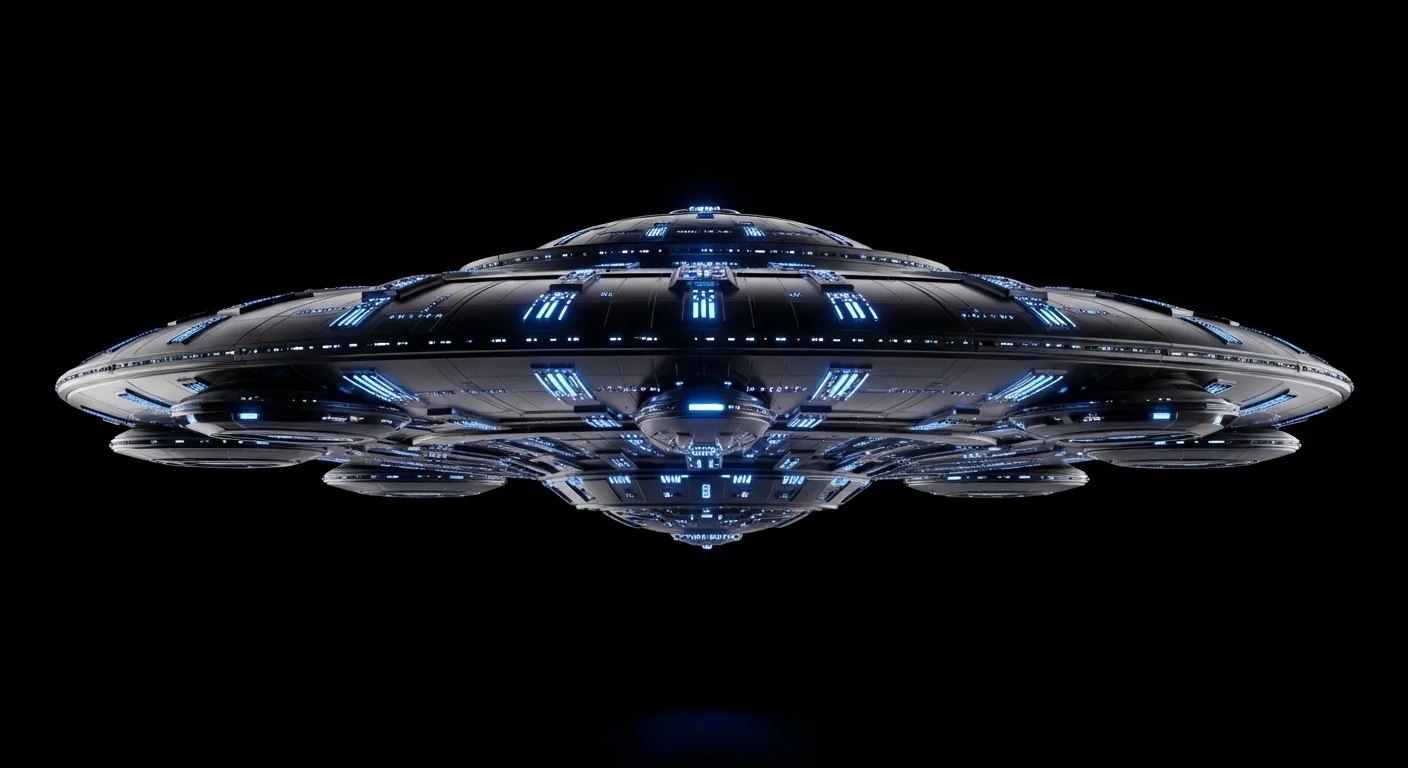
On July 17, 1957, a U.S. Air Force RB-47H electronic reconnaissance aircraft encountered an unknown object during a training mission that would become one of the most scientifically significant UFO cases on record. For over 1.5 hours and 700 miles, from Mississippi to Oklahoma, the six-man crew tracked an object that appeared simultaneously on their electronic countermeasures equipment, ground radar, and visual observation. Most remarkably, the object seemed aware of the aircraft’s actions - blinking out when pursued and reappearing when the aircraft turned away.
The Aircraft
RB-47H
The platform was an electronic reconnaissance aircraft, part of the 55th Strategic Reconnaissance Wing. It was equipped with sophisticated ECM (Electronic Countermeasures) equipment and multiple sensor systems. The crew consisted of six highly trained officers.
The Crew
Six officers were aboard: Major Lewis D. Chase - pilot, Captain James H. McCoid - copilot, Captain Thomas H. Hanley - navigator, First Lieutenant John J. Provenzano - ECM Monitor #1, First Lieutenant Frank B. McClure - ECM Monitor #2, and First Lieutenant Walter A. Tuchscherer - ECM Monitor #3.
The Mission
Training Flight
The event was a test/training mission, departing from Forbes AFB, Kansas, with operations focused on the Gulf Coast region. Standard ECM equipment checks and routine procedures were being followed.
ECM Capabilities
The aircraft possessed the ability to detect electronic signals, radar emissions, and signals operating at 2800 MHz. It featured sophisticated sensors and utilized multiple monitors to analyze the data collected.
The Encounter
Initial Detection
Over Mississippi, ECM Monitor McClure detected a signal at 2800 MHz originating from an unknown source, not matching any known aircraft. The characteristics of the signal suggested an unusual presence.
Visual Confirmation
Over Louisiana, the cockpit crew gained visual confirmation of an intensely luminous light – a bright, distinct object that did not resemble any conventional aircraft. This visual sighting was then corroborated by the ECM detection.
Ground Radar Confirmation
From Duncanville, Texas, Site Utah tracked the object, confirming the RB-47’s position and identifying it as an unknown target. This independent verification involved three-sensor confirmation.
The Object’s Behavior
Apparent Awareness
The most startling aspect of the encounter was the object’s apparent awareness of the aircraft’s actions. When RB-47 turned toward it, the object blinked out, disappearing simultaneously from all sensors—visual, ECM, and ground radar.
Return Pattern
When the aircraft turned away, the object would reappear, resuming its position approximately the same way and continuing to follow, repeating this pattern multiple times.
Extraordinary Maneuvers
The object demonstrated extraordinary capabilities, including dropping to 15,000 feet instantly on one occasion, pacing the RB-47 at various distances, outmaneuvering it consistently, and maintaining apparent surveillance.
Duration and Distance
Extended Encounter
The encounter lasted over 1.5 hours and covered more than 700 miles, from Mississippi to Oklahoma. The sustained contact involved multiple phases and continued through several states.
Geographic Tracking
The object was first detected over Mississippi, followed by visual contact in Louisiana, ground radar confirmation in Texas, and its final fade-out over Oklahoma. This continuous tracking occurred across multiple states.
Triple Verification
Why This Case Matters
The investigation relied on three independent systems: ECM equipment aboard the aircraft (detecting a 2800 MHz signal), ground radar at Site Utah and Duncanville, and visual observation by the cockpit crew.
Simultaneous Confirmation
The significance of the event lay in the simultaneous confirmation by all three systems – showing the same object, losing it simultaneously, and regaining it simultaneously. This ruled out equipment malfunction, indicating the presence of a real, unknown entity.
Investigation
Project Blue Book
Initial information regarding the incident was not received until October, over two months after the event. The delayed reporting highlighted the unusual nature of the case, which was eventually documented but never definitively explained.
Condon Committee
Later analysis by the Condon Committee studied the case in depth, remained unexplained, and was considered significant due to its scientific interest. No conventional explanation was found.
Dr. James McDonald
Dr. James McDonald, a scientific atmospheric physicist, called the encounter one of the most scientifically significant UFO cases on record, citing the multiple-sensor confirmation and the experienced military witnesses.
Analysis
What It Demonstrated
The object demonstrated a detectable electromagnetic signature, a physical presence (radar return), visual luminosity, apparent intelligence, and superior performance.
The Awareness Problem
The disturbing implication was that the object responded to aircraft actions, knowing when it was being approached and when pursuit ended, and coordinating its disappearance and reappearance – suggesting intelligence or advanced technology.
The Question
July 17, 1957. Somewhere over America.
An RB-47H, one of the most sophisticated reconnaissance aircraft in the world, crewed by six trained officers, encounters something impossible.
They detect it on their electronic equipment. A signal at 2800 MHz. Unknown source.
They see it with their eyes. An intensely luminous object. Following them.
Ground radar sees it too. Site Utah, Texas. Tracking both the RB-47 and the unknown.
Three different systems. Three different types of detection. All showing the same thing.
And then it gets stranger.
When Major Chase turns toward the object - it vanishes. Not from one sensor. From all of them. Simultaneously. ECM. Ground radar. Visual. All at once.
When he turns away - it comes back. On everything. At the same time.
It knows.
Whatever it is, it knows when they’re looking.
For 700 miles and 90 minutes, this dance continues. Over Mississippi. Louisiana. Texas. Oklahoma. The object follows, or leads, or paces. Dropping 15,000 feet in an instant. Appearing and disappearing at will.
The ECM operators are electronic warfare specialists. They know what signals should and shouldn’t exist. This one shouldn’t.
The pilots are experienced officers. They know what aircraft look like. This isn’t one.
And ground radar confirms it all.
The RB-47 encounter.
The case Dr. James McDonald called one of the most scientifically significant on record.
Three sensors. Six witnesses. 700 miles. 90 minutes.
And an object that knew when it was being watched.
Still unexplained.
Still impossible.
Still waiting for an answer.
Sources
- Project Blue Book — National Archives — USAF UFO investigation files, 1947–1969
- CIA UFO/UAP Reading Room — Declassified CIA documents on UAP
- Chronicling America — Historic US newspapers (1690–1963)