Las Mollacas Hill Crash
An alleged UFO crash on Las Mollacas Hill in Chile's San Clemente region was reportedly investigated by the Chilean Army and even drew interest from NASA. Chile's CEFAA (official UFO agency) documented the case. Physical evidence was claimed but details remain classified.
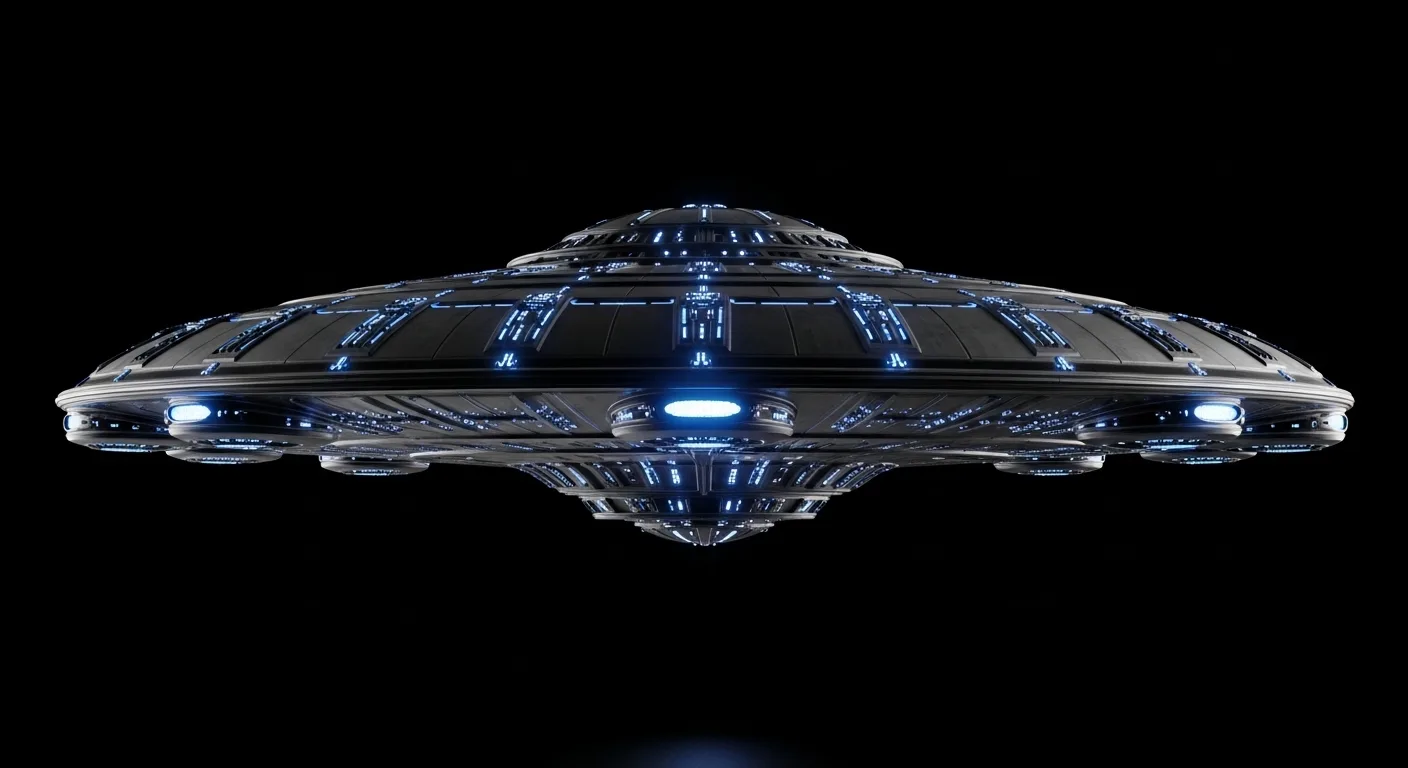
In 1998, something crashed on Las Mollacas Hill in central Chile’s San Clemente region—and what happened next would draw the attention of the Chilean military, government officials, and allegedly even NASA. The incident remains one of the most intriguing UFO cases in South American history, notable not for civilian speculation but for the official response it generated. Chile’s CEFAA, one of the few government-sanctioned UFO investigation agencies in the world, documented the case extensively, though many details remain classified to this day.
The San Clemente Region
The area around San Clemente, in Chile’s Maule Region, has long been considered one of the country’s most active zones for UFO activity. Local residents have reported unusual lights in the sky for generations, and the region’s remote valleys and hills provide ample opportunity for phenomena to go unwitnessed by outsiders. The terrain is rugged, with mountains and forested hills that could easily conceal a crashed object from casual observation.
By 1998, San Clemente had already developed a reputation among Chilean ufologists as a hotspot for unexplained aerial activity. Multiple sightings had been reported in the preceding years, and the local population had grown accustomed to strange lights and objects in their skies. But the Las Mollacas incident would prove different from the usual sighting—this time, something had apparently come down, leaving physical evidence that demanded investigation.
The Crash
Details of the initial incident remain partially obscured by official secrecy, but the basic facts are established. In 1998, local witnesses reported seeing something crash on or near Las Mollacas Hill. The object created enough disturbance that word spread quickly through the small community, and within a short time, the Chilean authorities became involved.
What distinguished this case from typical UFO reports was the official response. The Chilean Army dispatched personnel to the site, treating the incident with a seriousness that suggested more than routine curiosity. The military presence was notable and sustained, indicating that whatever had been found warranted extended investigation rather than dismissal.
The Investigation
The Chilean military’s investigation of the Las Mollacas site produced claims of physical evidence—impact traces, recovered materials, and anomalies in the surrounding environment. However, the specific nature of this evidence has never been fully disclosed to the public. Reports suggest that materials were recovered and analyzed, that the site showed signs consistent with a high-energy impact, and that the findings were unusual enough to warrant continued secrecy.
CEFAA, Chile’s Committee for the Study of Anomalous Aerial Phenomena, became involved in documenting the case. Unlike many countries, Chile has maintained an official government body dedicated to investigating UFO reports since 1997. CEFAA operates under the Directorate General of Civil Aeronautics and includes military and civilian scientific personnel. Their involvement in the Las Mollacas case lent it an air of legitimacy that purely civilian investigations lack.
The claim that NASA showed interest in the case has circulated in UFO research circles since the incident occurred. While this has never been officially confirmed, the suggestion that the American space agency took notice speaks to the perceived significance of whatever was found on that Chilean hillside.
Physical Evidence Claims
Witnesses and researchers have claimed that the Las Mollacas investigation yielded several types of physical evidence. Impact traces on the hillside suggested that something had struck the ground with considerable force. Materials reportedly recovered from the site defied easy classification, displaying properties that could not be attributed to conventional aircraft or natural phenomena.
Site anomalies were documented, including effects on vegetation and soil that suggested exposure to unusual conditions. Whether these anomalies resulted from the crash itself, from the object’s propulsion system, or from some other cause has never been publicly established. The analysis conducted by Chilean authorities produced results that remain classified, known only to those with official access.
Chile’s UFO Program
Chile stands apart from most nations in its official approach to UFO phenomena. CEFAA has operated continuously since its founding, treating aerial anomalies as legitimate subjects for scientific investigation rather than objects of ridicule. The agency has released declassified cases, including video footage captured by Chilean Air Force pilots, that demonstrate its commitment to transparency within security constraints.
This institutional framework meant that the Las Mollacas incident received serious attention from the start. Rather than being dismissed or ignored, the case was investigated by personnel with official standing and scientific training. The resulting documentation, while largely classified, exists within government archives rather than in the fragmentary records of amateur investigators.
CEFAA’s involvement also means that whatever conclusions were reached about Las Mollacas carry institutional weight. The agency’s determination that the case warranted classification suggests findings significant enough to justify secrecy—findings that, if mundane, would presumably have been released.
San Clemente: UFO Capital
In the years following the Las Mollacas incident, San Clemente has embraced its reputation as Chile’s UFO capital. The region now features a designated UFO trail, attracting tourists interested in the area’s long history of unexplained sightings. Local businesses cater to UFO enthusiasts, and the community has found economic benefit in its association with the unknown.
The ongoing activity in the region suggests that whatever attracts UFO phenomena to San Clemente continues to operate. Sightings remain common, and the area maintains its status as one of South America’s most reliable locations for encountering the unexplained. Whether the Las Mollacas crash represented a unique event or one incident among many remains unclear.
The Unanswered Questions
The Las Mollacas case raises questions that have never been publicly answered. What exactly crashed on that Chilean hillside in 1998? What materials were recovered, and what did analysis reveal about their origin? Why did the Chilean military respond with such apparent seriousness, and why do the findings remain classified more than two decades later?
The involvement of official agencies, particularly Chile’s CEFAA, distinguishes this case from countless unsubstantiated UFO reports. Something happened at Las Mollacas that government officials deemed worthy of investigation and classification. The truth of what occurred remains locked in official files, accessible only to those with clearance to know what crashed on a remote Chilean hill—and what it might mean for our understanding of what shares our skies.
Sources
- CIA UFO/UAP Reading Room — Declassified CIA documents on UAP