Chile Multiple Aircraft UFO Sighting
Six commercial aircraft crews flying over Chile simultaneously reported triangular lights in the sky in 2018. The pilots from different airlines all described the same formation. Chile's CEFAA investigated but could not identify the objects. A rare multi-aircraft encounter.
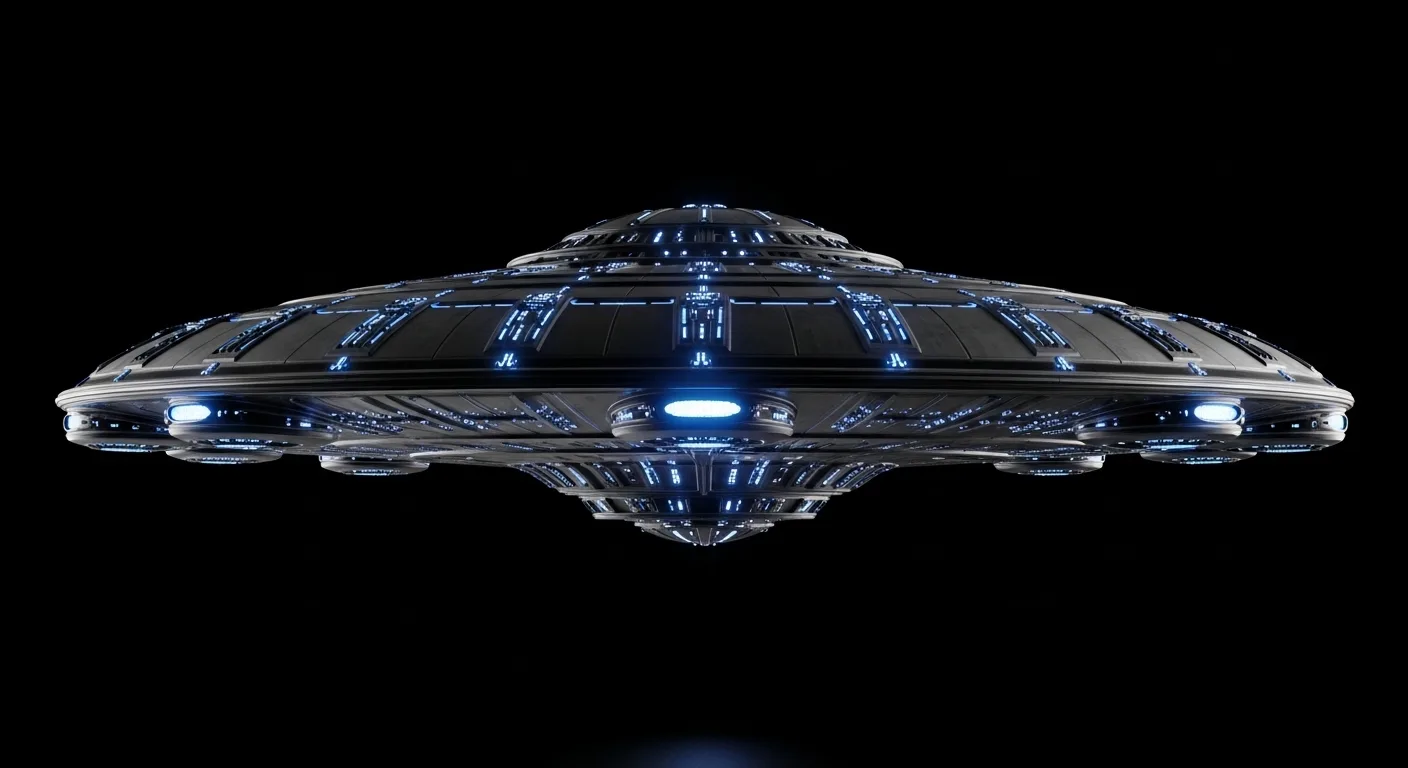
On a clear night in 2018, six commercial aircraft traversing Chilean airspace independently reported the same anomalous lights to air traffic control. The pilots, flying for different airlines along separate routes, each described a triangular formation of brilliant lights that held steady against the night sky, moving in ways that defied their professional understanding of aviation. Within minutes, controllers on the ground found themselves fielding nearly identical reports from crews who had no communication with one another, each describing the same inexplicable sight from different angles and altitudes. The event would become one of the most compelling multi-witness UFO encounters in modern history, not only for the quality and consistency of the testimony but because it occurred in the airspace of the one nation on Earth that has taken the scientific study of unidentified aerial phenomena more seriously and for longer than any other.
A Night Over Chilean Skies
The 2018 sighting unfolded during routine commercial flights over central Chile, in the corridor of airspace that handles some of the country’s heaviest traffic. The skies were clear, visibility was excellent, and the crews aboard six separate aircraft were going about the unremarkable business of ferrying passengers between destinations. There was nothing about the evening that suggested it would produce one of the most significant UFO cases in South American aviation history.
The first report came from a crew that noticed an unusual arrangement of lights at altitude, holding a fixed triangular pattern that did not correspond to any known aircraft configuration. Commercial pilots are trained observers who spend thousands of hours scanning the sky and are intimately familiar with the visual signatures of other aircraft, satellites, celestial bodies, and atmospheric phenomena. When something falls outside the catalogue of known objects, experienced aviators do not report it lightly. The decision to contact air traffic control represented a professional judgment that what they were seeing warranted official attention.
Within a short window of time, five additional crews contacted controllers with strikingly similar observations. The lights maintained their triangular formation with rigid precision, displaying none of the relative drift that would characterize separate objects flying in loose formation. Whatever the pilots were observing appeared to behave as a single structured object, or at the very least as multiple objects locked into a geometric arrangement with extraordinary discipline. The formation did not waver, did not break apart, and did not resemble any military or civilian flight pattern known to the crews.
The descriptions provided by the six crews showed a remarkable degree of consistency despite the fact that each was observing from a different position in the sky. Details about the color of the lights, their relative spacing, and the overall geometry of the formation aligned across all reports. This convergence of testimony from independent professional observers viewing the same phenomenon from multiple vantage points gives the 2018 Chilean sighting an evidential weight that single-witness encounters simply cannot match.
The Weight of Professional Testimony
Understanding the significance of this event requires appreciating exactly who these witnesses were and what their testimony represents. Commercial airline pilots are among the most carefully vetted professionals in any industry. They undergo rigorous psychological screening, maintain strict medical certifications, and operate under regulatory frameworks that demand clear judgment and precise observational skills. Their careers depend on their ability to accurately assess what they see in the sky and to make rapid, correct decisions based on those assessments.
Pilots are also deeply familiar with the phenomena that most commonly produce UFO reports among the general public. They know what Venus looks like near the horizon, how atmospheric conditions can distort the appearance of distant aircraft, what military flares look like as they descend, and how ice crystals in the upper atmosphere can create unusual light effects. They encounter these phenomena routinely and recognize them instinctively. When a trained aviator reports something as unidentified, it carries a professional weight that casual reports from untrained observers cannot claim.
The fact that six separate flight crews, operating for different airlines and flying different routes, simultaneously reported the same object eliminates many of the explanations typically offered for UFO sightings. A single pilot might misidentify a known object under unusual conditions. Two crews might share an uncommon atmospheric illusion. But six independent crews, viewing from different positions and altitudes, all describing the same triangular formation with consistent details, present a much more difficult case to dismiss. The probability that all six crews independently made the same misidentification at the same time is vanishingly small.
Furthermore, the crews had no contact with one another during the sighting. Each reported independently to air traffic control, unaware that other aircraft were observing and reporting the same phenomenon. This eliminates the possibility of social contagion or suggestibility, where one witness’s report influences another’s perception. Each crew’s testimony stands as an independent data point, and the convergence of these independent observations creates a body of evidence far more robust than any single account could provide.
The Triangular Formation
The object or objects reported by the six crews displayed characteristics that set the sighting apart from more ambiguous encounters. The triangular formation of lights was the defining feature, described consistently across all reports. The lights held their positions relative to one another with a precision that suggested either a single solid object with lights at its vertices or multiple objects maintaining formation with a degree of coordination beyond anything in conventional aviation.
The rigidity of the formation was particularly notable. Aircraft flying in formation, even highly trained military display teams, exhibit small variations in their relative positions as pilots make constant micro-corrections. The lights observed over Chile showed no such variation. They appeared locked in place, as if mounted on an invisible frame, maintaining perfect geometric relationships regardless of their movement through the sky.
The behavior of the formation also defied conventional explanation. Witnesses reported that the lights moved in ways inconsistent with known aircraft performance envelopes, though the specific details of these movements have been carefully guarded by investigators. What can be said is that the crews observed maneuvers that exceeded what they understood to be possible for any aircraft type in their experience, and these were professionals whose experience encompassed decades of flight operations.
Perhaps most intriguingly, air traffic control radar did not detect a corresponding target in the area where the crews reported the lights. The absence of a radar return could suggest several possibilities. The object might have been constructed of or coated with materials that absorb radar energy, a stealth characteristic associated with advanced military aircraft. Alternatively, the object might have operated at a size or altitude that placed it outside the effective detection range of the particular radar systems in use. Some researchers have noted that the absence of a radar signature, combined with the visual reports of six professional crews, only deepens the mystery rather than resolving it.
CEFAA and the Official Investigation
The reports from the six flight crews were channeled to CEFAA, Chile’s Comite de Estudios de Fenomenos Aereos Anomalos, or Committee for the Study of Anomalous Aerial Phenomena. CEFAA is a branch of the Direccion General de Aeronautica Civil, Chile’s equivalent of the Federal Aviation Administration, and it operates with full governmental authority and resources. When CEFAA investigates a sighting, it is not a fringe group pursuing a hobby but a state agency fulfilling its mandate to identify and assess potential threats to aviation safety.
CEFAA launched a formal investigation into the 2018 multi-aircraft sighting, applying the methodical protocols that have defined the agency’s work for decades. Investigators conducted detailed interviews with each flight crew, carefully comparing their accounts to identify areas of agreement and any discrepancies. The testimony was cross-referenced with radar data, satellite imagery, weather records, and known military and civilian flight schedules. Astronomical databases were consulted to rule out celestial objects, and atmospheric scientists were brought in to assess whether any known meteorological phenomenon could account for the observations.
The investigation also examined the possibility that the lights were produced by military operations, either Chilean or foreign. Chile maintains close relationships with its military services for exactly this purpose, and CEFAA has the authority to request information about classified operations when necessary to resolve a sighting. In this case, no military activity was identified that could explain what the six crews observed.
After exhaustive analysis, CEFAA concluded that the objects could not be identified. This conclusion was not reached hastily or for lack of effort. It represented the professional judgment of an experienced investigative team that had systematically eliminated every conventional explanation and found that none fit the evidence. The case remains open in CEFAA’s files, classified as an unidentified aerial phenomenon, a designation the agency reserves for cases where the evidence is strong and no prosaic explanation can be sustained.
Chile’s Pioneering UFO Program
The 2018 multi-aircraft sighting and CEFAA’s investigation of it can only be fully appreciated in the context of Chile’s extraordinary history of governmental engagement with unidentified aerial phenomena. Chile has maintained an official UFO investigation program since 1968, making it one of the longest-running state-sponsored efforts of its kind anywhere in the world. While other nations have launched and abandoned their own programs, while official attitudes elsewhere have oscillated between interest and ridicule, Chile has maintained a steady, scientifically grounded commitment to investigating what its pilots and citizens report in its skies.
The origins of Chile’s program lie in a series of sightings during the 1960s that attracted sufficient public and military attention to demand an organized response. Rather than dismissing the reports or burying them in classified files, the Chilean government took the unusual step of creating a formal investigative body within its civil aviation authority. This institutional placement was deliberate and significant. By housing the UFO investigation program within the aviation authority rather than the military or an intelligence agency, Chile signaled that it regarded unidentified aerial phenomena primarily as an aviation safety concern rather than a national security secret.
This approach has had profound implications for the program’s character and credibility. CEFAA operates with a transparency that is rare among government UFO programs worldwide. Its investigations are conducted using scientific methodology, its findings are published and discussed openly, and its leadership has consistently engaged with the international research community. The agency has hosted conferences, published papers, and collaborated with researchers from other countries, contributing to a global understanding of unidentified aerial phenomena while maintaining rigorous investigative standards.
CEFAA’s staff includes aviation experts, meteorologists, astronomers, physicists, and psychologists, reflecting an understanding that explaining unusual aerial phenomena requires a multidisciplinary approach. When a sighting is reported, the investigative team brings all of these perspectives to bear, considering not only what the witness observed but also the atmospheric conditions, the psychological factors that might influence perception, the astronomical events occurring at the time, and the full spectrum of conventional objects and phenomena that might account for the report.
This comprehensive approach has allowed CEFAA to resolve the vast majority of cases it investigates. Most reported sightings, once subjected to careful analysis, turn out to have conventional explanations. Aircraft seen at unusual angles, satellites catching sunlight, weather balloons, atmospheric phenomena, and simple misidentifications account for the bulk of reports. But a residual percentage of cases, typically between five and ten percent, resist all conventional explanation. These are the cases that CEFAA classifies as genuinely unidentified, and the 2018 multi-aircraft sighting is among them.
The longevity and consistency of Chile’s program stand in marked contrast to the experience of other nations. The United States ran Project Blue Book from 1952 to 1969 before shutting it down amid controversy, only to reveal decades later that various classified programs had continued in secret. France established GEIPAN within its space agency, and while it has done excellent work, it has operated with fewer resources and less institutional support than CEFAA. The United Kingdom closed its UFO desk in 2009. Brazil, Argentina, and Peru have maintained programs of varying scope, but none has matched Chile’s combination of longevity, transparency, and scientific rigor.
Chile’s success in maintaining its program can be attributed in part to the country’s culture of respect for scientific inquiry and institutional governance, but also to the simple fact that Chilean airspace produces a steady stream of genuinely puzzling reports. The nation’s geography, with its dramatic range of altitudes from sea level to the high Andes, its long coastline, and its clear southern skies, may contribute to both the frequency and quality of observations. Pilots flying over Chile operate in some of the most visually dramatic airspace on Earth, and they are accustomed to seeing extraordinary natural phenomena. When they report something that falls outside their experience, it commands attention.
The Significance of Multiple Independent Witnesses
The 2018 Chilean sighting occupies a special place in the study of unidentified aerial phenomena because it exemplifies the type of case that is most resistant to dismissal. In the hierarchy of UFO evidence, single-witness visual reports occupy the lowest tier, vulnerable to questions about perception, memory, and credibility. Instrumental recordings, such as radar tracks or infrared video, occupy a higher tier but can be affected by equipment malfunction or misinterpretation. Multiple independent witnesses represent one of the strongest forms of evidence available, particularly when those witnesses are trained professionals whose observational skills are regularly tested and whose careers depend on accurate perception.
The six crews who reported the triangular formation over Chile in 2018 provided exactly this type of evidence. Their independence from one another eliminates collusion. Their professional training eliminates naivety about aerial phenomena. Their consistency eliminates the likelihood of mass misidentification. And the official CEFAA investigation, with its failure to identify the objects despite exhaustive analysis, eliminates the most obvious conventional explanations.
Cases involving multiple independent professional witnesses are rare in the UFO literature, which is precisely what makes them so valuable. When they occur, they force a confrontation with the limits of current knowledge. Either six experienced flight crews simultaneously misidentified a known object in a way that has never been satisfactorily explained, or they observed something genuinely unknown. Neither conclusion is comfortable, and the 2018 Chilean case sits squarely in that space of productive discomfort where genuine inquiry begins.
An Open Question Over Open Skies
The triangular formation that six flight crews observed over Chile in 2018 has never been identified. It appeared without warning in some of the clearest skies on the continent, was witnessed by more than a dozen trained professionals from multiple vantage points, was investigated by one of the world’s most respected aerial phenomena agencies, and remains unexplained. The case file at CEFAA remains open, a testament to the agency’s commitment to honesty over convenience. Where other organizations might have forced a dubious explanation onto the data for the sake of closure, CEFAA allowed the evidence to speak for itself, and the evidence says that something was there that should not have been.
Chile’s skies have been watched more carefully and more honestly than those of almost any other nation, and they continue to produce phenomena that resist explanation. The 2018 multi-aircraft sighting is not an isolated anomaly but rather one entry in a decades-long record of encounters that Chile’s government has had the courage and scientific integrity to document. That record, maintained with rigor and transparency since 1968, represents one of the most valuable datasets in the global study of unidentified aerial phenomena.
For the pilots who witnessed the formation that night, the experience left an indelible mark. These were professionals who had spent careers mastering the sky, who understood its moods and its illusions, who could identify aircraft by their navigation light patterns alone. What they saw over Chile did not fit anything in their considerable experience. They reported it honestly, as their training demanded, and moved on with their duties. But the question of what held those lights in perfect triangular formation, silent and undetectable by radar, visible to six separate aircraft simultaneously, remains unanswered. It hangs in the Chilean sky like the lights themselves, steady and unresolved, waiting for an explanation that has not yet arrived.
Sources
- CIA UFO/UAP Reading Room — Declassified CIA documents on UAP