Belgian Triangle Wave Continues
The Belgian UFO wave peaked with F-16 intercept attempts on March 30, 1990. Radar tracked objects demonstrating impossible acceleration as thousands continued to report massive triangular craft.
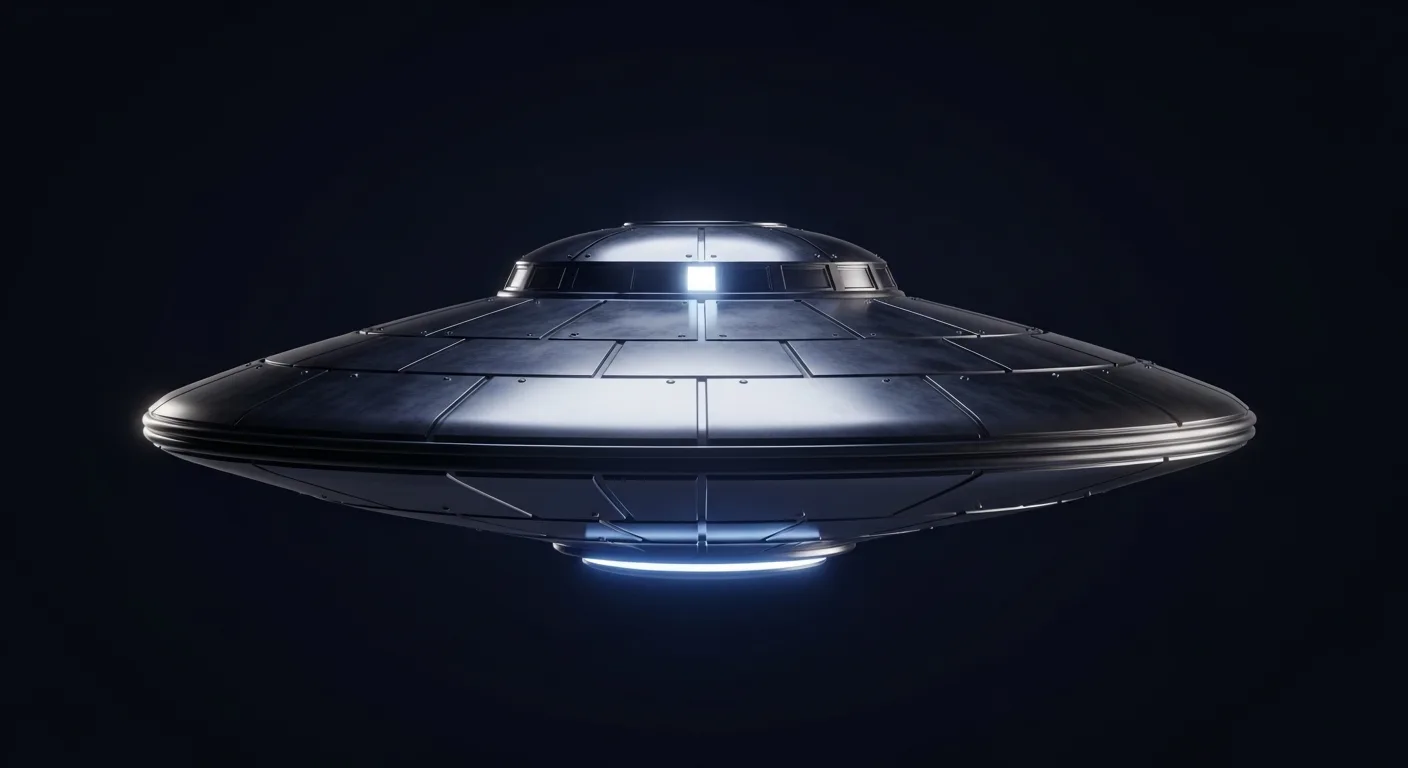
On the night of March 30-31, 1990, the skies over Belgium became the arena for one of the most extraordinary military-UFO encounters ever documented. Belgian Air Force F-16 Fighting Falcons, among the most advanced fighter aircraft in the NATO arsenal, were scrambled from Beauvechain Air Base to intercept unidentified objects that had been tracked on ground radar and reported by thousands of civilians across the country. What the pilots encountered defied every principle of aerodynamics and every assumption about the limits of flight technology. The objects they pursued demonstrated accelerations that would have crushed any human pilot and destroyed any known aircraft—dropping ten thousand feet in seconds, climbing back with equal violence, and breaking radar lock with maneuvers that simply should not have been possible. The Belgian Air Force, in a display of transparency virtually unprecedented in military UFO history, held a press conference, released the radar data, and admitted publicly that it could not explain what its pilots had encountered. The March 30 intercepts represented the peak of the Belgian UFO wave, an eighteen-month period of sustained sightings that produced over thirteen thousand reports and remains one of the most thoroughly investigated UFO episodes in history.
The Wave Builds
The Belgian UFO wave had begun on November 29, 1989, when two gendarmes in the town of Eupen observed a large, triangular object moving slowly and silently overhead. Their sighting was corroborated by numerous other witnesses in the area, and it marked the beginning of a phenomenon that would engulf the country for a year and a half.
Over the following months, reports flooded in from across Belgium. The witnesses came from every stratum of society—police officers, military personnel, airline pilots, engineers, teachers, farmers, and ordinary citizens. They described, with remarkable consistency, a large triangular craft with bright lights at each corner and a pulsating red or orange light at the center. The object was typically described as moving slowly and silently, often at treetop height, sometimes hovering motionless before accelerating away at speeds that no conventional aircraft could match.
The volume of reports was staggering. By the time the wave subsided in 1991, over thirteen thousand individual sightings had been documented. Even accounting for misidentifications, hoaxes, and the amplifying effect of media attention, the numbers were extraordinary. Belgium, a small country with a population of roughly ten million, was experiencing UFO sightings on a scale that dwarfed anything in the historical record.
The Belgian Society for the Study of Space Phenomena, known by its French acronym SOBEPS, undertook a systematic investigation of the reports, working in unprecedented cooperation with the Belgian military. This collaboration between a civilian research organization and an active military establishment was virtually unique in the history of UFO investigation and gave the resulting documentation a credibility that purely civilian or purely military efforts rarely achieve.
The Decision to Scramble
By March 1990, the sightings had been continuing for four months with no sign of abating, and the Belgian Air Force was under increasing pressure to respond. The military had been monitoring the situation with growing concern, not because it believed Belgium was under attack by extraterrestrial forces, but because unidentified objects were operating in Belgian airspace with apparent impunity, and the Air Force had a responsibility to determine what they were.
On the evening of March 30, multiple ground radar stations began tracking unknown objects over Belgian territory. The radar returns were solid and consistent, indicating physical objects of substantial size rather than atmospheric anomalies or electronic artifacts. Simultaneously, reports poured in from civilians and police across the southern part of the country, describing the familiar triangular craft—large, silent, brilliantly lit, and moving with deliberate purpose.
The convergence of radar contacts and visual reports provided the justification the Air Force needed. At approximately midnight, authorization was given to scramble two F-16 fighters from Beauvechain Air Base, located east of Brussels. The pilots were experienced military aviators, trained in interception procedures and thoroughly familiar with the flight characteristics of every aircraft type in the European inventory. They launched into the night sky with a clear mission: find the objects, identify them, and report.
The Pursuit
What followed over the next hour was an exercise in technological humility. The F-16 pilots, guided by ground controllers who were tracking the unknown objects on their screens, attempted to close with their targets and obtain visual identification. They achieved radar lock on multiple occasions—their onboard systems detecting and tracking solid, metallic objects that registered clearly on their instruments. But holding that lock proved impossible.
Each time a pilot obtained radar lock, the target responded with evasive maneuvers of breathtaking violence. The objects accelerated away from the fighters with a rapidity that exceeded anything the pilots had ever encountered or believed possible. Ground radar recorded the same movements, providing independent confirmation of what the airborne instruments were showing. The objects were not phantoms or electronic ghosts—they were physical craft performing maneuvers that defied the laws of physics as understood by aeronautical science.
The most dramatic sequence involved an object that dropped from an altitude of approximately ten thousand feet to just five hundred feet above the ground in a matter of seconds. The descent rate implied an acceleration of roughly forty times the force of gravity—40 Gs. To put this in perspective, the most advanced fighter aircraft in the world are designed to withstand approximately nine Gs for brief periods, and their pilots, even wearing anti-G suits, can endure perhaps twelve Gs for a fraction of a second before losing consciousness. At forty Gs, every known aircraft structure would fail catastrophically, and any living pilot would be killed instantly by the forces involved.
Yet the object did not disintegrate. It did not crash. It reached five hundred feet, decelerated with equal violence, and then climbed back to altitude, resuming its previous position as though the maneuver had been entirely routine. The F-16 pilots, pushing their aircraft to their limits, could not begin to match these performance characteristics. They were chasing something that operated in a realm of flight far beyond human engineering.
The Radar Evidence
The radar data from the March 30 intercepts constitutes some of the most compelling technical evidence in the entire UFO literature. Unlike visual observations, which can be affected by lighting conditions, distance, atmospheric effects, and the limitations of human perception, radar data is objective and quantifiable. The returns recorded on both ground stations and the F-16 onboard systems showed clearly defined targets executing maneuvers that no known aircraft could perform.
The data documented multiple instances of radar lock being obtained and then broken as the targets accelerated beyond the tracking capability of the fighters’ systems. It recorded the extraordinary altitude changes—the ten-thousand-foot drops and the subsequent climbs—with precise measurements of rate and acceleration. And it showed the objects maintaining positions and executing maneuvers with a precision that implied intelligent control rather than random atmospheric behavior.
Belgian Air Force analysts who examined the radar data after the intercepts were unable to identify the objects or explain their performance characteristics. The returns were not consistent with any known aircraft type, any known missile or drone, or any recognized atmospheric phenomenon. They were, in the careful language of the military analysis, genuinely unknown.
The decision to release this radar data publicly was remarkable. Military organizations do not typically share detailed information about the performance and limitations of their tracking systems, and the Belgian Air Force’s willingness to do so reflected both the transparency of its approach and the seriousness with which it treated the case. By releasing the data, the Air Force exposed its own inability to explain what had happened—a admission that required considerable institutional courage.
The Press Conference
On July 11, 1990, Major General Wilfried De Brouwer, chief of the air staff’s operations division, held a press conference at which he presented the findings of the Air Force’s investigation into the March 30 intercepts. De Brouwer’s presentation was measured, professional, and devastatingly honest.
He confirmed that F-16 fighters had been scrambled and had attempted to intercept unknown objects tracked on radar. He confirmed that the pilots had obtained radar lock on multiple occasions and that the locks had been broken by evasive maneuvers of extraordinary performance. He presented the radar data showing the objects’ acceleration and altitude changes. And he admitted, straightforwardly, that the Belgian Air Force could not explain what its pilots had encountered.
De Brouwer did not speculate about the origin of the objects. He did not invoke extraterrestrial hypotheses or engage in sensationalism. He simply presented the facts as the military had documented them and acknowledged that those facts exceeded the Air Force’s ability to explain. It was an exercise in intellectual honesty that stands in stark contrast to the evasions and dismissals that have characterized most military responses to UFO incidents around the world.
The press conference generated enormous international attention. Here was a NATO air force, operating with some of the most advanced military technology in the world, publicly admitting that it had encountered objects of unknown origin that outperformed its best aircraft by an enormous margin. The story was covered by media outlets worldwide, and the Belgian UFO wave became one of the most discussed UFO events of the twentieth century.
The Triangle
Throughout the eighteen months of the Belgian wave, the object most consistently described by witnesses was a large, triangular craft. The triangle was reported by thousands of independent observers across the country, from police officers and military personnel to ordinary citizens, and the descriptions were remarkably uniform.
The craft was typically described as large—estimates varied, but many witnesses suggested a wingspan of fifty to one hundred feet or more. It was dark in color, usually described as black or very dark grey, with bright white lights at each corner of the triangle and a pulsating red or orange light at the center. The lights at the corners were often described as intensely bright, illuminating the ground below the craft with pools of white light.
The most striking characteristic of the triangular craft was its ability to hover motionless and then accelerate to extraordinary speed. Witnesses repeatedly described the object hanging stationary in the sky, sometimes for minutes at a time, before departing with a sudden burst of acceleration that took it from a dead stop to supersonic speed in seconds. This combination of hovering capability and high-speed flight is not possible with any known aircraft design—hovering requires fundamentally different aerodynamic or propulsive characteristics than high-speed forward flight, and no conventional aircraft can transition between the two regimes as seamlessly as the Belgian triangles appeared to do.
The craft was also consistently described as silent or nearly so. Some witnesses reported a faint humming sound at close range, but the vast majority heard nothing at all. An aircraft of the size described, hovering at low altitude, would normally produce enormous noise from its engines or propulsion systems. The silence of the Belgian triangles was, in its own way, as inexplicable as their performance characteristics.
SOBEPS and the Military
The cooperation between SOBEPS and the Belgian military during the wave was groundbreaking. Auguste Meessen, a physicist at the Catholic University of Louvain, and other SOBEPS researchers were given access to military radar data, pilot debriefings, and other information that would normally be classified. In return, SOBEPS provided the military with its own data, including detailed witness interviews, photographic evidence, and analytical reports.
This partnership produced a body of documentation that is extraordinarily thorough and reliable. The witness testimony was collected using standardized interview protocols. The radar data was analyzed by qualified technical personnel. The photographic and video evidence was subjected to rigorous examination. The result was a case file of remarkable depth and quality—one that has withstood decades of scrutiny and remains a foundational document in UFO research.
SOBEPS published its findings in two substantial volumes that detailed the wave’s timeline, the characteristics of the reported objects, the radar data, the military intercept attempts, and the various hypotheses that had been considered and rejected. These publications remain essential reading for anyone interested in the Belgian wave and represent a model for how UFO investigations should be conducted—with rigor, transparency, and intellectual honesty.
Seeking Explanations
Over the three decades since the Belgian wave, numerous conventional explanations have been proposed and tested. Ultra-light aircraft, military stealth technology, atmospheric phenomena, mass hysteria, and various forms of misidentification have all been suggested as possible explanations for the sightings.
None has proven satisfactory. Ultra-light aircraft cannot hover silently, accelerate to the speeds recorded on radar, or perform forty-G maneuvers. Military stealth aircraft of the era—specifically the F-117 Nighthawk and the B-2 Spirit—do not match the descriptions provided by witnesses, cannot hover, and were not operational in Belgian airspace during the period in question. Atmospheric phenomena do not register as solid metallic objects on multiple radar systems simultaneously. And mass hysteria, while it might explain some peripheral reports, cannot account for radar contacts, pilot observations, or the physical characteristics documented by trained military personnel.
The Belgian government has never offered an official explanation for the wave. The Air Force’s position, as expressed by General De Brouwer, remains unchanged: the objects encountered during the March 30 intercepts were genuine unknowns that exceeded the Belgian military’s ability to identify or explain. This honest admission of ignorance is itself remarkable and distinguishes the Belgian wave from the majority of military UFO cases, where official explanations—however implausible—are typically imposed regardless of the evidence.
A Legacy of Transparency
The Belgian UFO wave of 1989-1991 endures as one of the most important episodes in the history of UFO research, not only because of the extraordinary events it encompassed but because of the extraordinary way in which those events were handled. The Belgian military’s decision to cooperate with civilian researchers, release its data, and publicly acknowledge its inability to explain what had occurred set a standard that few other military establishments have matched.
The March 30, 1990, F-16 intercepts represent the centerpiece of this legacy. The combination of ground radar contacts, airborne radar locks, pilot testimony, and ground witness observations creates a multi-layered body of evidence that is extremely difficult to dismiss. Each layer independently corroborates the others: the ground radar shows objects that the pilots pursued; the pilots confirm the maneuvers that the radar recorded; the ground witnesses describe craft consistent with the radar returns and the pilot reports. The evidence is not a single thread but a rope of interwoven strands, each strengthening the others.
Whatever flew over Belgium during those eighteen months—whatever executed those impossible maneuvers, whatever shrugged off F-16 intercepts as though they were irrelevant, whatever hovered silently over towns and farms and highways while thousands of people watched in wonder—it remains unexplained. The radar data is still there, the pilot reports are still on file, and the thirteen thousand witnesses still remember what they saw. The Belgian triangle wave was real. The military confirmed it. The evidence supports it. And no one, in more than three decades of trying, has been able to explain it away.
Sources
- CIA UFO/UAP Reading Room — Declassified CIA documents on UAP