Japan Air Lines Flight 1628
A Japanese cargo plane was followed by a UFO the size of two aircraft carriers over Alaska. The captain, with 29 years experience, watched it for 50 minutes. FAA radar confirmed an object. The FAA chief who investigated went public—he was silenced.
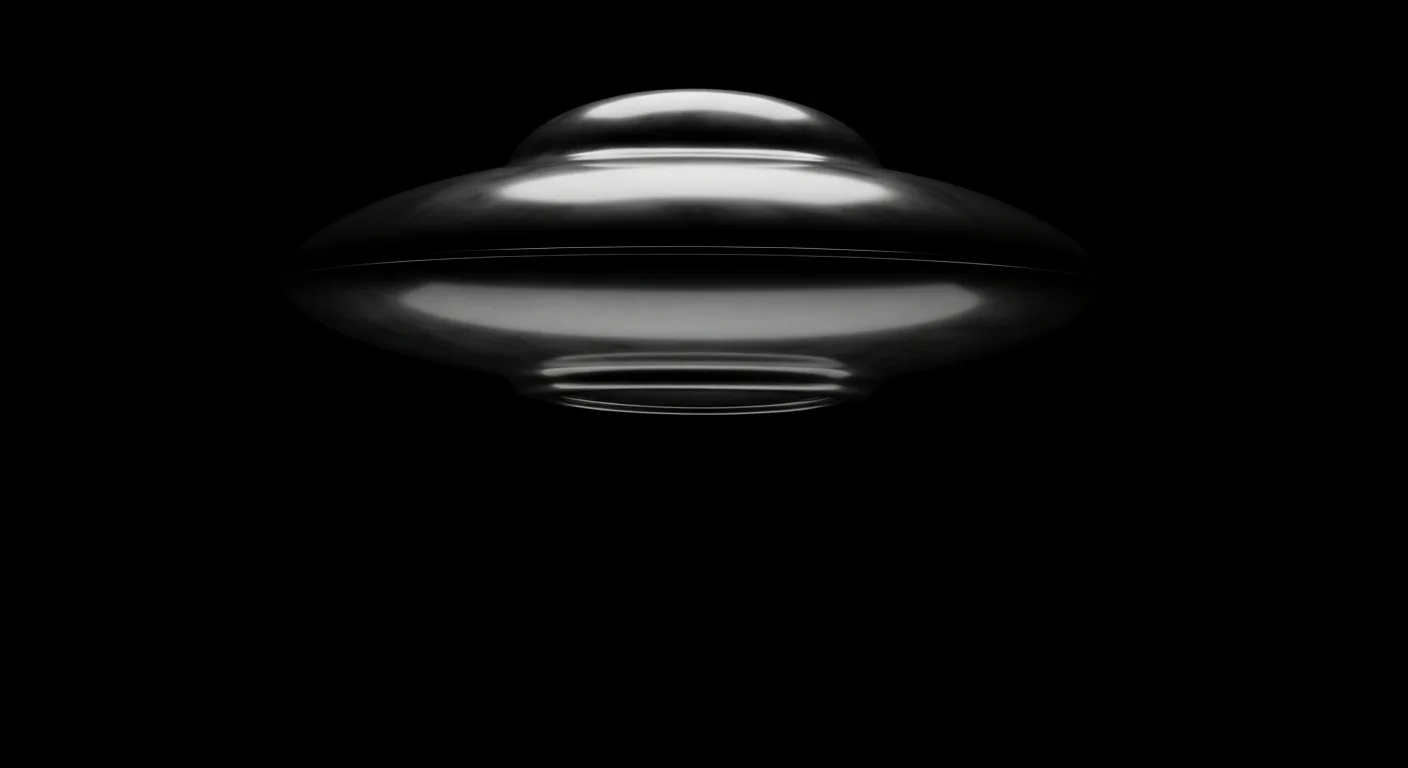
On the evening of November 17, 1986, a Boeing 747 cargo freighter designated Japan Air Lines Flight 1628 was making its way across the frozen wilderness of interior Alaska, carrying a load of Beaujolais wine from Paris to Tokyo with a refueling stop in Anchorage. The sun had already set over the subarctic landscape far below, and the aircraft was cruising at 35,000 feet in clear, calm conditions. What happened over the next fifty minutes would become one of the most credible and thoroughly documented UFO encounters in aviation history—a case involving an experienced flight crew, ground-based and airborne radar confirmation, and a subsequent investigation that revealed the involvement of the Central Intelligence Agency. The incident would end one pilot’s career, haunt an FAA division chief for decades, and raise questions about what the United States government knows about unidentified objects in its airspace that remain unanswered to this day.
Captain Kenju Terauchi
To appreciate the weight of the testimony that emerged from Flight 1628, one must first understand the man in the left seat. Captain Kenju Terauchi was no wide-eyed enthusiast prone to fanciful interpretations of atmospheric phenomena. He was a former fighter pilot with the Japanese Air Self-Defense Force who had transitioned to commercial aviation and accumulated over 10,000 hours of flight time across twenty-nine years of professional flying. He had flown routes across the Pacific, through the turbulent skies of Southeast Asia, and over some of the most remote terrain on the planet. He knew what stars looked like through a cockpit windscreen. He knew how ice crystals refracted light at altitude. He knew the difference between another aircraft’s navigation lights and something that defied every frame of reference he had ever relied upon.
Accompanying Terauchi on the flight deck were co-pilot Takanori Tamefuji and flight engineer Yoshio Tsukuba. Between the three of them, they represented a combined wealth of aviation experience that made their subsequent testimony extraordinarily difficult to dismiss. These were not passengers peering nervously through cabin windows—they were trained professionals whose daily work required precise observation, calm judgment under pressure, and the ability to accurately identify objects and phenomena in the sky.
First Contact Over Eastern Alaska
Flight 1628 had entered Alaskan airspace from the Canadian border and was proceeding westward toward Anchorage under the guidance of Anchorage Air Route Traffic Control Center. At approximately 5:09 PM local time, as the aircraft flew over the desolate terrain northeast of Fairbanks, Captain Terauchi noticed lights below and to the left of the aircraft. At first, he assumed they belonged to military traffic—Eielson Air Force Base and Fort Wainwright were both in the general vicinity, and military aircraft were not uncommon in the area. He thought little of it and continued monitoring his instruments.
But the lights did not behave like military aircraft. Instead of maintaining a steady course or receding into the distance, they began to pace Flight 1628, matching its speed and altitude with an ease that suggested deliberate intent. Over the next several minutes, the lights drew closer, and Terauchi’s initial indifference turned to focused attention. He alerted his crew, and all three men began watching the objects intently through the cockpit windows.
What they saw defied easy categorization. Two smaller objects had positioned themselves roughly five hundred to one thousand feet ahead of the 747, slightly below its altitude. They appeared to be rectangular or square in shape, and each emitted a warm, glowing light that Terauchi later compared to the exhaust of rocket engines. The objects were arranged in a stacked formation, one above the other, and they moved with a fluid precision that no conventional aircraft could replicate. Most strikingly, they seemed to periodically emit bursts of brighter light in what Terauchi described as a “firing” pattern—sudden flares that lit up the cockpit interior with enough intensity to warm his face.
Co-pilot Tamefuji confirmed the sighting, describing the lights as “belching” or pulsing with amber and whitish-yellow flames. Flight engineer Tsukuba, watching from his station behind the pilots, could also see the objects clearly. For roughly seven minutes, the two smaller craft maintained their position ahead of the 747, keeping perfect pace with an aircraft traveling at approximately 530 miles per hour. Then, as abruptly as they had appeared, the two objects rearranged themselves into a side-by-side formation and moved away to the left.
The Mothership
It was at this point that the encounter escalated from remarkable to almost incomprehensible. As the two smaller objects departed, Captain Terauchi looked to his left and saw something that would haunt him for the rest of his life. An enormous object had appeared in the darkness, silhouetted against the faint ambient light of the Alaskan horizon. Terauchi struggled to find words adequate to describe its size. In his subsequent report, he compared it to “two aircraft carriers,” a comparison that suggested an object several thousand feet across. Its shape, as best he could determine in the darkness, was that of a giant walnut—a flattened sphere or disc with an irregular, perhaps segmented surface.
The massive object was not directly ahead or behind the aircraft. It hung in the sky to the port side, slightly behind the 747’s wing, at what Terauchi estimated to be a distance of several miles. Despite this distance, the sheer scale of the thing was overwhelming. Terauchi later drew diagrams for investigators showing an object that dwarfed his 747 in the way a house might dwarf a housefly. He was a man accustomed to judging the size and distance of objects in the sky—it was a fundamental skill of his profession—and he was absolutely certain that what he was looking at was something of extraordinary dimensions.
The object appeared to have a faintly luminous quality, not brightly lit like the two smaller craft but visible against the night sky as a pale, defined shape. Terauchi believed it might be the “mothership” from which the two smaller objects had originated, though he acknowledged this was speculation. What was not speculation was its behavior: the enormous object tracked Flight 1628 as it continued toward Anchorage, maintaining its relative position with the same effortless precision the smaller craft had demonstrated.
The Radio Call
Captain Terauchi, whatever private awe or fear he may have been experiencing, was first and foremost a professional aviator responsible for the safety of his aircraft and crew. He keyed his radio and contacted Anchorage Center, reporting the presence of unidentified traffic. The controller on duty, whose recordings would later become crucial evidence, asked Terauchi to describe what he was seeing. The captain did so as calmly and precisely as his English allowed, conveying the essential facts: unknown objects, enormous size, matching his speed and course.
Anchorage Center checked with military radar facilities in the area. The initial response from the military was that they had nothing on their scopes in the vicinity of Flight 1628. However, the FAA’s own radar, operated from Anchorage Center, intermittently painted a return in the location where Terauchi reported the massive object. The radar return was not consistent—it appeared and disappeared—but when it appeared, it correlated with the captain’s visual report of the object’s position relative to his aircraft.
A United Airlines flight in the area was asked if it could divert to visually confirm the object, but by the time the airliner approached the general area, the encounter was drawing to a close. The enormous object had begun to recede, gradually falling back and fading from view as Flight 1628 made its approach into Anchorage. The entire encounter, from the first sighting of the two smaller objects to the final disappearance of the massive craft, had lasted approximately fifty minutes.
The FAA Investigation
Japan Air Lines Flight 1628 landed uneventfully in Anchorage, and Captain Terauchi and his crew were met by FAA officials who took detailed statements from all three men. The case was assigned to the FAA’s Alaskan Region for investigation, and it quickly became clear that this was no routine UFO report to be filed and forgotten. The caliber of the witnesses, the duration of the encounter, the radar data, and the recorded radio communications made this one of the most substantiated cases the FAA had ever encountered.
The investigation was overseen by John Callahan, who at the time served as the Division Chief of the Accidents and Investigations branch of the FAA. Callahan was a career aviation safety professional—pragmatic, evidence-driven, and not predisposed to believing in flying saucers. When he first heard about the incident, he was skeptical. “I figured there had to be a simple explanation,” he later recounted. “Split radar returns, atmospheric phenomena, something mundane. That’s how these things usually turn out.”
Callahan ordered the retrieval of all data associated with the event: the radar tapes from Anchorage Center, the voice recordings between Flight 1628 and air traffic control, the radar data from the military installations, and the written reports from the flight crew. He assembled his technical staff and began the painstaking process of reconstructing the encounter minute by minute.
What the data showed troubled him. The radar returns, while intermittent, appeared to show a primary target in the position described by Captain Terauchi. Callahan’s technicians replayed the radar data repeatedly, attempting to find a conventional explanation—a split return from the 747 itself, ground clutter from the mountains below, or weather phenomena. While some of the returns could potentially be explained by such factors, others were more difficult to dismiss. The correlation between the radar data and the pilot’s real-time radio reports was particularly compelling.
The CIA Briefing
What happened next transformed the Flight 1628 case from an unusual aviation incident into something far more troubling. Within days of the story becoming public—news of the encounter had leaked to the press, generating headlines around the world—Callahan was instructed to present his findings at a high-level briefing. He assumed it would be a standard presentation to FAA management. He was wrong.
When Callahan arrived at the briefing room, he found it occupied not only by FAA officials but also by representatives of the Central Intelligence Agency, the FBI, and President Reagan’s scientific staff. The presence of the CIA was startling—this was an aviation safety matter, squarely within the FAA’s jurisdiction, and Callahan could think of no reason why the intelligence community would be involved.
Callahan presented his data methodically: the radar tapes, the voice recordings, the crew statements, the timeline of events. The assembled officials watched and listened without interruption. When the presentation concluded, the CIA representatives spoke. According to Callahan’s account, they were primarily interested in one thing: containment. They wanted to know who had seen the data, who had copies of what, and how the information could be controlled.
The CIA officials then told everyone present that the meeting had never taken place and that they were not to speak of the incident publicly. All data, recordings, and documentation related to the encounter were to be turned over. “This event never happened,” Callahan recalled being told. “We were the only people in the world who had the data.” The implication was clear: the incident was to be buried.
Silencing the Pilot
Captain Terauchi fared poorly in the aftermath of his honesty. Having reported the encounter through proper channels and cooperated fully with investigators, he might reasonably have expected his professionalism to be recognized. Instead, Japan Air Lines, under pressure from sources that remain unclear, removed Terauchi from flight duty and reassigned him to a desk job. The message to other pilots was unmistakable: report a UFO, lose your career.
Terauchi never recanted his account. In interviews given over the following years, he maintained every detail of what he and his crew had witnessed over Alaska. His descriptions remained consistent, his demeanor that of a man who had seen something extraordinary and could not understand why the truth of it was being suppressed. The demotion and professional humiliation he endured did nothing to alter his testimony, which, if anything, lends it greater credibility—a man fabricating a story for attention would likely have recanted when the attention turned punitive.
Co-pilot Tamefuji and flight engineer Tsukuba also stood by their accounts, though both were less vocal than their captain. Their descriptions of the two smaller objects were consistent with Terauchi’s, though neither had as clear a view of the massive craft that appeared later in the encounter. The consistency among the three witnesses, despite the professional consequences they faced, has been cited by researchers as powerful evidence for the reality of the event.
John Callahan Goes Public
The CIA’s instruction to forget the incident might have succeeded were it not for one crucial detail: John Callahan had not turned over everything. Before the briefing, suspecting that something unusual was afoot, Callahan had made copies of the radar data, the voice recordings, and the key documents. He kept these copies in his possession for over a decade, saying nothing publicly but unable to reconcile his conscience with the suppression of what he believed to be legitimate evidence of an extraordinary event.
In 2001, Callahan stepped forward as part of the Disclosure Project, a public initiative organized by Dr. Steven Greer that brought together military, intelligence, and government witnesses willing to testify about UFO encounters. Before assembled media at the National Press Club in Washington, D.C., Callahan presented his preserved data and told the full story of the Flight 1628 investigation and the subsequent CIA intervention.
His testimony was remarkable for its matter-of-fact delivery. Callahan was not a wild-eyed believer making extraordinary claims without evidence—he was a senior FAA official presenting documented data and describing events he had personally witnessed. He produced the radar tapes, played the voice recordings, and walked through the timeline of the encounter with the same methodical precision he had used in the original briefing years earlier.
“When the strategy was to lie about it and confiscate the data, that told me something,” Callahan stated. “If this was just some atmospheric anomaly, why would the CIA be involved? Why would they want to take all the data? They weren’t trying to explain it—they were trying to make it go away.”
The Evidence Endures
The Japan Air Lines Flight 1628 encounter stands apart from the vast majority of UFO reports for several critical reasons. First, the primary witnesses were aviation professionals with decades of combined experience, trained to observe and identify objects in the sky. Second, the encounter lasted approximately fifty minutes—an eternity compared to the fleeting glimpses that characterize most sightings. Third, the crew’s real-time radio reports to air traffic control were recorded, providing a contemporaneous account that cannot be dismissed as embellished memory. Fourth, FAA radar data, however intermittent, showed returns consistent with the crew’s visual reports. And fifth, the subsequent involvement of the CIA and the deliberate suppression of the data suggest that at least some elements within the government took the encounter very seriously indeed.
Skeptics have offered alternative explanations over the years. Some have suggested that the crew misidentified the planets Jupiter and Mars, which were visible in the Alaskan sky that evening. Others have proposed that the radar returns were caused by atmospheric ducting or split returns from the 747 itself. Still others have speculated that ice crystals or other atmospheric phenomena could have created the illusion of enormous objects. Each of these explanations, however, struggles to account for the full scope of the encounter—the extended duration, the described movements of the objects, the warmth felt on Terauchi’s face from the smaller craft’s emissions, and the enormous apparent size of the primary object.
The Japanese crew had nothing to gain and everything to lose by reporting what they saw. Captain Terauchi’s subsequent grounding proved that the professional consequences of such honesty were severe. That he and his crew reported the encounter anyway, through official channels and with meticulous detail, speaks to either the authenticity of their experience or to a shared delusion of remarkable specificity and duration—an explanation that strains credulity at least as much as the encounter itself.
Legacy of Flight 1628
The case of Japan Air Lines Flight 1628 has become a touchstone in the study of unidentified aerial phenomena, cited repeatedly in congressional hearings, documentary films, and serious academic analyses of the UFO question. John Callahan’s preserved data remains among the most concrete physical evidence ever produced in connection with a UFO encounter, and his testimony about the CIA’s involvement has fueled broader questions about what the American government knows and conceals regarding objects in its airspace.
For Captain Terauchi, the encounter over Alaska defined the final chapter of a distinguished aviation career. He was eventually returned to flight status by Japan Air Lines, but the shadow of the incident followed him until his retirement. He gave his last known interviews in the early 1990s, still maintaining every detail of what he had witnessed, still puzzled by the hostility his honesty had provoked.
The skies over interior Alaska remain among the most remote and least surveilled airspace in North America. The route that Flight 1628 was traveling that November evening is still flown daily by cargo and passenger aircraft transiting between Asia and the rest of the world. The crews of those flights look out at the same vast darkness, the same star-strewn sky above the same frozen wilderness, and most see nothing unusual. But Captain Terauchi and his crew saw something in that darkness—something enormous, something deliberate, something that the most powerful intelligence agencies on Earth apparently preferred the world not know about. Whatever followed Flight 1628 across the Alaskan sky that night, the full truth of it remains, like the object itself, just beyond the reach of certainty.
Sources
- Japan Air Lines Cargo Flight 1628 — Wikipedia
- CIA UFO/UAP Reading Room — Declassified CIA documents on UAP