Bauru Humanoid Encounter
Topographer José Higgins reported that humanoid figures emerged from a landed disc-shaped UFO near Bauru, Brazil in 1947. The beings were about 7 feet tall, wore transparent suits, and attempted to communicate using drawings. One of Brazil's earliest close encounter reports.
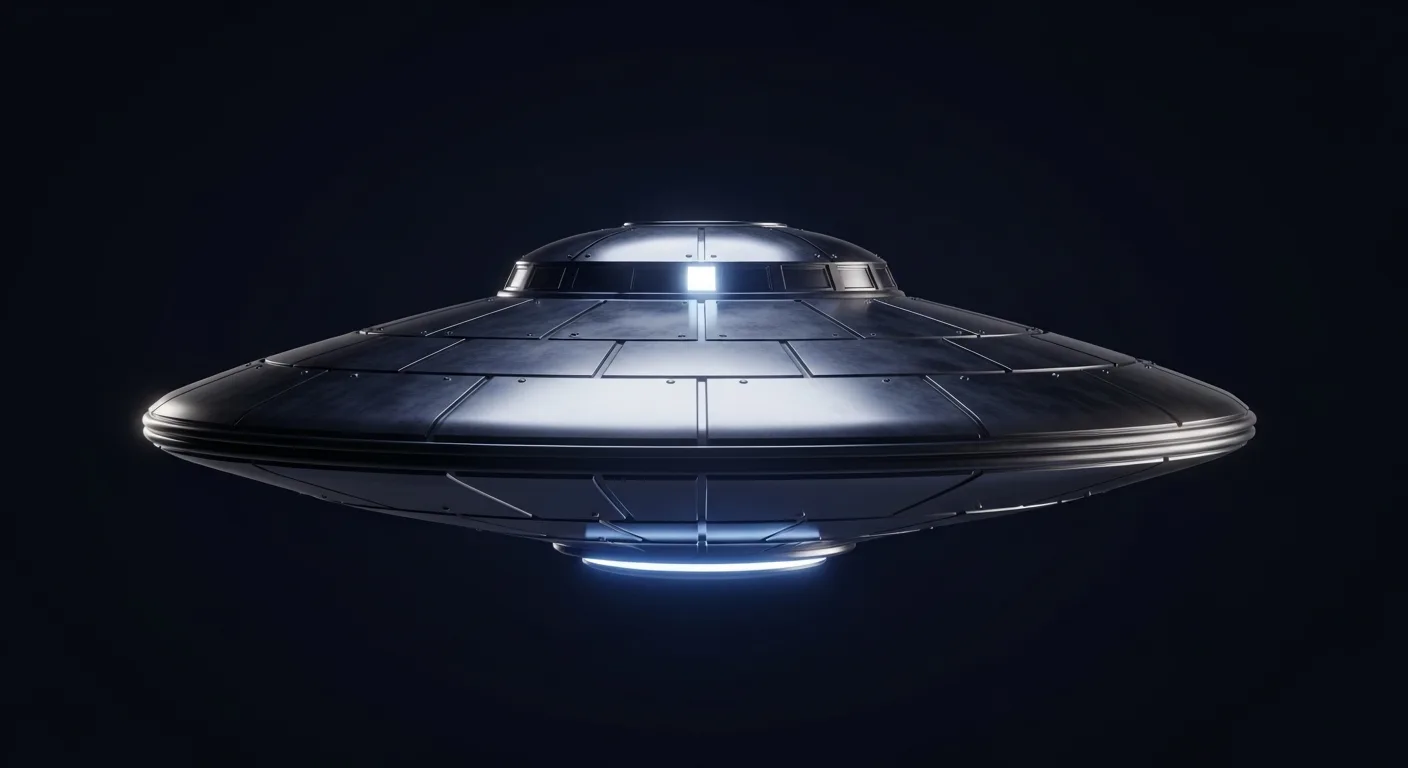
In July 1947, the same year that UFO fever gripped the United States following the Kenneth Arnold sighting and the Roswell incident, Brazil experienced its own remarkable close encounter. A professional topographer named José Higgins reported that humanoid beings emerged from a landed spacecraft and attempted to communicate with him using drawings. The Bauru encounter stands as one of South America’s earliest and most detailed reports of direct contact with apparent extraterrestrial beings.
The Witness
José C. Higgins was a topographer, a professional surveyor whose work required precision, careful observation, and accurate documentation of what he saw. He was employed in the field near the city of Bauru in São Paulo state, conducting measurements and surveys of the terrain. His profession made him an unusually credible witness for extraordinary claims.
Higgins had no prior interest in flying saucers or extraterrestrial life. The UFO phenomenon was only just emerging into public consciousness in 1947, and detailed accounts of humanoid occupants were extremely rare. What Higgins experienced that day came without any cultural template to shape his expectations.
The encounter occurred while Higgins was working alone in a rural area outside Bauru. The isolation of the location meant there were no other witnesses, but the detailed and consistent nature of his account has made it an important case in UFO research.
The Landing
In the afternoon of July 23, 1947, Higgins heard a loud whistling sound overhead. Looking up, he observed a disc-shaped object descending toward the ground. The craft was large, estimated at approximately 150 feet in diameter, and appeared to be made of some kind of gray metal.
The object landed in a clearing not far from where Higgins was working. He watched, transfixed, as the craft settled onto the ground. An opening appeared in the side of the disc, and from within, figures began to emerge.
Higgins’s first instinct was to run, but curiosity held him in place. The beings did not appear threatening, and their manner seemed more curious than aggressive. Against his better judgment, he remained to observe what would unfold.
The Beings
Three humanoid figures emerged from the landed craft. They were remarkably tall, standing approximately seven feet in height. Their physical proportions were similar to humans, but their heads appeared disproportionately large, with high, rounded skulls.
The beings wore what Higgins described as transparent suits or garments that allowed him to see their bodies beneath. Their skin appeared pale, and their features, while humanoid, had an unusual quality that Higgins found difficult to describe. Large eyes dominated their faces.
The beings moved with slow, deliberate grace. They showed no signs of hostility toward the human observer. Instead, they appeared to regard Higgins with the same curiosity that he felt toward them. Their manner suggested intelligence and purpose.
Attempted Communication
The beings approached Higgins and attempted to communicate. They produced what appeared to be a metallic sheet or surface and began making drawings. The drawings depicted circles of varying sizes, apparently representing celestial bodies.
Higgins interpreted the drawings as a representation of the solar system. The beings seemed to be indicating their point of origin by pointing to one of the outer circles in their diagram. Higgins believed they were indicating Saturn or one of its moons as their home.
The communication attempt was limited by the obvious barrier of language. The beings made sounds that Higgins could not understand, and his own words appeared equally meaningless to them. The drawings were their best attempt at bridging the gap between species.
At one point, the beings appeared to gesture that Higgins should come with them into the craft. Whether this was an invitation or something more insistent is unclear, but Higgins declined. He began backing away, and the beings did not attempt to force the issue.
The Departure
After the failed communication attempt, the beings returned to their craft. The opening in the side of the disc closed, and the whistling sound began again. The object lifted off the ground, rising slowly at first and then accelerating rapidly until it disappeared from view.
Higgins was left standing alone in the field, his surveying work forgotten. The entire encounter had lasted perhaps fifteen to twenty minutes, but it had changed his understanding of reality. He had seen beings from somewhere else, and they had tried to tell him where they came from.
The topographer returned to Bauru and reported what he had experienced. His account attracted attention from researchers interested in the emerging UFO phenomenon, and his testimony was documented in the weeks following the encounter.
Historical Context
The Bauru encounter occurred during the great UFO wave of 1947. In June of that year, pilot Kenneth Arnold had reported seeing nine disc-shaped objects flying near Mount Rainier, coining the term “flying saucer” and launching the modern UFO era. In July, something crashed near Roswell, New Mexico, generating controversy that continues to this day.
The timing of Higgins’s encounter, just weeks after these American incidents made headlines worldwide, has led some skeptics to suggest influence or fabrication. However, the level of detail in Higgins’s account, particularly the description of the beings and their communication attempt, goes well beyond what was available in news reports of the time.
Brazil would go on to become one of the world’s most active countries for UFO sightings and close encounters. The Bauru incident was merely the first of many Brazilian cases that would contribute to the global UFO phenomenon.
The Drawings
The element of Higgins’s account that researchers found most intriguing was the beings’ use of drawings to communicate. This suggested intelligence and intent beyond mere curiosity. The drawings indicated that the beings understood concepts of celestial mechanics and wished to convey information about their origin.
The Saturn indication is particularly interesting. In 1947, knowledge of the outer solar system was limited, and Saturn’s moons were poorly understood. If the beings were genuinely trying to communicate their origin, they were pointing to a location that held no special significance for humans at the time.
Later encounters around the world would include similar communication attempts, with beings showing witnesses drawings of star systems or planetary configurations. Whether these represent a consistent phenomenon or cultural contamination from earlier reports remains debated.
Credibility Assessment
The Bauru encounter rests on the testimony of a single witness, making it impossible to verify through independent corroboration. However, several factors support the credibility of Higgins’s account. His professional background as a surveyor indicates training in accurate observation. His report was made promptly, before extensive media coverage could influence his memory.
The detailed description of the beings and their communication attempt contains elements that were unusual for 1947 and suggest either genuine experience or remarkable imagination. Higgins maintained his account consistently over the years and did not seek publicity or profit from his experience.
The case remains classified as unexplained in Brazilian UFO research files. Whatever José Higgins encountered in that field near Bauru, he believed it was real. The drawings the beings showed him, pointing toward the stars, suggested that humanity might not be alone in the universe.
Sources
- Project Blue Book — National Archives — USAF UFO investigation files, 1947–1969
- CIA UFO/UAP Reading Room — Declassified CIA documents on UAP