Trans-en-Provence Landing
On January 8, 1981, farmer Renato Nicolai witnessed a disc-shaped craft land on his property in Trans-en-Provence, France, and then quickly take off. GEPAN, France's official UFO investigation group, conducted an extensive scientific study of the landing site. They found physical traces and biochemical changes in plants that could not be explained by any known phenomenon.
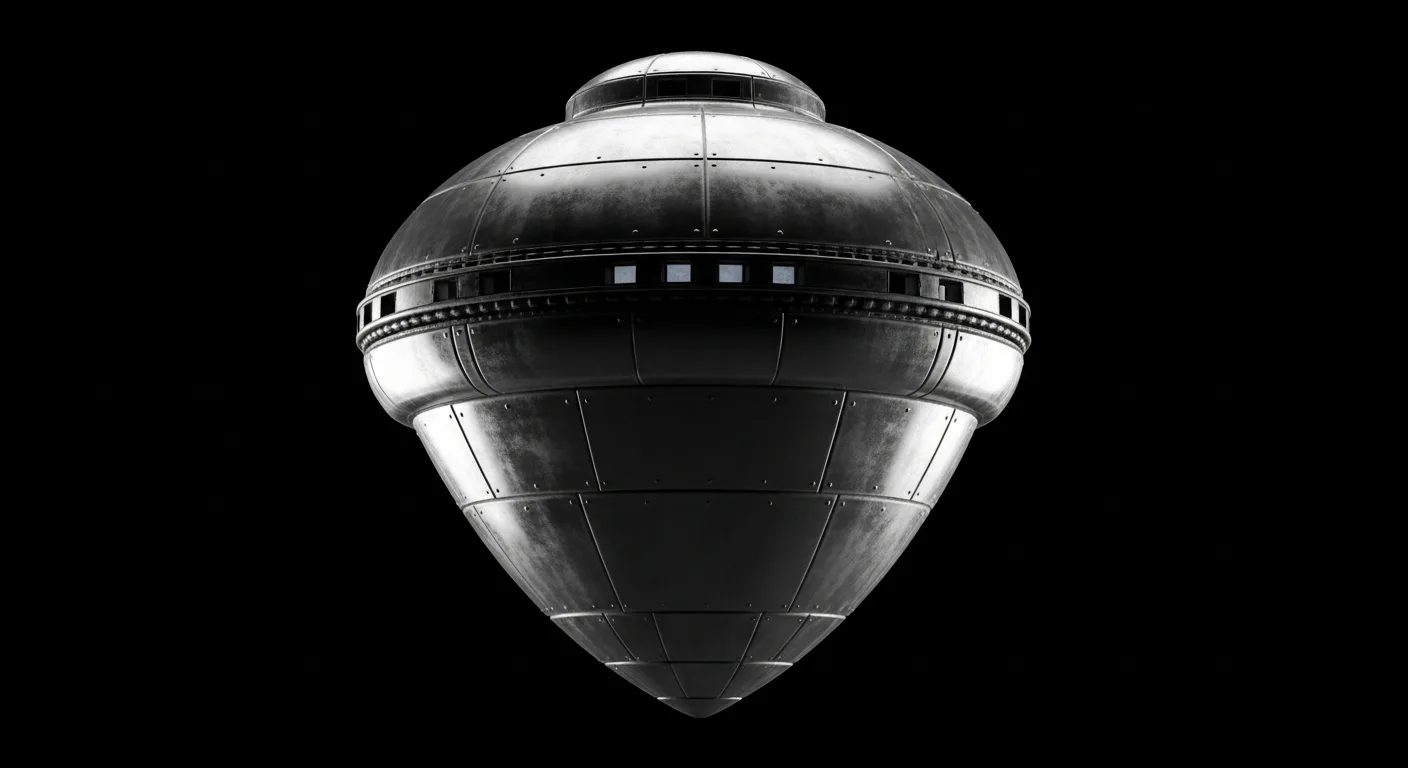
The Trans-en-Provence case is considered one of the most scientifically studied UFO landings in history. When a French farmer reported a craft landing on his property, France’s official aerospace UFO investigation team conducted an extensive analysis of the site. What they found – physical traces and unexplained biochemical changes in vegetation – represents some of the strongest physical evidence in UFO research.
January 8, 1981
The incident occurred in the afternoon: The time was approximately 5:00 PM. The location was Renato Nicolai’s property in Trans-en-Provence, a small town in southeastern France. The weather was clear winter afternoon. Activity included Nicolai working on his terraced garden.
The Witness
Renato Nicolai was a working farmer: He was a retired mason, working his property. He was known in the community as practical and honest. He had no prior interest in UFOs. He was reluctant to report the incident, fearing ridicule.
The Sighting
Nicolai heard something unusual: He heard a faint whistling noise caught his attention. He saw an object descending. The craft was a disc-shaped, lead-colored object, about 2.5 meters in diameter. It touched down on a terraced level of his property. The duration of the landing was about 20-30 seconds.
The Craft Description
Nicolai described what he saw clearly: The shape was disc-shaped, like two plates placed face to face. The color was dull, lead gray. The size was approximately 2.5 meters (8 feet) in diameter. The height was about 1.5 meters tall. He noted what appeared to be a rim or ridge around the circumference. The sound was a low whistling, quieter than an aircraft.
The Departure
The craft left as suddenly as it arrived: It rose vertically. He noted a trail or emission from beneath. The direction it flew away was to the northeast. The speed at which it departed was very quickly. The whistling increased as it took off.
The Landing Trace
Nicolai found evidence where the craft had been: A circular mark was visible on the ground. The dimensions of the mark were approximately 2 meters in diameter. There were scorch marks on the vegetation and soil appeared affected. He protected the area for investigators.
GEPAN Investigation
France’s official UFO research body responded: GEPAN (Groupe d’Études des Phénomènes Aérospatiaux Non-identifiés) was part of the French space agency CNES. Investigators arrived within days. They conducted a rigorous scientific analysis. Samples of soil and plant were collected and tested.
The Physical Evidence
The investigation found significant traces: Clear circular marks consistent with Nicolai’s account were found. Soil analysis showed signs of heating and compression. Plant effects showed abnormalities. No significant radiation was detected.
Plant Analysis
The vegetation analysis was groundbreaking: Significant changes in chlorophyll levels were found. The plants showed accelerated aging. The effects radiated outward from the center. Unaffected plants from the same area were tested for comparison. No known process could account for the changes.
Michel Bounias
A professor of biochemistry conducted plant analysis: Dr. Bounias was a respected scientist at INRA (National Institute for Agricultural Research). He documented significant biochemical changes in the plants. His findings were published in scientific journals. The conclusion was that the changes were real but unexplained.
The GEPAN Report
The official conclusions were remarkable: GEPAN concluded that something real had occurred. The traces were genuine and not fabricated. No conventional explanation fit the evidence. Technical analysis found evidence of intense heating and mechanical pressure.
Soil Analysis
The ground showed measurable effects: The soil was compressed as if by weight. Evidence suggested temperatures of 300-600°C. The soil was altered in color and composition. The effects were consistent with something landing.
Skeptical Analysis
Critics have raised questions: Only Nicolai saw the craft itself. Could his memory be unreliable? Could the ground effects have another explanation? The plant biochemistry evidence is difficult to explain otherwise.
The Scientific Method
The investigation set a standard: Investigators arrived before evidence degraded. Laboratory analysis was performed by multiple labs. Control samples established baselines. Everything was thoroughly documented. Results were published for peer review.
Comparison to Other Cases
The evidence stands out: Physical traces were few in UFO cases with such well-documented physical evidence. The level of scientific analysis is exceptional. It was studied by a government scientific body. The findings were verified by independent scientists.
The Witness’s Later Life
Nicolai maintained his account: His story never changed. He remained modest about the event. He never tried to profit from the experience. Investigators found him completely credible.
Legacy
The Trans-en-Provence case matters because a government scientific body investigated immediately. Physical traces were documented and analyzed. Plant biochemistry showed unexplained changes. The evidence was published in scientific journals. It remains one of the best-documented landing cases.
Significance
This case represents a model for how landing cases should be investigated. It contains rare, well-documented physical traces. It was recognized by France’s serious approach to UFO investigation. It endures as an enduring mystery that remains unexplained by conventional science.
Whatever landed on Renato Nicolai’s farm that January afternoon left marks in the soil and changes in the plants that scientists could measure but not explain. Trans-en-Provence remains a touchstone for those who believe UFOs leave behind evidence we can study.
Sources
- CIA UFO/UAP Reading Room — Declassified CIA documents on UAP