Manises UFO Incident
A commercial airliner was forced to make an emergency landing after a massive UFO came within 150 feet of collision. Spanish Air Force jets scrambled but the object demonstrated impossible maneuvers.
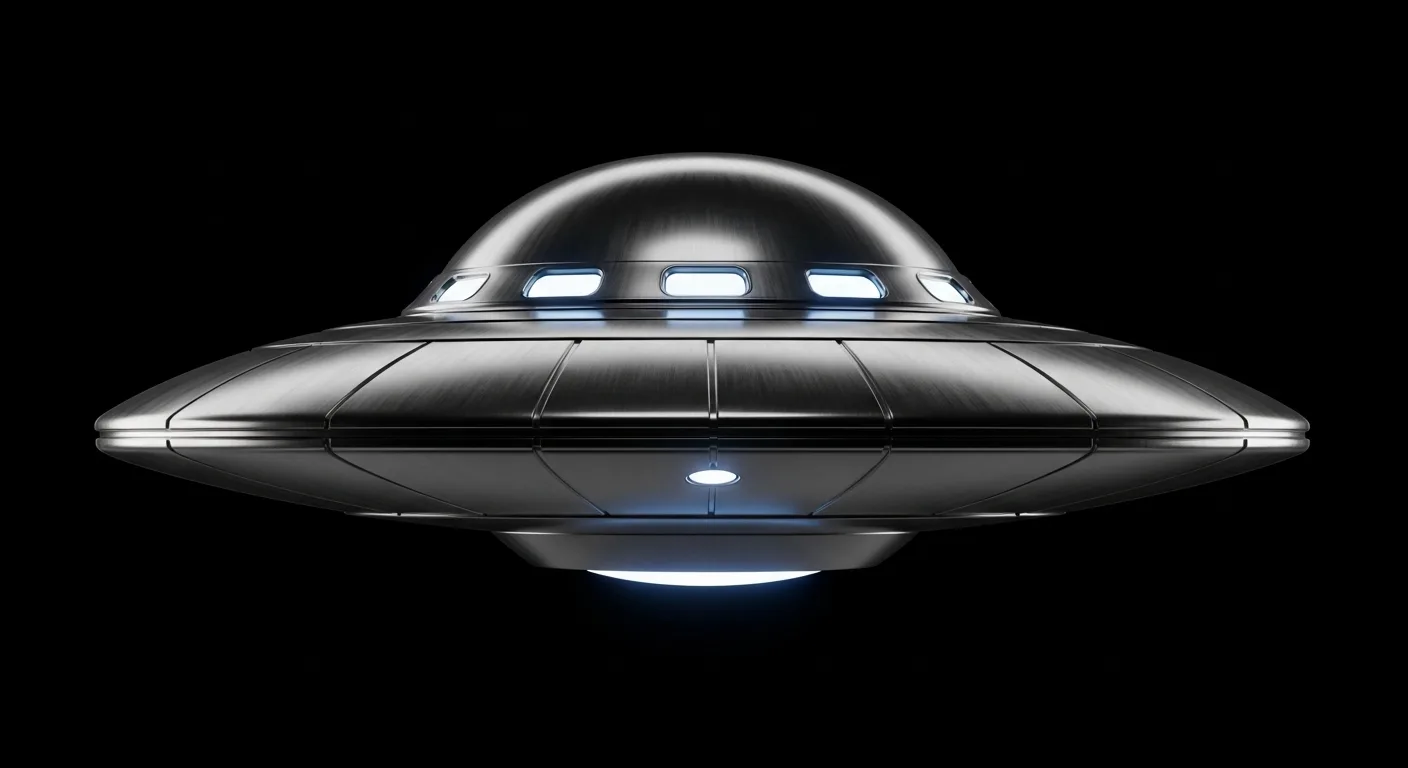
On the night of November 11, 1979, a commercial airliner carrying 109 passengers was forced into an emergency landing at Valencia’s Manises Airport after encountering a massive unidentified object that came within 150 feet of collision. The incident triggered an immediate Spanish Air Force response, with Mirage fighter jets scrambling to intercept an object that would demonstrate capabilities far beyond any known aircraft. The Manises incident became one of the best-documented UFO cases in European aviation history, a genuine emergency involving a commercial flight, military response, and official investigation that could offer no conventional explanation.
The flight was TAE Transportes Aereos Espanoles Flight JK-297, operating from Salzburg, Austria, to Tenerife in the Canary Islands. The aircraft was carrying 109 passengers on what should have been a routine night flight across Europe and over the Mediterranean. Captain Francisco Lerdo de Tejada, an experienced commercial pilot, was in command. Nothing in the evening’s flight plan had prepared him or his passengers for what they would encounter over Spanish territory.
The Approach
The first indication of something unusual came as the aircraft was cruising at altitude over the Spanish Mediterranean coast. Captain Lerdo de Tejada and his crew observed bright red lights approaching their aircraft, lights that did not match the characteristics of any conventional aircraft. The objects grew closer with alarming speed, displaying no navigation lights or other standard aviation identification.
As the lights approached, their size became apparent. Whatever was producing them was massive, far larger than the commercial airliner, and it was closing on a potential collision course. Captain Lerdo de Tejada faced a decision that pilots rarely confront: how to respond to an unknown craft that appeared to be bearing down on his aircraft with 109 passengers aboard.
The Emergency
With the object approaching to within an estimated 150 feet of his aircraft, Captain Lerdo de Tejada made the call to declare an emergency and divert. The proximity was too close, the potential for collision too real, to continue on course. He turned the aircraft toward Valencia’s Manises Airport, requesting emergency landing priority.
The passengers aboard the flight were witness to the encounter, able to see the red lights through the aircraft windows as the captain maneuvered to avoid collision. For those 109 civilians, the experience was terrifying and unforgettable, a brush with something unknown during what should have been ordinary air travel.
The aircraft landed safely at Manises Airport, the emergency procedures executed without incident. But the event was far from over. The Spanish Air Force had been monitoring the situation, and as the commercial flight touched down, military response was already underway.
The Scramble
Spanish Air Force command ordered an immediate scramble from Los Llanos Air Base. Captain Fernando Camara took off in a Mirage F-1 fighter jet, armed and ready to intercept whatever had forced a commercial airliner to make an emergency landing. His orders were to identify and, if necessary, engage the unknown object.
What followed was a chase that would push the limits of the Mirage’s performance. Captain Camara acquired the target on radar and visually confirmed the lights that the commercial crew had reported. He attempted to close on the object, applying full military power to intercept.
The object outran him easily. Demonstrating acceleration that the Mirage could not match, it pulled away from the pursuing fighter whenever Camara attempted to close the distance. The pilot reported that the object could change direction instantaneously, performing maneuvers that would have destroyed any conventional aircraft and that his fighter could not begin to replicate.
The Performance
The UFO’s demonstrated capabilities exceeded anything in the Spanish or any other nation’s aviation inventory. It could accelerate faster than a military jet at full afterburner. It could change direction without any visible banking or turning radius. It appeared to be toying with the pursuing aircraft, allowing partial approaches before effortlessly pulling away.
Captain Camara pursued the object for an extended period, unable to close to weapons range or even identification distance. The radar tracked a solid return, confirming that the object was physically present and not an optical illusion or atmospheric phenomenon. Whatever was out there over Valencia that night was real, detectable by instruments, and completely beyond the capability of Spain’s front-line fighter aircraft.
Continued Activity
The night’s events did not end with a single encounter. The object, or objects, remained in the area for an extended period, appearing on radar and being observed by multiple witnesses. Additional military and civilian observers reported the phenomena, creating a body of testimony that extended well beyond the initial commercial flight crew.
The persistence of the activity suggested either a single object remaining in the region or multiple objects operating in the same area. Either possibility pointed toward deliberate presence rather than random appearance, a visitation with purpose that extended beyond brief observation.
Official Investigation
Spanish authorities took the Manises incident seriously from the beginning. The involvement of a commercial airliner, the declaration of an emergency, and the scrambling of military aircraft ensured that the event would be thoroughly documented and investigated. The Spanish Air Force compiled reports from the commercial crew, from Captain Camara, and from other witnesses.
The investigation could not identify the object. It was not a Spanish aircraft, not an aircraft from any NATO ally, not a Soviet intrusion, not any known technology. The radar returns confirmed a physical presence. The visual observations from multiple trained observers described consistent characteristics. The object’s performance exceeded any known aviation capability.
The official conclusion was that the event was genuine and unexplained. Unlike many governments that dismiss or debunk UFO reports, Spanish authorities acknowledged that something had occurred that they could not explain.
Declassified Files
In later years, Spain declassified the files related to the Manises incident, making the documentation available for public examination. The released materials confirmed the accounts that witnesses had given, showing that official investigations had taken the event seriously and had been unable to produce a conventional explanation.
The transparency demonstrated by Spanish authorities set the Manises case apart from many other UFO incidents. Rather than suppressing information or offering implausible explanations, Spain documented the event honestly and eventually shared that documentation with the public.
Significance
The Manises incident stands as one of the clearest examples of a UFO event creating genuine aviation emergency conditions. A commercial flight with 109 passengers was forced to divert due to an unknown object. Military aircraft were scrambled in response. The object demonstrated capabilities that exceeded anything in the world’s aviation arsenals. Official investigation could not explain what had occurred.
This combination of factors makes Manises one of the most significant UFO cases in aviation history. It involved not speculation or ambiguous sightings but concrete emergency procedures, documented military response, and official acknowledgment of the inexplicable.
Legacy
The Manises incident demonstrated that UFOs can create real-world consequences that affect commercial aviation and national defense. A flight full of passengers was endangered. Military resources were deployed. An investigation was conducted at the highest levels. All of this occurred because something appeared in Spanish airspace that could not be identified or explained.
What visited Valencia on November 11, 1979, what forced a commercial airliner into emergency landing and outran Spanish Air Force interceptors, remains unknown. The official files are public. The testimony is documented. The mystery endures. The Manises incident stands as evidence that the UFO phenomenon can manifest in ways that demand official response, and that even when such responses occur, answers may remain beyond reach.
Sources
- Manises UFO incident — Wikipedia
- CIA UFO/UAP Reading Room — Declassified CIA documents on UAP