Moscow, Soviet Union UFO Sighting (December 11th 1966) — FBI Files
Declassified FBI files detail a 1966 report regarding long-term Soviet radar detections of unidentified flying objects over Moscow.
Historical Context
During the height of the Cold War, the geopolitical landscape was defined by intense surveillance and the constant monitoring of airspace. In the Soviet Union, the ability to track objects via radar was a critical component of national defense and early warning systems. The mid-1ob60s represented a period when both the United States and the Soviet Union were deeply invested in understanding any aerial phenomenon that could potentially represent a breach of sovereign airspace or a new technological development in aerospace engineering.
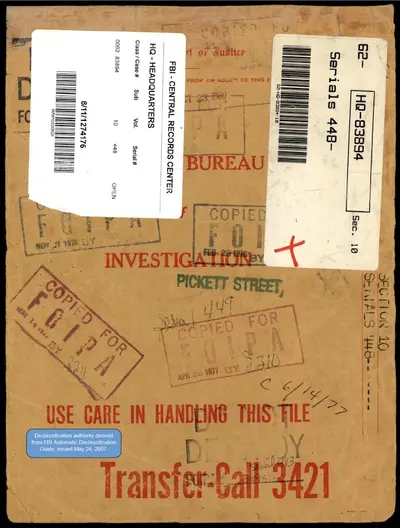
The documentation of this specific incident emerged decades later through the Presidential Unsealing and Reporting System for UAP Encounters (PURSUE), a program designed to release previously classified information to the public. The records regarding the Moscow sighting were processed through the Federal Bureau of Investigation, following established protocols where regional field offices in cities such as Knoxville, Albuquerque, and Los Angeles routed UFO reports to headquarters. This routing was part of a standardized procedure intended to protect vital installations and monitor potential threats to national security.
The December 1966 Incident
On December 11, 1966, investigators recorded an incident centered in Moscow, Soviet Union, involving unidentified flying objects. The released files indicate that Soviet radar systems had been detecting these unidentified objects for a period of twenty years prior to the report. This long-term detection prompted significant scientific scrutiny within the Soviet scientific community.
The documentation highlights the perspectives of a researcher named Zigel, who addressed the persistent nature of these radar detections. Zigel proposed five distinct possibilities to explain the phenomena, a range that spanned from intentional hoaxes to the presence of visitors from outer space. In his assessment, the fundamental problem of the objects’ origin remained unsolved. The reports noted that these observations were not isolated to the Soviet Union, as similar phenomena had been observed on a global scale. Zigel specifically rejected explanations involving natural occurrences, such as the movement of birds or various atmospheric conditions, asserting that there could be no doubt regarding the existence of these objects, even though their nature remained incomprehensible.
Analytical Classification
The case is classified primarily as a radar track, meaning the unidentified objects were detected via military or civilian radar equipment rather than through visual sighting alone. This type of evidence is often considered significant in aerial anomaly investigations because radar provides a measurable, electronic trace of an object’s movement through space.
Under the current oversight of the All-domain Anomaly Resolution Office (AARO), all records released via the PURSUE program are designated as unresolved by default. The federal government has maintained a neutral stance, neither concluding that the events were anomalous nor confirming them to be conventional. In the context of the 1960s, investigators often considered several conventional candidates for such sightings. These included the presence of experimental aircraft, weather balloons—such as those used in the Project Mogul series—atmospheric optical phenomena like lenticular clouds or sundogs, and astronomical bodies like the Moon, Venus, or meteors appearing near the horizon. The Moscow case remains a significant entry in the archive due to the reported twenty-year duration of the radar detections mentioned in the file.