Mont.-Star UFO Sighting (April 19, 1966) — FBI Files
On April 19, 19
Background
On April 19, 1966, in Mont.-Star, U.S. government investigators recorded an unidentified-object incident later released to the public on May 8, 2026, as part of the Presidential Unsealing and Reporting System for UAP Encounters (PURSUE). This incident occurred during the height of the Cold War, a period characterized by intense aerial surveillance and heightened sensitivity regarding unauthorized incursions into sovereign airspace. The case was investigated under the framework of the Air Force’s Project Blue Book or its predecessors, which served as the primary mechanism for analyzing Unidentified Flying Object reports within the United States military.
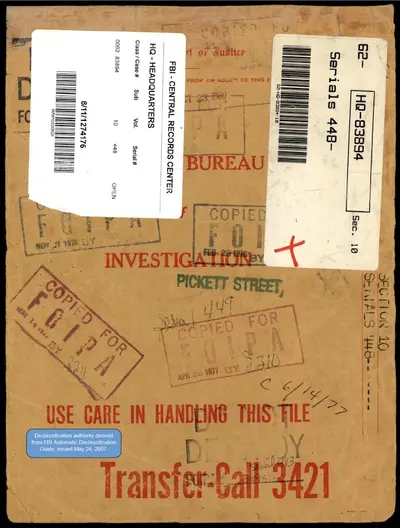
The documentation regarding this event was filed with the Federal Bureau of Investigation. During this era, the Bureau maintained specific standing protocols for the protection of vital installations and national security interests. Under these procedures, various field offices, including those in Knoxville, Albuquerque, and Los Angeles, were tasked with routing UFO reports to headquarters for centralized processing. This administrative structure ensured that any aerial phenomenon that could potentially represent a threat to sensitive military or governmental sites was documented within the broader intelligence community.
The Incident in Ingersoll
The specific details of the sighting involve a family in Ingersoll, Ontario, observing a phenomenon in the night sky. A mother and her 15-year-old daughter both observed a clear white light that exhibited a distinct pattern of dimming and brightening. The daughter provided further descriptive detail, noting the presence of a white ring surrounding a red light positioned in the sky. A 13-year-old brother also observed the object during the event. While the released document does not specify the total number of witnesses, the primary accounts are centered on these three individuals.
The movement of the object was noted for its lack of rapid propulsion or sudden maneuvers. Within the official file, one witness provided a direct observation regarding the velocity of the phenomenon, stating, “It was moving ever so slow-ly.” This description of slow, steady movement is a common element in many mid-century aerial sightings, often complicating the ability of investigators to distinguish between slow-moving celestial bodies and unidentified craft.
Analysis and Classification
This case is classified as a visual sighting reported by ground observers. In the context of 1960s aeronautics, such reports were often analyzed alongside known atmospheric and astronomical phenomena. Investigators of this era frequently considered various conventional candidates to explain such sightings. These included experimental aircraft testing, the presence of weather balloons—specifically those related to the Project Mogul series active in the late 1940s—and atmospheric optical phenomena such as sundogs or lenticular clouds. Additionally, astronomical objects like Venus, the Moon, or meteors appearing near the horizon were standard points of comparison for investigators.
The status of this case remains officially unverified. All records released under the PURSUE program are designated as unresolved by the All-domain Anomaly Resolution Office (AARO) by default. The federal government has not reached a conclusion regarding whether the event was anomalous or conventional, and it has not ruled out either possibility. The incident remains a part of the historical record of unidentified aerial phenomena, preserved within the declassified archives of the FBI and the broader US intelligence apparatus.