Exeter New Hampshire Incident
A teenager and two police officers watched a UFO with pulsating red lights hover over a field in Exeter. The case inspired the book 'Incident at Exeter' and was never explained by Project Blue Book.
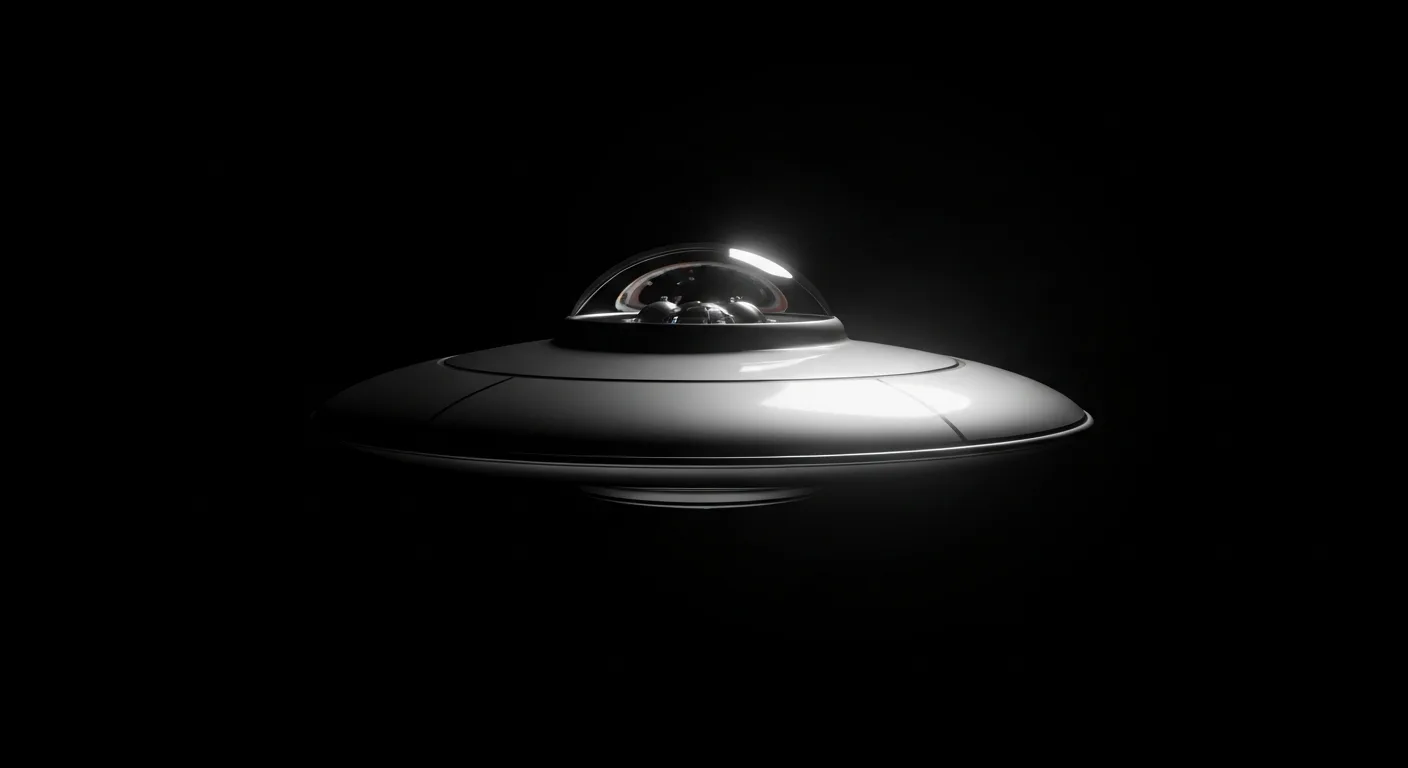
In the small hours of September 3, 1965, a terrified teenager burst into the police station in Exeter, New Hampshire, babbling about a massive object with brilliant red lights that had silently pursued him along a dark country road. Within the hour, two police officers would see the same object with their own eyes, watching in astonishment as it rose from behind a stand of trees and hovered over an open field, its pulsating red lights illuminating the landscape below. The Exeter incident would become one of the most famous UFO cases of the 1960s, the subject of a bestselling book, and a case that the United States Air Force, despite its best efforts, could never adequately explain. More than half a century later, the events of that September night remain a cornerstone of UFO history, a case whose credible witnesses, multiple observations, and utter resistance to conventional explanation continue to challenge those who would dismiss the UFO phenomenon as fantasy or delusion.
Exeter, New Hampshire
Exeter in 1965 was a quiet New England town of roughly eight thousand souls, a place whose history stretched back to the colonial era and whose present was defined by the comfortable rhythms of small-town life. Located in southeastern New Hampshire, roughly fifty miles north of Boston, the town sat amid a landscape of farms, forests, and small communities connected by two-lane roads that wound through countryside that had changed little in decades.
The area around Exeter was not heavily developed. Beyond the town’s compact center, the landscape opened into agricultural fields, pastures, and wooded tracts that provided the kind of dark, unlit environments where unusual aerial phenomena would be immediately noticeable. The roads connecting Exeter to neighboring towns like Kensington and Hampton passed through stretches of open country where a traveler on foot would have unobstructed views of the sky in every direction.
The summer of 1965 had been an active one for UFO reports in the Exeter area. In the weeks preceding the September 3 incident, multiple residents had reported seeing unusual lights and objects in the skies over southeastern New Hampshire. These reports had been noted by local police and by the area’s newspapers but had not attracted significant attention outside the immediate region. The reports would later prove to be part of a broader pattern of activity that made the September 3 encounter not an isolated event but the most dramatic episode in an extended wave of sightings.
Norman Muscarello: The Walk Home
The chain of events that would make Exeter famous began with Norman Muscarello, an eighteen-year-old who was hitchhiking home to Exeter from Amesbury, Massachusetts, in the early morning hours of September 3. Muscarello was a recent high school graduate who had enlisted in the Navy and was awaiting his reporting date for basic training. He was, by all accounts, a straightforward young man of average disposition, neither imaginative nor excitable, the kind of person whose word his community was inclined to trust.
Unable to find a ride at the late hour, Muscarello was walking along Route 150 near the town of Kensington, roughly two miles from Exeter, when something appeared in the sky that would alter the course of his life. At approximately 2:00 AM, as he walked along the deserted road, he noticed a brilliant light approaching from his right, moving slowly above the tree line.
The light resolved itself into an enormous object bearing five bright red lights that pulsed in a sequential pattern, each light brightening and dimming in turn, creating a cascading effect that swept across the object from one end to the other. The object was huge, far larger than any aircraft Muscarello had ever seen, and it moved with a silence that was deeply wrong. Aircraft make noise. Helicopters make noise. Whatever was approaching Muscarello along that dark New Hampshire road made no sound at all.
The object descended toward Muscarello, and the young man was seized by a terror that he would later describe as the most intense fear of his life. He threw himself into a shallow ditch beside the road, pressing himself flat against the ground as the object passed over or near him. Its lights were so brilliant that they illuminated the entire surrounding landscape, turning night into a garish red-tinted day.
When the object moved away, Muscarello scrambled to his feet and ran to a nearby house, pounding on the door until a frightened woman let him in and called the police. When Officer Eugene Bertrand arrived to investigate, he found Muscarello in a state of obvious distress, pale, shaking, and struggling to articulate what he had seen. The young man was not hysterical or incoherent; he was terrified, the kind of deep, physiological fear that is difficult to fake and impossible to sustain as a performance.
Officer Eugene Bertrand: A Prior Encounter
What Officer Bertrand heard from Muscarello resonated with something he had experienced earlier that same evening, a connection that would prove critical to the case. Earlier in his shift, Bertrand had responded to a call from a woman parked at the side of a road, who told him that a large, silent object with brilliant red lights had followed her car for some distance before veering away. The woman was visibly frightened, and Bertrand, while noting her distress, had not filed a formal report. He had been unable to identify the object and had assumed there must be some conventional explanation.
Now, hearing Muscarello describe what was unmistakably the same object, Bertrand reconsidered. Two independent witnesses, separated in time but describing the same phenomenon in the same area, changed the calculus. Bertrand decided to take Muscarello back to the location of his sighting to investigate further.
The two men drove to the stretch of Route 150 near Kensington where Muscarello had seen the object. The area was a classic New England landscape: an open field bordered by trees, with farmhouses scattered in the distance. Bertrand parked the patrol car, and the two walked into the field, scanning the sky for any sign of the object Muscarello had described.
For several minutes, nothing happened. The night was quiet, the sky clear, and Bertrand may have begun to wonder whether the trip had been a waste of time. Then, with a suddenness that both men would later emphasize, the object appeared.
The Joint Sighting
Rising from behind a stand of trees at the far edge of the field, the object climbed silently into the air and moved toward the two men. Its five red lights pulsed in the sequential pattern Muscarello had described, each light brightening in turn as the cascade swept across the object’s width. The object was enormous, an estimated eighty to ninety feet in diameter, and it moved with a smooth, deliberate motion that suggested controlled flight rather than any natural phenomenon.
Both men were immediately terrified. Muscarello, reliving the horror of his earlier encounter, was nearly incapacitated by fear. Bertrand, a trained police officer and former Air Force enlisted man, was scarcely less affected. The object was close enough and bright enough to illuminate the entire field in a red glow, and its utter silence made it seem more menacing than any noisy aircraft could have been. The absence of sound gave the encounter a dreamlike quality that heightened rather than diminished the men’s sense of unreality and dread.
Bertrand drew his service weapon but did not fire, later stating that he realized almost immediately that a handgun would be useless against whatever he was confronting. He grabbed Muscarello and the two ran back toward the patrol car, watching the object over their shoulders as they retreated.
The object did not pursue them. It hovered over the field for a period that the witnesses estimated at several minutes, its lights continuing their relentless pulsation, before it began to move away. It did not accelerate dramatically or perform any sudden maneuver; it simply drifted away over the tree line, maintaining its altitude and its silence, until it was out of sight.
Officer David Hunt: The Third Witness
As Bertrand and Muscarello watched the object from the relative safety of the patrol car, Officer David Hunt arrived on the scene. Hunt had heard Bertrand’s radio transmissions and had driven to the location to provide backup. He arrived in time to see the object as it moved away over the trees, confirming with his own eyes what Bertrand and Muscarello had been reporting.
Hunt’s arrival was fortuitous in several respects. As a third independent witness, he eliminated the possibility that Bertrand and Muscarello were sharing a joint hallucination or mutual delusion. As a second police officer, he added additional professional credibility to the report. And his observation of the object’s departure, while briefer than the primary sighting, confirmed the basic characteristics that the other witnesses had described: a large, silent object with pulsating red lights.
Hunt immediately radioed the police station to report what he was seeing, creating a real-time record of his observation. His calm, professional report, transmitted while he was actually watching the object, provided documentation of the sighting that was free from the distortions of memory and the influence of subsequent discussion.
The Object
All three witnesses provided descriptions of the object that were consistent in their essential details. The craft appeared as a large, dark shape against the night sky, its outline discernible primarily through the arrangement of its lights. Five bright red lights were positioned along the object’s width, and these lights pulsed in a sequential pattern, each brightening and dimming in turn as the sequence moved from one end to the other. The effect was described as a sweeping or cascading pattern that repeated continuously.
The object moved with a wobbling or tilting motion that distinguished it from the steady flight of conventional aircraft. This motion, combined with the object’s ability to hover motionlessly and then move at various speeds, was inconsistent with any known aircraft type. The silence of the object was perhaps its most distinctive characteristic. At the distances from which the witnesses observed it, any conventional aircraft of comparable size would have produced substantial engine noise. The object produced none.
The witnesses estimated the object’s diameter at between eighty and ninety feet, though they acknowledged the difficulty of estimating size for an unknown object at night. Their estimates were based on the object’s apparent angular size in relation to known landmarks and on the area it illuminated when hovering close to the ground.
Project Blue Book Investigation
The sighting was reported through official channels and reached Project Blue Book, the Air Force’s UFO investigation program, which was still operational in 1965. Blue Book investigators examined the case and proposed that the witnesses had observed a high-altitude aerial refueling operation involving KC-97 tanker aircraft from the 100th Air Refueling Wing, which was conducting exercises in the area.
This explanation was immediately and forcefully rejected by the witnesses. Both Bertrand and Hunt were experienced observers, Bertrand having served in the Air Force before joining the police. They were familiar with aerial refueling operations and emphatically stated that what they had seen bore no resemblance to such an operation. The object was at low altitude, not high altitude. It was a single, enormous craft, not a pair of aircraft connected by a refueling boom. It was silent, not accompanied by the roar of multiple jet engines. And it hovered motionlessly, a behavior that is physically impossible for fixed-wing aircraft.
Bertrand and Hunt wrote a letter to Blue Book protesting the explanation, a document that has been widely reproduced in UFO literature. Their letter was professional, detailed, and unyielding: the aerial refueling explanation was wrong, and they wanted it corrected. Blue Book’s response was to reclassify the case as “unknown,” an admission that no conventional explanation could account for what the witnesses had described.
The case’s classification as unknown was significant. In 1965, Project Blue Book was under institutional pressure to resolve as many cases as possible with conventional explanations, thereby reducing the apparent number of genuinely unexplained UFO reports. The Exeter case resisted this pressure. The witnesses were too credible, their observations too detailed, and the proposed explanation too obviously inadequate for the case to be swept away with a convenient label.
John Fuller and “Incident at Exeter”
The Exeter case attracted the attention of John G. Fuller, a journalist and author who would transform it from a local police report into a nationally known event. Fuller traveled to Exeter, conducted extensive interviews with the primary witnesses and with dozens of other area residents who had reported their own sightings, and published the results in his 1966 book “Incident at Exeter.”
The book was a revelation. Fuller discovered that the September 3 sighting was not an isolated event but part of an extended pattern of UFO activity in the Exeter area that had been going on for weeks. Residents throughout southeastern New Hampshire had been seeing unusual objects in the sky, and many had reported their sightings to local police or newspapers. The police logs contained numerous entries documenting calls from frightened citizens reporting lights and objects that defied identification.
Fuller’s investigation revealed a community that was deeply affected by the sightings. Residents were losing sleep, altering their routines, and in some cases refusing to leave their homes after dark. The frequency and proximity of the sightings created an atmosphere of pervasive unease that affected people who had previously given no thought to UFOs or the paranormal.
“Incident at Exeter” became a bestseller, bringing the Exeter case to the attention of millions of readers and establishing it as one of the defining UFO events of the 1960s. Fuller’s thorough, journalistic approach to the subject lent the case a credibility that more sensationalized treatments might not have achieved. He presented the evidence clearly, acknowledged uncertainties, and let the witnesses speak for themselves, creating a narrative that was compelling precisely because of its restraint.
The Broader Wave
Fuller’s research revealed that the Exeter area was experiencing a genuine wave of UFO activity during the late summer and early fall of 1965. Dozens of residents had reported sightings independent of Muscarello’s encounter, and their descriptions showed a consistency that argued against mass hysteria or copycat reporting.
The witnesses included farmers, housewives, students, professionals, and police officers. Their sightings occurred at different times, in different locations, and under different conditions. Some saw the objects at close range; others observed them from a distance. Some described objects similar to Muscarello’s five-light craft; others described different configurations. The diversity of the sightings, combined with their geographic clustering and temporal concentration, painted a picture of genuine anomalous activity rather than a social contagion.
The Exeter wave was itself part of a broader national and international increase in UFO sightings during 1965. The concentration of reports during this year was among the highest since the great wave of 1952, and it included numerous cases from other parts of the United States and from countries around the world. The Exeter incident was the most visible manifestation of this wave, but it was far from the only one.
The Witnesses’ Legacy
Norman Muscarello, Eugene Bertrand, and David Hunt maintained their accounts throughout their lives. None ever wavered in their descriptions or suggested that they might have been mistaken. The consistency of their testimony over decades, the absence of any motive for fabrication, and the professional standing of the two police officers all contributed to the enduring credibility of the case.
Muscarello went on to serve in the Navy as planned, and his military service added another dimension to his credibility. He was not a dropout, a troublemaker, or a marginal figure; he was a young man of good character who happened to be in the wrong place at the wrong time, or perhaps the right place at the right time, and who reported what he had experienced with an honesty that never faltered.
Bertrand continued his career in law enforcement, his reputation undiminished by his UFO report. In an era when reporting a UFO sighting could damage a career, Bertrand’s willingness to stand by his account spoke to both his courage and his conviction. He had seen something extraordinary, and he was not willing to pretend otherwise, regardless of the professional consequences.
Hunt, the third witness, corroborated the essential details of the sighting throughout his career. His role was smaller than Bertrand’s or Muscarello’s, but his independent confirmation of the object’s existence was a crucial element in the case’s evidentiary structure.
Significance
The Exeter incident occupies a special place in UFO history for several reasons. It features multiple credible witnesses, including two police officers whose professional training and institutional credibility make their testimony particularly difficult to dismiss. It was thoroughly investigated by both Project Blue Book and an independent journalist, and it resisted explanation in both cases. It generated a bestselling book that brought the case to national attention and established it as a benchmark for subsequent UFO reports.
Most fundamentally, the Exeter incident demonstrates the core challenge of the UFO phenomenon: credible people report experiences that cannot be explained by any known conventional phenomenon, and the institutions charged with investigating these reports either cannot or will not provide satisfactory answers. The Air Force’s aerial refueling explanation was transparently inadequate, and its subsequent reclassification of the case as “unknown” was an admission that the phenomenon was beyond its ability to resolve.
The night of September 3, 1965, left its mark on Exeter and on the broader history of the UFO phenomenon. A terrified teenager, a seasoned police officer, and a backup patrolman all saw the same thing: a massive, silent craft with pulsating red lights, hovering over a New Hampshire field in the small hours of a September morning. They reported what they saw, clearly and consistently, and they waited for an explanation that never came. In the decades since, the object that rose from behind the trees at Kensington has become one of the enduring mysteries of American skies, a silent, luminous enigma that appeared, hovered, and departed, leaving behind three credible witnesses and a question that remains unanswered.
Sources
- Project Blue Book — National Archives — USAF UFO investigation files, 1947–1969
- CIA UFO/UAP Reading Room — Declassified CIA documents on UAP
- UK National Archives — UFO Files — MoD UFO investigation records
- British Newspaper Archive — UK press archive