The Exeter Incident
Multiple witnesses including police officers observed a massive silent craft with flashing lights.
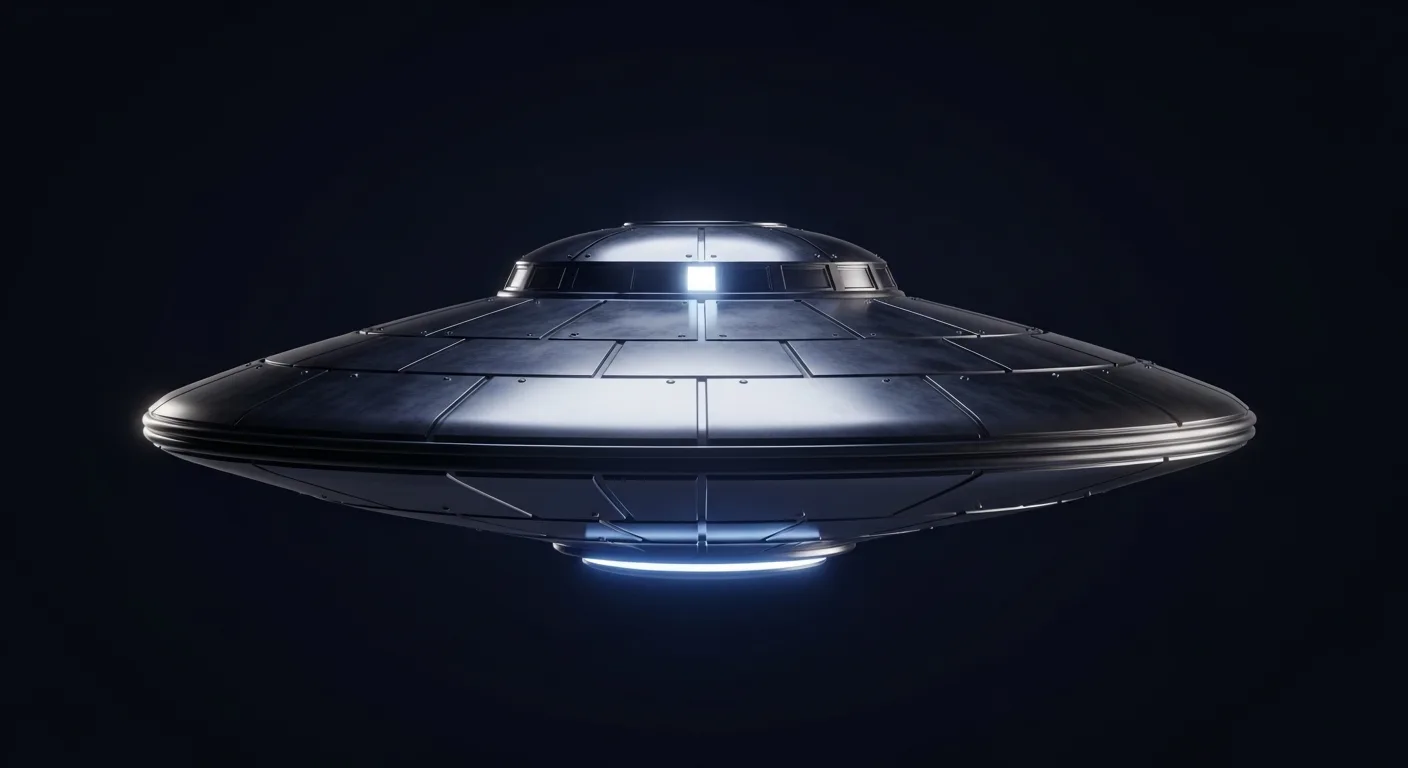
The quiet town of Exeter, New Hampshire, had no reason to expect that the early morning hours of September 3, 1965, would deliver one of the most compelling UFO encounters in American history. Exeter was a small, unassuming New England community of roughly eight thousand people, the kind of place where nothing much happened after dark and where the police blotter typically recorded little more than the occasional domestic disturbance or traffic violation. Yet on that warm September night, a sequence of events unfolded along the rural roads outside town that would draw the attention of the United States Air Force, ignite a national media sensation, and produce one of the few UFO cases that has never been satisfactorily explained by conventional means. The Exeter Incident, as it came to be known, combined multiple independent witnesses, trained law enforcement officers, and a prolonged observation of an object that defied every attempt at identification. More than six decades later, it remains a cornerstone case in the study of unidentified aerial phenomena.
A Young Man on a Dark Road
The story begins with Norman Muscarello, an eighteen-year-old who had recently graduated from Exeter High School and was days away from reporting for duty with the United States Navy. On the night of September 2, Muscarello had been visiting a girlfriend in Amesbury, Massachusetts, about twelve miles south of Exeter. Without a car, he set out to hitchhike home along Route 150, a narrow two-lane road that wound through the open farmland and scattered houses of Kensington, New Hampshire, before crossing into Exeter.
It was approximately 2:00 AM when Muscarello found himself walking along Route 150, his thumb out for any passing vehicle. The road was deserted. Fields stretched away on either side, bordered by low stone walls and the occasional line of trees. The night was clear and warm, typical of late New England summer, and visibility was good. Muscarello had no reason to feel uneasy, and no expectation that anything unusual was about to occur.
Then, from behind a stand of trees to his right, something emerged. A massive object rose silently over the tree line, blazing with brilliant red lights that pulsated in sequence. Muscarello would later describe the object as being at least eighty to ninety feet in diameter, far larger than any aircraft he had ever seen. The lights were arranged in a row or cluster and flashed in a distinct pattern, each one brightening to an almost unbearable intensity before dimming as the next one ignited. The object made no sound whatsoever. It moved slowly, almost deliberately, drifting over the open field toward the road where Muscarello stood frozen in disbelief.
As the object drew closer, Muscarello felt a wave of instinctive terror. The sheer size of the thing, its absolute silence, and the unnatural brilliance of its lights combined to produce a visceral fear response that overrode rational thought. He threw himself into a shallow ditch beside the road, pressing himself flat against the ground as the object passed overhead at what he estimated to be roughly one hundred feet of altitude. The red lights illuminated the surrounding field and the facade of a nearby farmhouse owned by the Russell family, bathing everything in a pulsating crimson glow.
Muscarello scrambled to his feet and ran to the Russell house, pounding on the door and shouting for help. No one answered. Desperate, he ran back to the road and flagged down a passing car. The frightened driver took him to the Exeter police station, where Muscarello burst through the door shortly before 2:30 AM, visibly shaken, pale, and barely coherent. The desk officer, Reginald Toland, noted that the young man was genuinely terrified, his hands trembling and his speech rapid and fragmented. Whatever Muscarello had seen, Toland was convinced the fear was real.
Officer Bertrand Returns to the Field
Muscarello’s account might have been filed away as the overwrought imagination of a teenager walking alone on a dark road, except for a coincidence that lent it immediate credibility. Earlier that same night, around 1:00 AM, Exeter police officer Eugene Bertrand had encountered a woman sitting in her parked car on Route 101, visibly upset. She told Bertrand that a huge, silent object with brilliant red lights had followed her car for approximately twelve miles, hovering just above the tree line before finally veering away. Bertrand, a seasoned officer and Air Force veteran who had served during the Korean War, had noted the woman’s distress but had attributed the sighting to some conventional explanation. He did not take her name, a decision he would later regret.
When Bertrand returned to the station and heard Muscarello’s account, the similarities were impossible to ignore. Two independent witnesses, separated by roughly an hour and several miles, were describing essentially the same object. Bertrand volunteered to drive Muscarello back to the location on Route 150 where the encounter had occurred.
They arrived at the field near the Russell farm at approximately 3:00 AM. Bertrand parked the cruiser and the two men walked into the open field, scanning the sky. For several minutes, nothing happened. Muscarello grew increasingly agitated, insisting that what he had seen was real while simultaneously hoping it would not return. Bertrand, though sympathetic, was beginning to wonder if the trip had been pointless.
Then the horses at a nearby farm began to kick and whinny in their stalls. Dogs in the surrounding houses erupted into frantic barking. And from behind a line of trees at the edge of the field, the object rose again.
Bertrand would later describe the moment in precise, measured language befitting his law enforcement training. The object emerged slowly from behind the trees, moving with a floating, leaf-like motion. It was enormous, its dark mass clearly visible against the night sky, blotting out the stars behind it. The pulsating red lights were exactly as Muscarello had described them, blazing in sequence with an intensity that made Bertrand instinctively shield his eyes. The object tilted slightly as it moved, wobbling on its axis in a way that suggested no known aerodynamic principle. And it was utterly, profoundly silent. There was no engine noise, no rotor wash, no sonic signature of any kind. The only sounds were the panicked animals and the pounding of Bertrand’s own heart.
As the object drifted toward them across the field, Bertrand drew his service revolver on instinct before thinking better of it and holstering the weapon. He grabbed Muscarello and the two men retreated to the cruiser, where Bertrand radioed the station to report what they were seeing. His voice on the radio was later described by Toland as controlled but unmistakably alarmed.
A Third Witness Arrives
Officer David Hunt, responding to Bertrand’s radio call, arrived at the scene within minutes. He was in time to see the object as it hovered over the field, its lights still pulsating in their distinctive pattern. Hunt watched as the craft began to move away, drifting slowly toward the southeast in the direction of the Atlantic Ocean. All three men observed the object as it receded, its lights gradually diminishing until it disappeared from view. The entire observation at the field had lasted approximately fifteen minutes.
Hunt’s arrival was critical to the case. With three witnesses now on record, two of them police officers, the sighting could not easily be dismissed as a single person’s misidentification or fabrication. Both Bertrand and Hunt were experienced, sober, and trained observers. Bertrand in particular had extensive familiarity with military aircraft from his Air Force service and was emphatic that the object bore no resemblance to any conventional aircraft, helicopter, or known military vehicle. The object’s size, silence, lighting pattern, and movement characteristics placed it entirely outside his frame of reference.
The three witnesses were not alone in their observations that night. In the hours surrounding the incident, the Exeter police department received multiple calls from residents reporting unusual lights in the sky. A woman on Hampton Road reported a bright red light hovering over her house. Other callers described lights moving erratically over the fields north and east of town. While these ancillary reports lacked the detail and duration of the primary sighting, they established that something unusual was occurring in the skies over southeastern New Hampshire that night, and that whatever it was, it was being seen by people who had no connection to one another and no knowledge of each other’s observations.
The Air Force Responds
The Exeter Incident quickly attracted official attention. Reports were filed with the Air Force under Project Blue Book, the government program tasked with investigating UFO sightings. The case was assigned identifier number 10073, and investigators from Pease Air Force Base, located just fifteen miles from Exeter, were dispatched to interview the witnesses.
The Air Force’s initial explanation was swift and, to the witnesses, deeply unsatisfying. Pentagon spokesman Major Hector Quintanilla attributed the sighting to aircraft from a Strategic Air Command exercise called Operation Big Blast, which had been conducted in the area around the same time. According to this explanation, the witnesses had simply misidentified military aircraft conducting nighttime refueling operations at high altitude.
Bertrand and Hunt were outraged. Both men responded with a forceful letter to the Air Force, pointing out several critical flaws in the explanation. Operation Big Blast had concluded well before 2:00 AM, more than an hour prior to the primary sighting. The object they observed was at an altitude of roughly one hundred feet, not at the thousands of feet required for aerial refueling. The object was completely silent, while military aircraft of the era were anything but quiet. And the object’s size, estimated at eighty to ninety feet, was consistent with no known aircraft involved in the exercise.
The Air Force’s response to these objections was telling. After months of correspondence, during which the officers’ detailed rebuttals went largely unanswered, the official classification of the Exeter sighting was quietly changed from “aircraft from Operation Big Blast” to “unidentified.” This reclassification was significant. Project Blue Book successfully explained the vast majority of reported sightings as misidentifications of conventional objects or phenomena. For a case to remain officially unidentified meant that the Air Force’s own investigators had been unable to find a satisfactory conventional explanation, despite considerable motivation to do so.
John Fuller and the National Stage
The Exeter Incident might have faded into the archives of Project Blue Book had it not attracted the attention of John G. Fuller, a journalist and author who wrote a regular column for the Saturday Review. Fuller traveled to Exeter in the weeks following the incident and conducted extensive interviews with the primary witnesses as well as dozens of area residents who reported their own sightings during the same period. What he discovered was not a single isolated event but a sustained wave of UFO activity in the Exeter region that had been ongoing for weeks before and after the September 3 sighting.
Fuller’s investigation resulted in “Incident at Exeter,” published in 1966, which became one of the first serious, book-length examinations of a UFO case. The book was a bestseller and brought the Exeter sighting to national prominence. Fuller’s careful, journalistic approach lent the case a credibility that more sensational treatments would have undermined. He presented the witnesses’ accounts without embellishment, let the evidence speak for itself, and resisted the temptation to draw conclusions that the facts could not support.
The book documented numerous sightings in the Exeter area during the summer and fall of 1965, painting a picture of a community under sustained observation by something unknown. Farmers reported objects hovering over their fields. Motorists described lights pacing their vehicles along rural highways. Families saw strange illuminations from their kitchen windows. The sheer volume of reports, many from people with no interest in or knowledge of UFO phenomena, suggested that something genuinely anomalous was occurring.
Fuller also documented the frustration of witnesses who felt dismissed or ridiculed by official authorities. The Air Force’s explanations were widely seen as inadequate, and the refusal to take the reports seriously bred a distrust of official narratives that would become a recurring theme in the UFO discourse for decades to come. The Exeter case, in many ways, marked a turning point in public attitudes toward UFO sightings. Here were credible witnesses, including police officers, who had observed something extraordinary at close range and been told by the government that they had merely seen airplanes. The disconnect between their experience and the official explanation was simply too great to bridge.
The Landscape of the Encounter
Part of what makes the Exeter Incident so compelling is the mundane, unremarkable setting in which it occurred. Route 150 in 1965 was a quiet country road bordered by working farms, hay fields, and patches of New England woodland. The Carl Russell farm, near which the primary sighting took place, was a typical rural property with a modest house, outbuildings, and open pasture. There was nothing about the location that suggested it would become the site of one of the most famous UFO encounters in history.
Yet the area around Exeter had features that UFO researchers would later note with interest. The town sits near the seacoast of New Hampshire, not far from the tidal estuaries of the Squamscott River. Pease Air Force Base was a major Strategic Air Command installation nearby. Some researchers have theorized that UFO activity tends to cluster around military installations, bodies of water, or areas with particular geological characteristics, and Exeter arguably offered all three. Whether these correlations are meaningful or merely coincidental remains a matter of debate.
The rural character of the location was also significant for evidentiary purposes. The open fields provided clear sight lines, and the absence of urban light pollution meant that the witnesses could observe the object against a dark sky with good visibility. There were no nearby industrial facilities, airports, or other sources of unusual lights that might have provided a conventional explanation. The isolation of the setting, which might have been expected to undermine the credibility of the sighting by reducing the number of potential witnesses, actually strengthened the case by eliminating many possible sources of misidentification.
Legacy and Significance
The Exeter Incident occupies a unique position in the history of UFO research. It is not the most dramatic case on record, nor the most widely known to the general public. It involves no claims of alien contact, no physical evidence, and no photographs. What it offers instead is something that many more spectacular cases lack: credibility. The witnesses were ordinary, reliable people with no history of making unusual claims and no apparent motive for fabrication. The police officers involved risked professional ridicule by reporting what they saw, and their willingness to challenge the Air Force’s explanation publicly demonstrated a conviction that went beyond casual interest.
The case has been examined repeatedly by UFO researchers over the decades and has consistently withstood scrutiny. Skeptics have proposed various explanations, from advertising aircraft to experimental military vehicles to atmospheric phenomena, but none has gained wide acceptance. The specific combination of characteristics reported by the witnesses, particularly the object’s enormous size, complete silence, low altitude, distinctive lighting pattern, and apparent reaction to the observers, does not map neatly onto any known phenomenon.
In 2011, the town of Exeter formally acknowledged the incident’s place in its history with a commemorative event marking the sighting’s anniversary. The Exeter Incident has become part of the town’s identity, a piece of local history that residents regard with a mixture of pride, amusement, and genuine curiosity. Norman Muscarello, who returned from his Navy service and lived in the Exeter area for the rest of his life, continued to speak publicly about his experience until his death in 2014. He never wavered in his account and never sought to profit from it. Eugene Bertrand and David Hunt similarly maintained their accounts throughout their lives, regarding the sighting as the most remarkable event of their careers.
An Unanswered Question
What flew over the fields of Exeter, New Hampshire, on that September night in 1965? After more than six decades, the question remains open. The object was too large, too silent, and too slow to be a conventional aircraft. It was too structured and too brilliantly illuminated to be a natural phenomenon. It was seen by too many independent witnesses, over too sustained a period, to be easily dismissed as a hallucination or hoax. The Air Force investigated and failed to explain it. Journalists investigated and could only document the mystery. Researchers have revisited the case generation after generation and reached no consensus.
The Exeter Incident endures because it resists easy answers. It presents a core mystery that cannot be explained away by invoking swamp gas, weather balloons, or overactive imaginations. Three men stood in a New Hampshire field in the small hours of the morning and watched something that should not have been there move silently across the sky. Their testimony is clear, consistent, and unembellished. They described what they saw, reported it through official channels, and defended their accounts against institutional dismissal. They asked only to be believed, and more than half a century later, the evidence suggests they deserved to be.
Whatever the object was, it left no physical trace in those Exeter fields. It left something else instead: a permanent mark on the historical record, a case that continues to challenge assumptions about what is and is not possible in our skies. The lights that pulsated over Route 150 on September 3, 1965, illuminated more than the New Hampshire countryside. They illuminated the limits of conventional explanation and the enduring human capacity to encounter something genuinely unknown.
Sources
- Project Blue Book — National Archives — USAF UFO investigation files, 1947–1969
- CIA UFO/UAP Reading Room — Declassified CIA documents on UAP
- UK National Archives — UFO Files — MoD UFO investigation records
- British Newspaper Archive — UK press archive