Socorro Police UFO Landing
Police officer Lonnie Zamora witnessed an egg-shaped craft with two small figures land outside town. Project Blue Book and the FBI investigated, finding physical traces and no explanation.
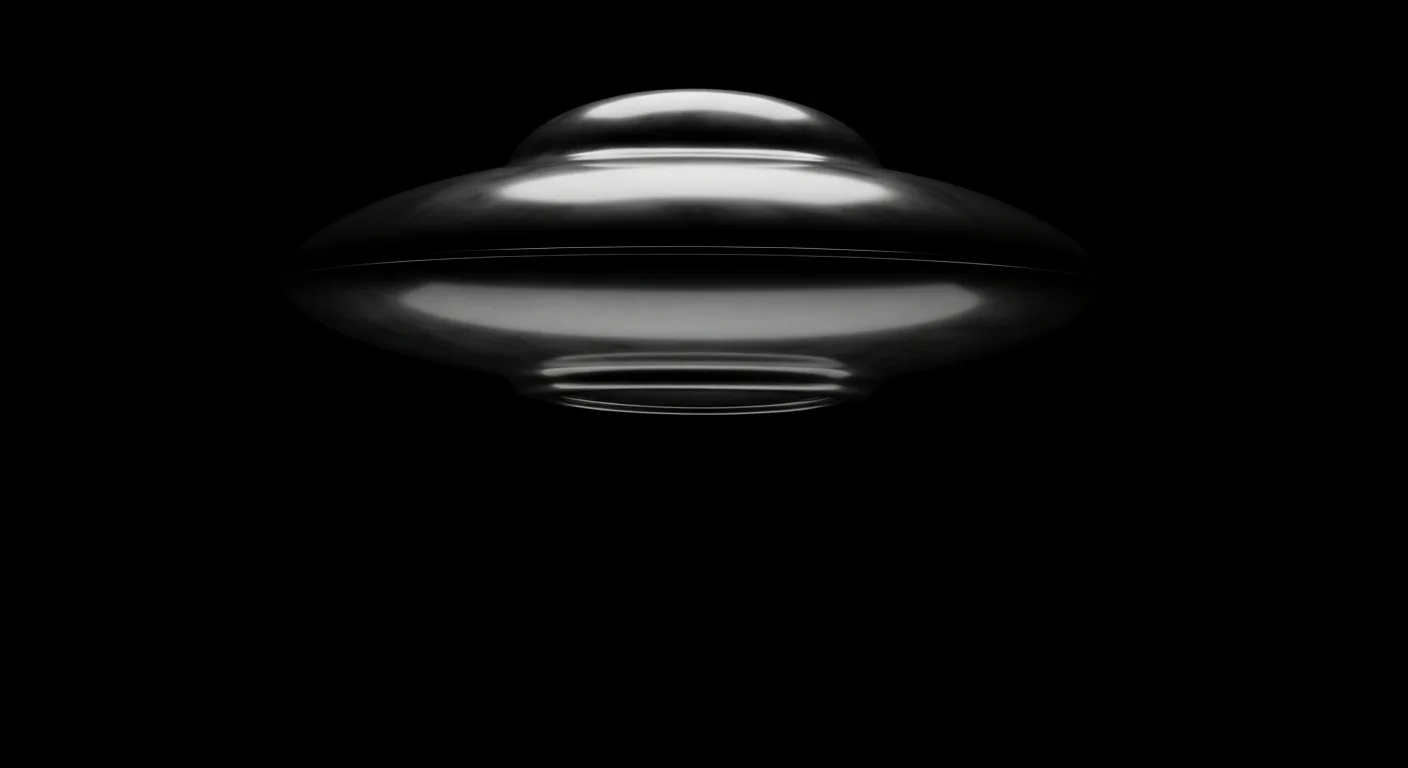
On the afternoon of April 24, 1964, a veteran police officer in the small New Mexico town of Socorro encountered something in the desert that would alter the trajectory of UFO research in the United States and remain unexplained for over sixty years. Sergeant Lonnie Zamora, a respected and pragmatic lawman with no interest in flying saucers, abandoned a routine traffic pursuit to investigate what he thought was an explosion at a nearby dynamite shack. What he found instead was an egg-shaped metallic craft resting on legs in a shallow gully, two small figures in white coveralls standing beside it, and an experience so credible and well-documented that it convinced even the hardened skeptics of Project Blue Book that something genuinely anomalous had occurred. The Socorro landing stands as one of the most important UFO cases in history, a single-witness sighting elevated to landmark status by the impeccable character of the witness, the physical traces left behind, and the utter failure of multiple government agencies to provide a conventional explanation.
The Officer
To understand why the Socorro incident carries such weight in UFO research, one must first understand the man at its center. Lonnie Zamora was born in 1933 and had served as a police officer in Socorro for years by the time of his encounter. He was not a man given to imagination or exaggeration. Colleagues described him as steady, reliable, and somewhat humorless in the way of men who take their responsibilities seriously. He was a World War II veteran, a family man, and a lifelong resident of the Socorro area who knew the desert landscape around the town as well as anyone alive.
Zamora had no interest in UFOs, science fiction, or the paranormal. He did not read books about flying saucers, did not attend lectures on the subject, and had never reported anything unusual in his years of patrolling the highways and back roads of Socorro County. He was, in short, the last person anyone would expect to fabricate a UFO sighting, and the first person whose testimony would be taken seriously if he reported one. This combination of credibility and reluctance would prove crucial in the investigation that followed.
His superiors uniformly vouched for his character. Socorro’s police chief described Zamora as one of his most dependable officers. FBI agent Arthur Byrnes, who later investigated the case, characterized Zamora as a “solid, unimaginative, reliable” individual who would not fabricate such a story. Even Dr. J. Allen Hynek, the astronomer who served as scientific consultant to the Air Force’s Project Blue Book and who had spent years debunking UFO reports, found Zamora entirely credible and was deeply affected by his testimony.
The Pursuit and the Roar
The afternoon of April 24 was clear and warm, typical spring weather for central New Mexico. At approximately 5:45 PM, Sergeant Zamora was in his patrol car on the south side of Socorro, pursuing a speeding black Chevrolet along Old Rodeo Street. The chase was routine, the kind of thing Zamora handled regularly, and his attention was focused entirely on the fleeing vehicle.
Then he heard it. A loud roar, somewhere between an explosion and a sustained rumble, came from the southwest. Simultaneously, Zamora caught a glimpse of a flame in the sky, a bluish-orange cone of fire descending toward the ground in the area where he knew a dynamite shack was located. Socorro was a mining area, and explosions at dynamite storage facilities were a genuine hazard. Zamora made a split-second decision that would change his life. He broke off the traffic pursuit and turned his patrol car toward the source of the sound, concerned that the dynamite shack might have exploded.
The decision was entirely in character for Zamora, a conscientious officer who would naturally prioritize a potential explosion over a speeding ticket. He drove his patrol car up a rough gravel road that led toward the mesa where the dynamite shack was situated. The road was steep and unpaved, and Zamora’s car struggled on the incline, its wheels spinning on the loose surface. It took him several attempts to crest the rise, each failed attempt adding to his frustration and concern about what might be happening ahead.
The Object in the Gully
When Zamora finally reached the top of the mesa and looked down into the shallow arroyo below, the dynamite shack was intact and undamaged. But something else was there, something that stopped the experienced officer in his tracks.
Approximately 150 to 200 yards to the southwest, sitting in the gully, was a whitish, metallic object that Zamora initially took to be an overturned car. It was roughly the size of an automobile, egg-shaped or oval, and it gleamed in the late afternoon sun. As Zamora looked more carefully, he realized it was not a car at all. The object was smooth and seamless, resting on what appeared to be metallic legs or struts. On its side, Zamora could see a red insignia or symbol, a marking he would later attempt to reproduce from memory with varying degrees of accuracy.
Standing near the object were two figures. They appeared to be small, roughly the size of children or perhaps slightly larger, and they were wearing white coveralls or jumpsuits. From Zamora’s distance, he could not make out facial features or other details. One of the figures appeared to turn toward him, as if startled by his approach, and then both figures moved quickly toward the object.
Zamora drove his patrol car closer, intending to offer assistance to what he still half-believed might be people involved in a car accident. He radioed his dispatcher, Nep Lopez, to report that he was investigating a possible accident south of town. Then he parked his car, got out, and began walking toward the object on foot.
The Red Insignia
One of the most debated details of Zamora’s account is the red insignia he observed on the side of the craft. In his initial report, he described and sketched the symbol, which appeared to be some kind of marking or emblem approximately two and a half feet wide. The symbol has been variously described and reproduced over the years, and there is some controversy about whether the version that became publicly known was the actual symbol Zamora saw or a deliberately altered version released by the Air Force to serve as a control against copycat reports.
According to researcher Ray Stanford, who conducted extensive interviews with Zamora, the officer described an inverted V with three horizontal lines through it, topped by a curved line. Other versions of the symbol show an arc over an arrow pointing upward. The discrepancy may be the result of deliberate obfuscation by military investigators or simply the natural variation that occurs when a witness attempts to reproduce from memory a symbol seen briefly under stressful conditions.
The insignia remains one of the most intriguing aspects of the case. If Zamora’s sighting was of a genuine unknown craft, the symbol might represent some form of identification marking. If the incident was a hoax or a misidentification of a military test vehicle, the symbol should theoretically be traceable to a known source. No such source has ever been identified.
The Departure
As Zamora approached on foot, events accelerated rapidly. The two small figures disappeared, apparently entering the object through an opening that Zamora could not clearly see from his angle. Seconds later, the object began to emit a loud roar, the same sound Zamora had heard from the road. A blue and orange flame appeared beneath the craft, and it began to rise from the ground.
Zamora’s reaction was visceral and immediate. Convinced that the object was about to explode, he turned and ran, stumbling and falling in his haste to get away. His sunglasses flew off and landed in the dirt. He scrambled behind his patrol car, using it as a shield against the expected blast.
The explosion never came. Instead, the roar suddenly ceased, replaced by a complete and eerie silence. Zamora peered over his car and saw the object rising smoothly into the air, now completely silent, hovering momentarily before accelerating away to the southwest at remarkable speed. It cleared the nearby mountains and disappeared from sight within seconds, leaving behind nothing but the sound of wind and Zamora’s own ragged breathing.
The entire encounter, from Zamora’s first sighting of the object to its departure, lasted no more than a few minutes. But those few minutes left behind physical evidence that would prove far more durable than the object itself.
Physical Traces
Zamora immediately called his dispatcher and requested backup. Sergeant Sam Chavez of the New Mexico State Police arrived within minutes and accompanied Zamora to the landing site. What they found in the gully provided tangible, measurable evidence that something heavy and hot had recently been there.
Four distinct impressions were found in the hard-packed desert soil, arranged in a roughly rectangular pattern that was consistent with the landing gear configuration Zamora had described. The impressions were deep enough to suggest considerable weight and were irregular, as if made by pads or feet rather than wheels. Measurements showed the marks to be approximately one to two inches deep and arranged in a pattern roughly thirteen feet on each side.
In the center of the landing gear pattern and radiating outward, the desert brush was burned and smoldering. A greasewood bush in the area was still smoking when Chavez arrived. The soil beneath the burned area showed signs of having been subjected to intense heat, and in some spots the sand appeared to have been partially fused or vitrified, a condition that requires temperatures far beyond what an ordinary fire could produce.
Zamora’s sunglasses were found where he had dropped them during his panicked retreat. Small rocks in the area showed unusual marks, and the soil disturbance was consistent with Zamora’s account of the object’s landing and departure. The physical evidence was photographed and documented by multiple agencies in the days that followed.
The Investigation
The Socorro incident attracted an extraordinary level of official attention. Within days of Zamora’s report, investigators from multiple agencies converged on the small New Mexico town. The FBI sent agent Arthur Byrnes. The U.S. Army dispatched Captain Richard T. Holder from White Sands Proving Ground. Project Blue Book sent its chief scientific consultant, Dr. J. Allen Hynek, along with Air Force Major Hector Quintanilla, who headed the project at the time.
The investigation was thorough by the standards of the era. The landing site was examined and documented. Zamora was interviewed at length by each agency independently. Background checks were conducted on the officer. The surrounding area was canvassed for additional witnesses. Weather records, flight logs, and military test schedules were consulted to determine whether any known aircraft or experimental vehicle might account for the sighting.
The results were uniformly inconclusive. No experimental aircraft or vehicle could be identified that matched Zamora’s description. No weather balloon, helicopter, or conventional aircraft was known to have been in the area. White Sands Proving Ground, which conducted missile and rocket tests in the general region, confirmed that no test had been conducted that afternoon that could explain the sighting. The landing marks and burn patterns were consistent with Zamora’s account and could not be readily explained by any natural or man-made cause.
Dr. J. Allen Hynek’s Assessment
Perhaps the most significant outcome of the investigation was its effect on Dr. J. Allen Hynek. The astronomer had served as Project Blue Book’s scientific consultant since 1948 and had spent years providing conventional explanations for UFO sightings. He was the originator of the infamous “swamp gas” explanation for a 1966 Michigan UFO wave, a debunking effort that had earned him widespread ridicule and the displeasure of the very public he was trying to reassure.
Hynek arrived in Socorro expecting to find a mundane explanation. He left deeply troubled. After extensive interviews with Zamora, examination of the landing site, and review of all available evidence, Hynek concluded that the case was genuinely unexplained. He found Zamora to be an exemplary witness, honest, reluctant, consistent in his account, and entirely lacking in the attention-seeking behavior that characterized most UFO claimants.
In his later writings, Hynek cited the Socorro case as one of the pivotal incidents that led him to take the UFO phenomenon seriously. “There is much more to the UFO phenomenon than mere misidentifications,” he wrote, and the Socorro landing was a primary reason for that conclusion. The case contributed to Hynek’s development of the Close Encounters classification system, in which Socorro would be categorized as a Close Encounter of the Third Kind, a sighting involving both a craft and apparent occupants.
Zamora After Socorro
The aftermath of his sighting brought Lonnie Zamora none of the benefits that skeptics typically attribute to UFO witnesses. He did not write a book. He did not go on the lecture circuit. He did not sell his story to tabloids or seek any form of financial compensation. Instead, the publicity brought him unwanted attention, occasional ridicule, and a level of scrutiny that an intensely private man found deeply uncomfortable.
Zamora continued to serve as a police officer in Socorro for years after the incident, performing his duties with the same steady reliability that had characterized his career before April 24, 1964. He submitted to numerous interviews over the years, always telling the same story in the same straightforward manner, never embellishing, never retracting, never seeking the spotlight. When asked if he wished he had never seen the object, he reportedly said that he sometimes did, since nothing but trouble had come from reporting it.
Zamora passed away in 2009 at the age of seventy-six. He maintained his account of the Socorro landing until the end of his life, never changing a significant detail and never expressing any doubt about what he had witnessed. His consistency over forty-five years of retelling is itself a form of evidence, one that argues powerfully against fabrication, which typically produces increasingly elaborate accounts over time, or misidentification, which is usually recognized as such once the initial excitement fades.
Debunking Attempts
The Socorro case has attracted its share of skeptical attention, and several attempts have been made to provide conventional explanations. The most prominent debunking effort came from noted skeptic Philip Klass, who suggested that Zamora had fabricated the entire incident to create a tourist attraction that would benefit Socorro economically. This theory was roundly rejected by virtually everyone who knew Zamora, including the investigators who had found him credible, and has been further undermined by the fact that Socorro never developed the sighting into a significant tourist draw.
Another explanation proposed that Zamora witnessed a test of a lunar lander module being developed at the nearby New Mexico Institute of Mining and Technology. While the institution was indeed involved in aerospace research, no record has ever been produced of a test flight matching the description of Zamora’s sighting, and the physical characteristics of the object he described do not match any known lunar lander prototype of the era.
A more recent claim, made decades after the event, suggested that the sighting was an elaborate prank staged by students at the mining institute. This theory, put forward without supporting evidence and contradicted by the physical traces at the landing site, has been dismissed by most serious researchers as speculation unsupported by facts.
The Significance of Socorro
The Socorro landing occupies a unique position in UFO history. It is not the most dramatic case, lacking the multiple witnesses of events like the 1952 Washington, D.C., sightings or the physical injuries reported in the Cash-Landrum incident. It is not the most famous, overshadowed in the public imagination by Roswell and Rendlesham Forest. But among serious researchers, Socorro is often cited as the single most credible UFO case on record, the one that best demonstrates that the phenomenon cannot be entirely explained away as misidentification, hoax, or delusion.
The case’s strength lies in the convergence of factors that skeptics normally use to dismiss UFO reports. The witness was credible and had no motive to lie. The sighting occurred in daylight. Physical traces were found and documented by multiple agencies. The investigation was thorough and multi-agency. No conventional explanation was found despite extensive searching. And the witness maintained his account, unchanged, for forty-five years until his death.
Project Blue Book classified the Socorro incident as “unknown,” one of only a small percentage of cases to receive that designation. Major Quintanilla, who headed Blue Book at the time, later wrote that the case was the one that troubled him most, the one for which he most wanted to find an explanation and could not.
For those who study the UFO phenomenon, Socorro represents a kind of bedrock, a case so well-documented and so resistant to debunking that it serves as an anchor point for the argument that something genuinely unexplained is occurring in our skies. Lonnie Zamora saw something in that desert gully on a spring afternoon in 1964, something with occupants and an insignia and landing gear that left marks in the earth. Whatever it was, it departed into the New Mexico sky and took its answers with it, leaving behind only the testimony of a good man, the marks in the desert, and a mystery that time has done nothing to diminish.
Sources
- Project Blue Book — National Archives — USAF UFO investigation files, 1947–1969
- CIA UFO/UAP Reading Room — Declassified CIA documents on UAP