The Cash-Landrum Incident
Three witnesses suffered severe radiation-like injuries after encountering a diamond-shaped UFO escorted by military helicopters.
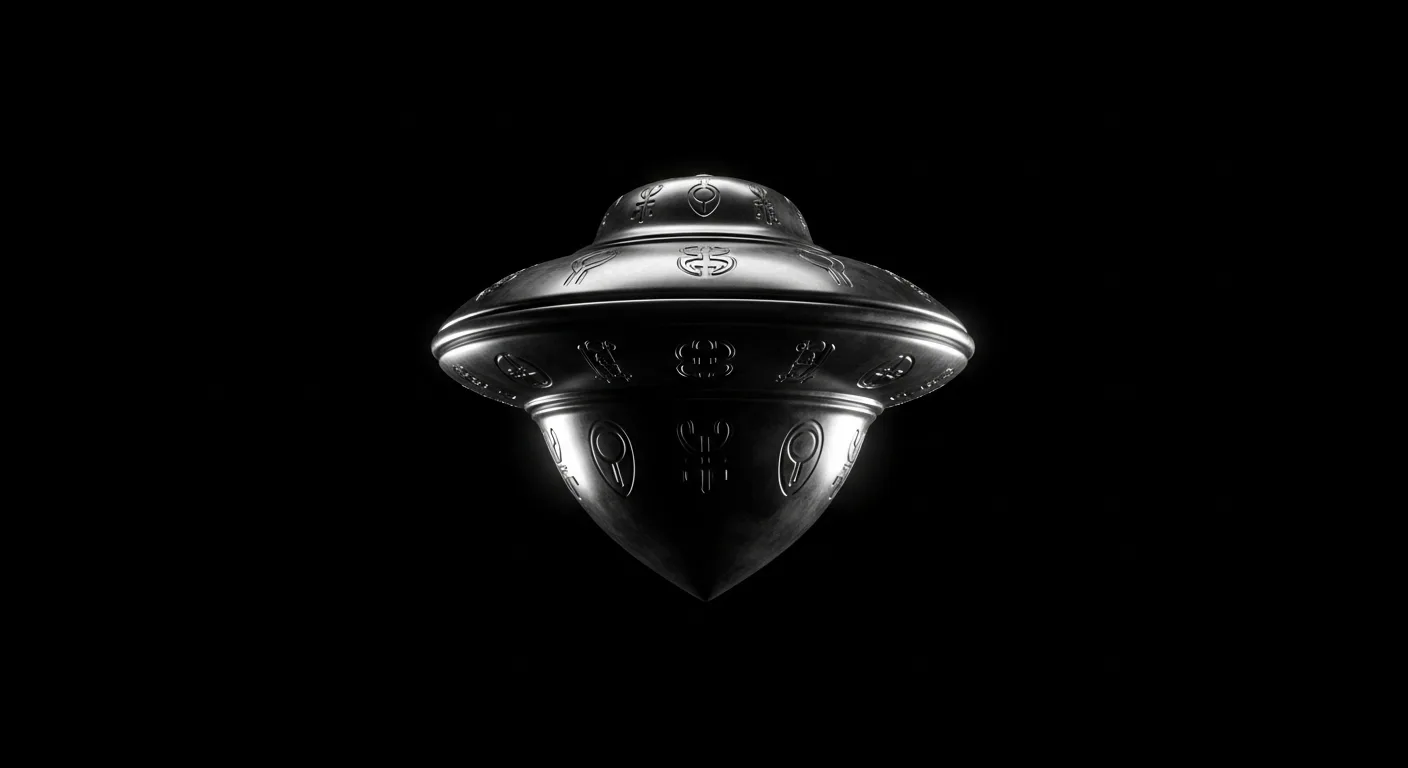
The evening of December 29, 1980, began as an unremarkable outing. Betty Cash, a fifty-one-year-old restaurant owner, her friend Vickie Landrum, a fifty-seven-year-old grandmother, and Vickie’s seven-year-old grandson Colby had driven out for dinner at a roadside restaurant in New Caney, Texas. The meal was pleasant, the company familiar, and the drive home through the piney woods northeast of Houston should have taken less than an hour. Instead, the three encountered something on a dark stretch of Farm-to-Market Road 1485 that would alter their lives irrevocably, leaving them with injuries that medical professionals struggled to explain and questions that remain unanswered more than four decades later. The Cash-Landrum incident stands as one of the most physically consequential UFO encounters ever documented—a case where the evidence was not limited to testimony and photographs but was seared into the bodies of the witnesses themselves.
The Piney Woods of East Texas
The landscape surrounding Huffman, Texas, in 1980 was a world apart from the sprawling suburbs of Houston that lay some thirty-five miles to the southwest. This was rural East Texas, a region defined by dense stands of loblolly pine and hardwood, narrow two-lane roads, and communities where everyone knew their neighbors by name. Farm-to-Market Road 1485 cut through this terrain like a dark ribbon, flanked on both sides by thick forest that pressed close to the road’s edge. At night, the road was profoundly dark—there were no streetlights, no roadside businesses, and very little traffic. The canopy of trees overhead blocked out even the stars in places, creating a tunnel of shadow through which headlights carved a narrow path.
This isolation was both the blessing and the curse of the Cash-Landrum encounter. The remoteness of the location meant that very few other witnesses were available to corroborate the trio’s account, a fact that skeptics would later seize upon. But it also meant that whatever happened on that road was experienced with an intensity and intimacy that a more populated setting might have diffused. There was no crowd to share the terror, no nearby house to flee toward, no passing motorist to flag down. Betty, Vickie, and Colby were alone with the thing in the sky, and they had nowhere to go.
A Light Through the Trees
As they drove south on FM 1485, it was Vickie who first noticed a bright light above the treetops ahead. At first, none of them paid it much attention. Lights in the sky were not unusual—this was a region where oil refineries occasionally flared excess gas, and aircraft from Houston’s airports passed overhead regularly. But as they continued driving, the light grew larger and more intense, and it became clear that this was something different. The light was not moving across the sky as an aircraft would. It was hovering, stationary, directly over the road ahead of them.
Betty slowed the car. As they rounded a curve, the object came into full view, and what they saw defied any conventional explanation. Hovering at treetop level, perhaps sixty to eighty feet above the road, was a massive diamond-shaped craft. The object was brilliant, casting light so intense that it illuminated the surrounding forest as brightly as daylight. Beneath it, flames or jets of intense fire erupted downward at irregular intervals, each burst accompanied by a roaring sound that filled the car even with the windows closed.
Betty brought the Oldsmobile Cutlass to a complete stop. The road ahead was effectively blocked—not by any physical barrier, but by the sheer intensity of the heat and light emanating from the object. The air itself seemed to shimmer and distort, the way it does above hot asphalt on a summer day, but magnified enormously. The temperature inside the car began to climb rapidly, despite the cool December evening outside.
Face to Face with the Unknown
What happened next would become the subject of intense debate, investigation, and legal proceedings for years to come. Betty Cash, driven by a mixture of curiosity and some impulse she later struggled to articulate, opened her car door and stepped out onto the road for a better look. Vickie also exited the vehicle briefly, though Colby’s terrified screaming quickly drew her back inside. The little boy was hysterical, convinced that the world was ending, and Vickie—a devout Christian—held him close and told him not to be afraid, that it was Jesus coming to take them to a better place.
Betty stood outside the car for several minutes, transfixed by the object overhead. She would later describe the craft as metallic in appearance, roughly the shape of a diamond standing on its point, with a flat bottom from which the periodic bursts of flame erupted. The surface of the object appeared to glow with its own light, separate from the fire beneath it. She estimated it to be as large as a water tower, though precise dimensions were impossible to gauge against the featureless night sky.
The heat was extraordinary. Even at a distance of perhaps 130 feet, Betty felt it pressing against her skin like an open oven door. The metal of the car became too hot to touch with bare hands. When Vickie attempted to steady herself by gripping the car door, the softened vinyl of the dashboard left an impression of her hand. Betty later found that the ring she was wearing had left a burn mark on her finger, the metal having been heated by the radiated energy.
After what the witnesses estimated to be ten to fifteen minutes—though the distortion of time under extreme stress makes such estimates unreliable—the object began to ascend. As it rose above the treetops, the three witnesses became aware of another element of the encounter that would prove just as baffling as the craft itself. From multiple directions, the deep, rhythmic thudding of helicopter rotors filled the air. Not one or two helicopters, but a formation of them—Betty would later count twenty-three—converging on the rising object and appearing to escort it away to the southwest.
Several of the helicopters were identified by the witnesses as CH-47 Chinooks, the large, twin-rotor military transport helicopters whose distinctive profile is difficult to mistake. Others appeared to be smaller utility helicopters. The formation moved with the object as it departed, the combined noise of their rotors drowning out all other sound until the entire procession disappeared over the tree line. Then, as suddenly as it had begun, the encounter was over. The road was dark and silent again, the pine trees standing as they always had, and three shaken human beings were left to drive home and try to make sense of what they had seen.
The Onset of Suffering
The first symptoms appeared within hours. By the time Betty dropped off Vickie and Colby and arrived at her own home, she was already feeling profoundly unwell. Her skin was reddened, as though she had suffered a severe sunburn, and her eyes were swollen and painful. A pounding headache had settled behind her temples, and waves of nausea left her unable to keep food down. She assumed it was shock, or perhaps the flu, and went to bed hoping sleep would bring relief.
It did not. Over the following days, Betty’s condition deteriorated rapidly and alarmingly. Her skin erupted in large, fluid-filled blisters, particularly on her face and the areas of her body that had been most exposed while standing outside the car. Her eyes swelled completely shut. Most disturbingly, her hair began falling out in thick clumps, coming away in handfuls when she ran her fingers through it. She was admitted to Parkway Hospital in Houston as a burn victim, where doctors treated her symptoms but were baffled by their cause. No conventional burn mechanism could explain the combination of skin damage, eye inflammation, hair loss, and systemic illness she was presenting.
Vickie and Colby also suffered, though their symptoms were less severe—consistent with their shorter exposure time and the partial shielding provided by the car. Vickie developed eye inflammation, skin burns, and hair loss, while Colby suffered from eye irritation and skin problems. Both experienced recurring bouts of illness in the weeks and months that followed.
The symptoms exhibited by all three witnesses were strikingly consistent with acute radiation syndrome, the constellation of effects produced by exposure to ionizing radiation. The pattern of skin burns, hair loss, nausea, vomiting, diarrhea, and immune suppression that characterized their illness matched what medical literature described in victims of nuclear accidents and radiation exposure events. Yet there was no known source of radiation on a rural Texas road, and the idea that a hovering aircraft of any kind could produce such effects raised questions that no one could easily answer.
The Investigation
The Cash-Landrum incident attracted the attention of several investigators, most notably John F. Schuessler, a NASA aerospace engineer and UFO researcher based in Houston. Schuessler was uniquely positioned to investigate the case—his engineering background gave him the technical knowledge to evaluate the witnesses’ descriptions, while his proximity to the Houston area allowed him to conduct extensive on-site research and maintain close contact with the witnesses over many years.
Schuessler meticulously documented the medical records of all three victims, photographed their injuries as they progressed, and interviewed them repeatedly to establish the consistency of their accounts. He also searched for corroborating witnesses and found several. A Dayton, Texas, police officer named Lamar Walker and his wife reported seeing a large number of CH-47 helicopters in the area on the night in question, flying in the direction described by Cash and Landrum. An oilfield worker named Jerry McDonald, who was in his backyard in the area that evening, reported seeing a large, bright, triangular object pass overhead, trailed by helicopters.
Schuessler’s investigation also revealed an intriguing absence. Despite exhaustive inquiries, no military base or unit in the region would acknowledge having helicopters in the air that night. The sheer number of Chinooks reported—twenty-three or more—would have represented a significant military operation, one that should have left extensive records. CH-47 Chinooks were operated by the U.S. Army, and a deployment of that scale in civilian airspace would normally require coordination with the Federal Aviation Administration. Yet no flight plans were filed, no military exercises were scheduled, and no branch of the armed forces admitted to any involvement.
This denial became central to the case. If the military was present—and the witnesses were adamant that it was—then the government was lying about its involvement. If the military was not present, then the witnesses were either mistaken about the helicopters or fabricating that element of their account. Neither explanation was satisfying. The witnesses had no reason to invent the helicopter detail, and their description of the aircraft was specific and technically accurate. The military’s blanket denial, meanwhile, raised more questions than it answered.
The Lawsuit
In 1986, Betty Cash and Vickie Landrum took the remarkable step of filing a $20 million lawsuit against the United States government, seeking compensation for injuries they argued were caused by a government-operated or government-associated craft. The case, filed in the U.S. District Court for the Southern District of Texas, named the Department of the Army, the Department of the Navy, the Department of the Air Force, and NASA as defendants. The legal theory was straightforward: the military helicopters escorting the object demonstrated government knowledge of and involvement with the craft, and the government was therefore liable for the injuries it caused.
The case faced an insurmountable obstacle. To establish liability, the plaintiffs needed to prove that the object was owned or operated by the U.S. government. Every branch of the military flatly denied any involvement, any knowledge of the incident, and any ownership of any craft matching the witnesses’ description. Without documentation or testimony linking the object to the government, the case had no foundation. In August 1986, U.S. District Judge Ross Sterling dismissed the suit, finding that the plaintiffs had failed to establish that the object belonged to the government or that the government bore any responsibility for their injuries.
The dismissal was devastating for Cash and Landrum, who had viewed the legal system as their last hope for acknowledgment and compensation. The government’s position was unassailable in a courtroom: it simply denied everything, and the burden of proof lay with the plaintiffs. Short of a whistleblower or a declassified document confirming military involvement, there was no way to overcome that denial. The women were left to bear the costs of their ongoing medical care and the continuing deterioration of their health without any assistance from the entity they believed was responsible.
Betty Cash’s Decline
Of the three witnesses, Betty Cash suffered the most severe and enduring consequences. Her initial hospitalization was only the beginning of a prolonged medical ordeal that lasted the rest of her life. She was readmitted to the hospital more than two dozen times in the years following the incident, suffering from a cascade of health problems that her physicians connected to her initial radiation-like exposure. Her immune system was permanently compromised, leaving her vulnerable to infections and secondary illnesses. Skin problems persisted for years, and her hair never fully grew back in some areas.
Betty had been an energetic, independent businesswoman before the encounter—she owned and operated a grocery store and restaurant near Dayton, Texas. After the incident, she was unable to work. Her business failed. Her savings were consumed by medical bills. The vibrant, capable woman who had stepped out of her car on FM 1485 was gradually reduced to a shadow of herself by the consequences of that decision.
Betty Cash died on December 29, 1998—exactly eighteen years to the day after the encounter that defined and ultimately consumed her life. The cause of death was listed as cancer. Whether the cancer was directly caused by radiation exposure from the object remains a matter of speculation, but the timing and the pattern of her health decline leave little room for coincidence in the minds of those who knew her case. She was sixty-nine years old.
Vickie Landrum continued to suffer health problems related to the incident but outlived her friend by several years. She remained outspoken about the encounter until the end of her life, insisting that the government bore responsibility for what happened and expressing frustration at the official refusal to acknowledge the event. Colby Landrum, who was just seven years old at the time of the encounter, grew up with the incident as a defining feature of his childhood, carrying both the physical and psychological scars of that December night into his adult life.
Theories and Interpretations
The Cash-Landrum incident has generated a wide spectrum of interpretations in the decades since it occurred, ranging from extraterrestrial encounter to secret military technology test to elaborate hoax. Each theory must account for certain stubborn facts: the witnesses’ injuries were real and medically documented; their accounts were consistent over many years of retelling; and the presence of military-style helicopters, if accepted, implies a level of official involvement that the government has never acknowledged.
The extraterrestrial hypothesis holds that the object was a craft of non-human origin, and that the military helicopters were scrambled in response to its detection, attempting to track or contain it. This interpretation explains the military denial—the government would have every reason to conceal its awareness of and interaction with an alien vehicle. However, it raises the question of why such a craft would hover over a rural road, apparently in distress, given the sophistication implied by interstellar travel.
A more popular theory among researchers suggests that the object was a piece of experimental military technology—a nuclear-powered or nuclear-armed aircraft, perhaps—that malfunctioned during a test flight. The helicopters would have been the escort and recovery team, and the government’s denial would be a straightforward matter of national security classification. This theory accounts neatly for both the radiation injuries and the military presence, though no evidence of such a program has ever been declassified or leaked.
The possibility that the object was some form of nuclear device being transported by air has also been raised. An improperly shielded nuclear reactor or weapon, slung beneath a helicopter or carried by an experimental heavy-lift platform, could theoretically produce the radiation effects described by the witnesses. The diamond shape could have been a housing or transport container, and the flames could have been the exhaust of a struggling propulsion system. This theory is speculative but has the virtue of requiring no exotic technology.
Skeptics have questioned whether the witnesses’ injuries were truly caused by the encounter, noting that Betty Cash was a heavy smoker and that cancer has many potential causes. However, the acute onset of symptoms immediately following the encounter, the consistency of those symptoms with radiation exposure, and the fact that all three witnesses fell ill simultaneously argue strongly against coincidence. Medical professionals who examined the witnesses were unable to identify any alternative explanation for the pattern of injuries.
A Wound That Never Healed
The Cash-Landrum incident occupies a unique position in the annals of UFO research. Unlike the vast majority of encounters, which leave no physical evidence beyond testimony and occasionally ambiguous photographs, this case produced tangible, measurable harm to human beings. The blisters, the hair loss, the compromised immune systems, the cancer—these were not matters of belief or interpretation. They were medical facts, documented in hospital records and witnessed by physicians.
The case also stands as a stark illustration of the powerlessness of ordinary citizens when confronted with a government that chooses denial. Betty Cash and Vickie Landrum did everything that the system ostensibly allows—they reported their experience, they sought medical treatment, they retained attorneys, they filed suit in federal court. At every step, they were met with official silence or outright denial. The helicopters they saw and heard were phantoms, according to the government. The object that burned their skin and stole their health did not exist. The suffering that consumed the final two decades of Betty Cash’s life was, in the eyes of the law, caused by nothing at all.
Whatever hovered above Farm-to-Market Road 1485 on the night of December 29, 1980, it left marks that time has not erased. The trees along that stretch of road have long since grown over any scorch marks, and the road itself has been repaved and widened in the intervening decades. But the questions raised that night remain as raw and unresolved as the burns on Betty Cash’s skin. Three people drove into the piney woods of East Texas for a quiet evening out and drove home into a nightmare from which none of them would ever fully awaken. The object departed into the night, escorted by helicopters that no one will claim, leaving behind only pain, mystery, and the unyielding silence of a government that knows more than it will say.
Sources
- CIA UFO/UAP Reading Room — Declassified CIA documents on UAP