Washington, D.C. UFO Sighting (December 23, 1953) — FBI Files
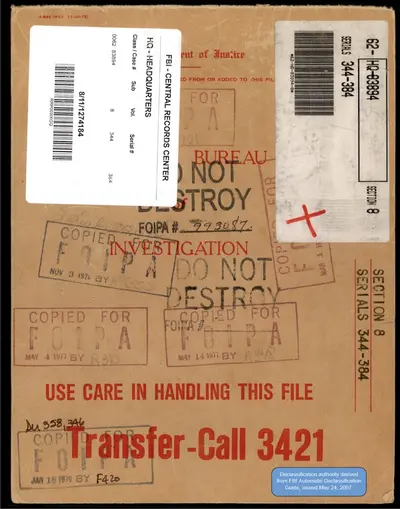
FBI documents from December 1953 detail a discrepancy regarding reported Chilean Navy UFO photographs taken near Antarctica in 1948.
Historical Context of the Cold War Era
The mid-twentieth century represented a period of heightened atmospheric anxiety within the United States. Following the conclusion of World War II, the onset of the Cold War necessitated a rigorous monitoring of the skies to detect potential Soviet incursions. During this era, the phenomenon of Unidentified Flying Objects (UFOs) became a significant concern for national security, leading to the establishment of various investigative bodies. The United States Air Force operated Project Blue Book, a systematic study of UFO reports, while the Federal Bureau of Investigation (FBI) maintained its own protocols for documenting aerial anomalies that might threaten vital installations or national interests.
During the 1950s, the scientific and intelligence communities frequently struggled to differentiate between emerging technologies and natural phenomena. The deployment of high-altitude reconnaissance programs, such as the Project Mogul series of weather balloons, often created confusion among observers. Atmospheric optical phenomena, including lenticular clouds or sundogs, were frequently misidentified as metallic craft. Because the geopolitical landscape was so volatile, any report of an unidentified object in the vicinity of the nation’s capital or other strategic hubs was treated with extreme scrutiny by federal agencies.
The December 1953 Incident
On December 23, 1953, in Washington, D.C., U.S. government investigators recorded an unidentified-object incident that remained classified for decades. The details of this specific case were later released to the public on May 8, 2026, as part of the Presidential Unseiling and Reporting System for UAP Encounters (PURSUE). This case was processed through the FBI, following established bureaucratic channels where field offices in cities such as Knoxville, Albuquerque, and Los Angeles routed UFO-related reports to the central headquarters. This routing was part of the Bureau’s standing protocols intended to protect sensitive government infrastructure and maintain oversight of potential aerial threats.
The core of the released documentation involves a specific discrepancy regarding international reports of aerial anomalies. On the date in question, Captain Nagel of the Chilean Naval Mission confirmed the receipt of a letter concerning photographs of UFOs. These photographs were reportedly taken by Captain Orrego of the Chilean Navy near Antarctica in 1948. The photographs were said to depict unidentified objects in formational flight. However, the subsequent communication revealed a significant contradiction. Captain Orrego stated that he had not seen any UFOs over Antarctica in 1948 and, consequently, the requested photographs did not exist. This sudden reversal of claims introduced questions regarding potential censorship or the reliability of the original reports.
Analysis and Classification
The document does not specify the number of witnesses involved in the original 1948 sightings or the 1953 reporting. The case is classified as a visual sighting reported by ground or air observers. The nature of the discrepancy—where a previously reported physical evidence source is suddenly retracted—is a recurring theme in Cold War-era intelligence files, often complicating the ability of researchers to verify the legitimacy of the initial sighting.
Under the current oversight of the All-domain Anomaly Resolution Office (AARO), all records released through the PURSUE program are designated as unresolved by default. The federal government has maintained a neutral stance, neither concluding that the events described were anomalous nor confirming them as conventional. While the 1953 file highlights a specific conflict regarding Chilean naval records, the broader context of the era suggests that many such reports could have been attributed to experimental aircraft, astronomical objects like Venus or meteors, or atmospheric phenomena. The 1953 case remains a notable example of the bureaucratic complexities involved in documenting aerial phenomena during the height of the nuclear age.