Norway AND SWEDEN UFO Sighting (Oct. 13, 1952) — FBI Files
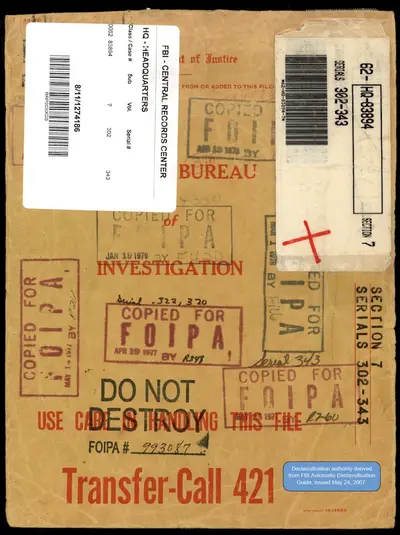
Declassified FBI records detail a 1952 report of a saucer-shaped object landing in Norway, with additional sightings reported in Stockholm, Sweden.
Historical Context
The incident occurring on October 13, 1952, took place during a period of heightened global tension and intense scrutiny regarding unidentified aerial phenomena. This era was defined by the immediate aftermath of the 1947 Kenneth Arnold sighting and the Roswell incident, both of which had ignited a widespread phenomenon known as the “flying saucer” wave. During the early 1950s, the geopolitical landscape of Northern Europe was heavily influenced by the burgeoning Cold War. The Scandinavian region, encompassing Norway and Sweden, occupied a strategic position between the NATO-aligned Western powers and the Soviet Union. Consequently, any unidentified aerial activity in these territories was viewed through a lens of national security and potential espionage.
The reporting of such phenomena during this decade often followed specific bureaucratic patterns. In the United States, the Federal Bureau of Investigation maintained protocols for monitoring aerial anomalies that could threaten vital installations. Field offices in cities such as Knoxville, Albuquerque, and Los and Angeles were tasked with routing significant reports to headquarters. This systematic approach ensured that sightings of unidentified objects were documented within the framework of intelligence gathering, particularly as the technological capabilities of both the United States and the Soviet Union were rapidly advancing through the development of jet propulsion and early rocket technology.
The 1952 Incident
On October 13, 1952, the Norwegian government reported the presence of a saucer-shaped object that had reportedly landed within Norwegian territory. The nature of the object’s movement and its eventual landing prompted investigations by various specialists. At the time, German experts analyzed the event and suggested that the object might be of Russian origin. This hypothesis aligned with the physical description provided in the reports, as the perceived capabilities of the craft were compared against the known or suspected technological developments of the Soviet Union during the early Cold War period.
Simultaneous to the reports from Norway, sightings of unidentified objects were documented in Stockholm, Sweden. While the specific details regarding the movement of the objects in Sweden were part of the broader atmospheric phenomenon, they were recorded alongside the Norwegian landing event. The released documentation does not specify the exact number of witnesses who observed the objects in either country, focusing instead on the official reports submitted by governmental and expert bodies.
Analysis and Classification
The objects described in the documentation were characterized by their disc- or saucer-shaped appearance, a common descriptor in the mid-century era of unidentified aerial phenomena. Such descriptions were frequently used to categorize objects that did not conform to the known aerodynamic profiles of contemporary fixed-wing aircraft.
The status of this case remains officially unresolved. Under the Presidential Unsealing and Reporting System for UAP Encounters (PURSUE), all released records are designated as unresolved by the All-domain Anomaly Resolution Office (AARO) by default. The federal government has maintained a neutral stance, neither concluding that the events were anomalous nor confirming that they were the result of conventional technology.
When evaluating such sightings, researchers often consider several conventional candidates prevalent during the 1950s. These include experimental aircraft testing, the presence of weather balloons—specifically those associated with the Project Mogul series of the late 1940s—and various atmospheric optical phenomena such as lenticular clouds or sundogs. Additionally, astronomical objects such as the Moon, Venus, or meteors appearing near the horizon have historically been identified as potential sources for sightings of bright, moving lights. The 1952 Norway and Sweden case remains part of this broader scientific and intelligence-based inquiry into the nature of unidentified aerial activity.