Downers Grove, Illinois UFO Sighting (July 4, 1950) — FBI Files
A United Air Lines meteorologist and his wife observed a fast-moving, silvery object over Illinois during the 1950 Independence Day celebrations.
Historical Context
The period following the Second World War was characterized by intense technological competition and a heightened state of military readiness. In the United States, the early 1950s saw a surge in public interest regarding unidentified aerial phenomena, driven largely by the cultural phenomenon of “flying saucers.” This era of mass sightings was ignited by the Kenneth Arnold sighting in June 1947 and the subsequent reports surrounding the Roswell incident in July 1947. As the Cold War intensified, the presence of unidentified objects in the sky became a matter of national security concern, prompting various government agencies to monitor and document such occurrences.
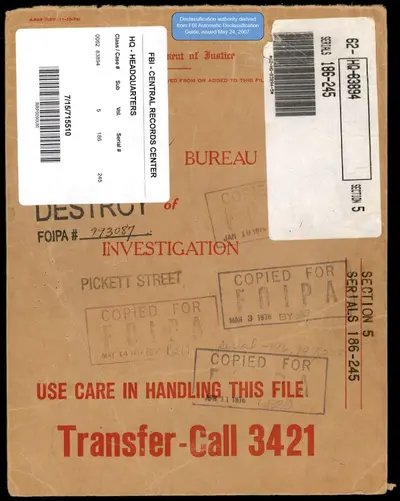
During this time, the Federal Bureau of Investigation (FBI) maintained specific protocols for handling reports that could potentially impact the safety of vital installations or national infrastructure. When field offices in cities such as Knoxville, Albuquerque, or Los Angeles received reports of unidentified objects, the Bureau’s standing procedures dictated that these files be routed to headquarters for centralized processing. This bureaucratic structure ensured that any potential aerial threats or unauthorized incursions were documented within the federal intelligence framework, even if the nature of the objects remained unknown.
The Downers Grove Incident
On the evening of July 4, 1950, in Downers Grove, Illinois, an incident occurred that was later documented within these official government files. The sighting was made by a man employed as a United Air Lines meteorologist and his wife. Given the witness’s professional background in meteorology and aviation, the observation was recorded with specific technical details regarding the object’s movement and appearance.
The observers noted a large, bright, silvery object moving through the night sky. The object was tracked at an estimated altitude of approximately 10,000 feet, traveling in a north-northwesterly direction. The meteorologist provided an estimate of the object’s velocity, calculating a speed of 700 to 800 miles per hour. To provide a frame of reference for this speed, the witness compared the movement of the object to that of commercial airplanes. Crucially, the witness explicitly stated that the object was neither an aircraft nor a fireworks display, despite the date coinciding with traditional Independence Day celebrations.
While the specific number of witnesses is not detailed in the released documentation, the official record remains a primary source for the event. The details of this encounter were not made public to the general populace at the time of the sighting but were later released on May 8, 2026, as part of the Presidential Unsealing and Reporting System for UAP Encounters (PURSUE).
Investigation and Classification
The Downers Grove case is classified as a visual sighting reported by ground observers. In the decades following the incident, the investigation of such cases has transitioned from localized FBI reporting to the oversight of the All-domain Anomaly Resolution Office (AARO). Under the current mandates of the PURSUE program, all released records are designated as unresolved by default. This designation indicates that the federal government has not reached a definitive conclusion regarding whether the event was the result of an anomalous phenomenon or a conventional source.
The ambiguity of the case reflects the broader challenges of mid-century aerial monitoring. At the time of the sighting, several conventional explanations were plausible. The late 1940s and early 1950s were marked by the deployment of the Project Mogul series of high-altitude balloons, which were designed to detect Soviet nuclear tests and were frequently mistaken for unidentified objects. Additionally, atmospheric optical phenomena, such as lenticular clouds or sundogs, and the presence of bright astronomical bodies like Venus or the Moon near the horizon, often produced sightings that mimable the characteristics of unidentified craft. Furthermore, the rapid advancement of experimental aerospace technology during the early Cold War meant that high-speed, unidentified silhouettes were a recurring feature of the era’s aerial landscape.