Denver, Colorado UFO Sighting (January 1950) — FBI Files
FBI records from January 1950 document an investigation into claims of flying saucers made by George Koehler in Denver, Colorado.
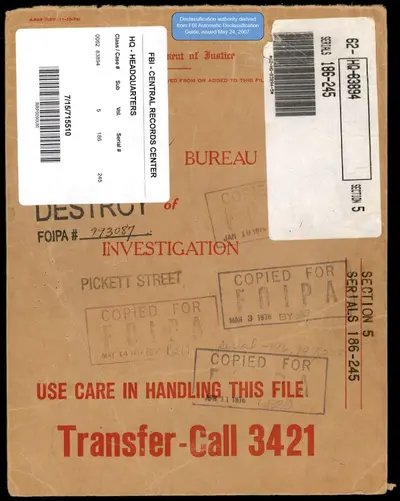
Background
In January 1950, in Denver, Colorado, U.S. government investigators recorded an unidentified-object incident later released to the
public on May 8, 2026, as part of the Presidential Unsealing and Reporting System for UAP Encounters (PURSUE). This incident occurred during a period of heightened public and governmental anxiety regarding aerial phenomena. The case is categorized as part of the first significant wave of “flying saucer” reports that swept the United States following the Kenneth Arnold sighting of June 1947 and the Roswell incident of July 1947. During this era, the sudden appearance of unidentified aerial phenomena prompted a shift in how domestic intelligence agencies monitored the skies, as the Cold War necessitated strict oversight of all objects entering sovereign airspace.
The documentation for this specific event was filed with the Federal Bureau of Investigation. At the time, the Bureau maintained a standardized procedure for handling reports of unexplained aerial phenomena. Field offices in Knoxville, Albuquerque, Los Angeles, and other regional hubs were tasked with routing UFO reports to headquarters under the Bureau’s standing protocols for the protection of vital installations. This systematic approach ensured that any object that could potentially threaten sensitive military or governmental infrastructure was documented and analyzed by central authorities.
What the document records
The released documentation focuses on claims made by an individual identified as George Koehler. In January 1950, Koehler reportedly made claims about observing flying saucers. Following these assertions, an investigation was conducted by OSI Denver. The investigators concluded that they found no verifiable information to support the claims made by Koehler. Based on the findings of the investigation, the Bureau categorized Koehler as a probable mental case. Consequently, the FBI was asked to advise on whether any further action was needed in Denver regarding the matter.
The released documents do not specify the total number of witnesses involved in the sighting. The investigation appears to have centered primarily on the credibility of the individual reporting the event rather than the corroboration of multiple observers.
Type of case
The case is classified as a visual sighting reported by ground or air observers. Such reports were common during the post-war period, as the proliferation of civilian and military aviation increased the frequency of human-eye observations of the upper atmosphere.
Status
All records released under the PURSUE program are designated unresolved by the All-domain Anomaly Resolution Office (AARO) by default. The federal government has not concluded that the events were anomalous, has not concluded that they were conventional, and has not ruled out either possibility. This lack of a definitive conclusion is standard for historical files released decades after the initial reporting.
When analyzing sightings from this specific period, researchers often consider various conventional candidates. These include experimental aircraft developed during the early stages of the jet age, weather balloons—particularly those associated with the Project Mogul series in the late 1940s—and atmospheric optical phenomena such as sundogs and lenticular clouds. Additionally, astronomical objects including Venus, the Moon, and meteors passing near the horizon are frequently evaluated as potential explanations for reported unidentified objects.