Roswell UFO Crash, October 21, 1949 — FBI File
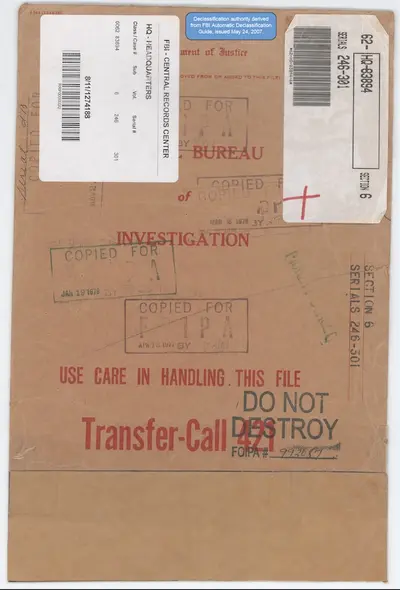
An FBI-documented sighting of a bright white object moving at 150 mph occurred over Roswell, New Mexico, in late 1949.
Historical Context of Post-War Aerial Anomalies
The late 1940s represented a transformative period in American aerial surveillance and public perception of the skies. Following the conclusion of World War II, the rapid advancement of aeronautical technology led to an increase in both experimental military hardware and civilian atmospheric observation. This era was characterized by the emergence of the “flying saucer” phenomenon, a cultural and scientific preoccupation sparked by high-profile sightings that suggested the presence of unidentified aerial phenomena. The period was defined by a tension between the burgeoning Cold War need for secrecy regarding classified aerospace projects and a public increasingly attuned to unusual movements in the upper atmosphere.
Geographically, the high desert of New Mexico provided a significant backdrop for such reports. The region’s vast, open landscapes and proximity to sensitive military installations made it a frequent site for both documented atmospheric phenomena and classified testing. During this time, the United States government was actively engaged in various high-altitude monitoring programs, which often resulted in unintended sightings by the local populace. The intersection of military secrecy and civilian observation created a landscape where unidentified objects became a recurring subject of official investigation and public speculation.
The October 1949 Incident
On October 21, 1949, in Roswell, New Mexico, U.S. government investigators recorded an unidentified-object incident that remained shielded from public view for decades. The details of this specific event were only released to the public on May 8, 2026, as part of the Presidential Unsealing and Reporting System for UAP Encounters (PURSUE). This incident occurred during the first wave of “flying saucer” reports that had swept the United States following the Kenneth Arnold sighting of June 1947 and the widely discussed Roswell incident of July 1947.
The documentation recovered from the Federal Bureau of Investigation (FBI) provides a specific account of the sighting. On the night of October 21, observers in the Roswell area reported the presence of a bright white object positioned above the horizon. The movement of the object was noted as being consistent with a speed of approximately 150 mph. While the document provides these specific physical characteristics of the object and its velocity, the total number of witnesses involved in the sighting is not specified within the released text.
Investigative Protocols and Classification
The administrative handling of the Roswell sighting reflects the established bureaucratic procedures of the era. The case was officially filed with the Federal Bureau of Investigation, utilizing a standardized reporting structure. Under the Bureau’s standing protocols for the protection of vital installations, various field offices—including those in Knoxville, Albuquerque, and Los Angeles—were responsible for identifying and routing UFO reports to the FBI headquarters. This centralized system ensured that any aerial activity that could potentially threaten or involve sensitive government assets was documented and analyzed by federal authorities.
The classification of the case as a visual sighting reported by ground or air observers places it within a broader category of documented anomalies investigated by the state. The nature of the reporting suggests a focus on the visual tracking of objects that did not immediately align with known civilian or military flight paths.
Analytical Status and Conventional Explanations
As of the current records, all documents released under the PURSUE program are designated as unresolved by the All-domain Anomaly Resolution Office (AARO) by default. The federal government has maintained a neutral stance regarding the October 1949 event, having reached no conclusion as to whether the object was anomalous or conventional. The official position does not rule out the possibility of extraterrestrial or unknown technology, nor does it dismiss the possibility of a known, terrestrial origin.
When analyzing sightings from this specific period, investigators often consider several conventional candidates. These include experimental aircraft being tested in the New Mexico corridor or the Project Mogul series of high-altitude balloons, which were designed to detect Soviet nuclear tests. Other possibilities include atmospheric optical phenomena, such as sundogs or lenticular clouds, which can create the illusion of moving, structured objects. Additionally, astronomical objects such as the Moon, Venus, or meteors appearing near the horizon are frequently cited as potential sources for bright, moving lights observed by ground-based witnesses.