Phoenix, Arizona UFO Sighting (June 7, 1949) — FBI Files
Federal investigators documented an unidentified object sighting in Phoenix, Arizona, in 1949, as revealed through declassified FBI files.
Historical Context
The period following the end of the Second World War was characterized by a significant increase in reports of unidentified aerial phenomena across the United States. This era, often referred to as the first wave of the flying saucer phenomenon, was catalyzed by the Kenneth Arnold sighting in June 1947 and the subsequent reports surrounding the Roswell incident in July 1947. During this time, the American public and various government agencies were navigating a landscape of rapid technological advancement, the early stages of the Cold War, and the emergence of high-altitude surveillance capabilities.
Geographically, the American Southwest, including Arizona, became a focal point for such reports due to its vast, open desert landscapes and the presence of numerous sensitive military installations and aerospace research facilities. The visibility afforded by the clear desert skies often led to frequent sightings of both natural atmospheric phenomena and man-made objects. At the time, the scientific and intelligence communities were attempting to categorize these sightings within the framework of known aeronautics, often weighing the possibility of secret Soviet technology against more conventional atmospheric or astronomical occurrences.
The June 1949 Incident
On June 7, 1949, an unidentified-object incident occurred in Phoenix, Arizona. The details of this specific event were recorded by U.S. government investigators and were later released to the public on May 8, 2026, as part of the Presidential Unsealing and Reporting System for UAP Encounters (PURSUE). The documentation regarding this event is part of a larger bureaucratic effort to track and catalog aerial anomalies that could potentially impact national security.
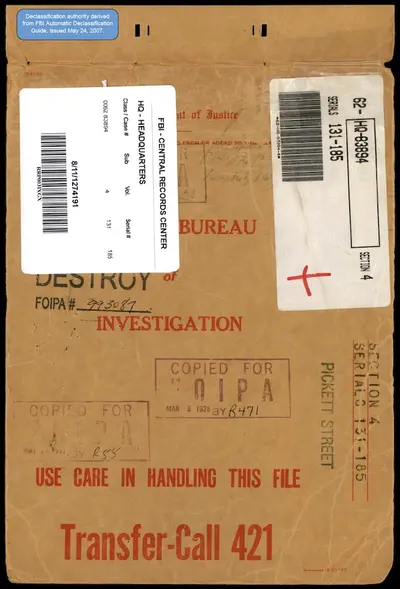
The released documents reveal an administrative interaction involving the Office of Special Investigations (OSI). On the date of the record, OSI representative Lynn C. Aldrich requested detailed information from the FBI Phoenix office concerning a 1947 interview conducted with an individual named William Rhodes. The purpose of this request was to obtain the substantive details of the original interview to provide to superiors in San Francisco. This request was prompted by Rhodes’s specific demand for the return of his photographs related to the matter.
The internal records regarding the recollection of the events are limited. When Fugate, an official involved in the investigation, was questioned by his superiors regarding the matter, he described his recollection of the initial interview as hazy. While the documents confirm the existence of the investigation and the pursuit of the 1947 interview details, the released files do not specify the exact number of witnesses present during the original sighting.
Investigative Procedures and Classification
During this era, the Federal Bureau of Investigation maintained a structured protocol for handling reports of unidentified objects. Field offices in locations such as Knoxville, Albuquerque, and Los Angeles were tasked with routing UFO reports to FBI headquarters. This procedure was part of the Bureau’s standing protocols designed for the protection of vital installations and the monitoring of potential threats to domestic security. The systematic collection of these reports allowed for a centralized repository of aerial sightings, even if the primary focus was often on the security implications of the objects rather than their physical nature.
The nature of this case is classified as a visual sighting reported by ground or air observers. Under the current oversight of the All-domain Anomaly Resolution Office (AARO), all records released through the PURSUE program are designated as unresolved by default. The federal government has maintained a neutral stance, neither concluding that the events were anomalous nor confirming that they were the result of conventional objects.
Potential conventional explanations for sightings during this period include the presence of experimental aircraft, weather balloons—specifically those associated with the Project Mogul series active in the late 1940s—or atmospheric optical phenomena such as sundogs and lenticular clouds. Additionally, astronomical objects like Venus, the Moon, or meteors appearing near the horizon were frequently cited as possible sources for reported unidentified objects.