Grand Canyon, Arizona UFO Sighting (July 1, 1947) — FBI Files
On July 1, 1947, a pilot over the Grand Canyon reported observing two high-speed, light gray, circular objects moving vertically.
Historical Context
The summer of 1947 represents a pivotal era in the history of unidentified aerial phenomena, marking the beginning of a period of intense public and governmental scrutiny regarding objects in the sky. This period was characterized by a sudden surge in reports following the Kenneth Arnold sighting in June 194 and the subsequent Roswell incident in July 1947. During this time, the term “flying saucer” entered the common lexicon, reflecting a widespread cultural fascination with objects that appeared to defy conventional aerodynamic principles. The geography of the American Southwest, including the vast and rugged terrain of the Grand Canyon in Arizona, often served as a backdrop for such sightings due to its isolation and the frequent presence of military and civilian aviation.
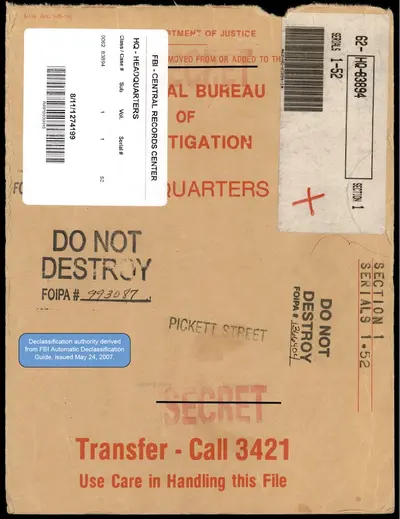
In the post-World War II landscape, the United States government was increasingly preoccupied with national security and the potential for technological advancements by foreign adversaries. The Federal Bureau of Investigation (FBI) maintained specific protocols for managing reports that could impact the safety of vital installations or national interests. When field offices in locations such as Knoxville, Albuquerque, or Los Angeles received reports of unidentified objects, they were instructed to route these files to headquarters. This administrative process ensured that any phenomenon potentially threatening military or strategic assets was documented within the federal intelligence apparatus.
The Incident
On July 1, 1947, an incident occurred over the Grand Canyon, Arizona, involving unidentified objects in the airspace. The details of this event were preserved in government records and were later released to the public on May 8, 2026, through the Presidential Unsealing and Reporting System for UAP Encounters (PURSUE). The primary account of the event comes from a pilot who was operating an aircraft over the canyon at the time of the observation.
The pilot observed two round objects traveling at extremely high speeds. These objects were described as being light gray and circular in shape. According to the pilot’s account, the objects were moving in a straight downward trajectory. The movement of the objects was such that the pilot reacted by turning his aircraft away from the path of the objects, noting that one object appeared to be following the other. While the documentation provides a clear account of the pilot’s visual observations and physical reaction, the released files do not specify the total number of witnesses present during the event.
Investigation and Classification
The classification of this case falls under the category of a pilot or aircrew sighting, defined by an observation made directly from a cockpit during active flight. Such sightings are considered significant in aerial anomaly research because the observers are trained in aircraft identification and are positioned within a controlled environment that allows for the tracking of object motion and trajectory.
The official status of the Grand Canyon sighting remains unresolved. Under the default protocols of the All-domain Anomaly Resolution Office (AARO), all records released through the PURSUE program are categorized as unresolved. The federal government has maintained a neutral stance regarding the nature of the objects, neither concluding that the event was caused by anomalous technology nor confirming that it was the result of conventional means.
In the context of 1947, several conventional explanations are frequently considered by researchers. These include the presence of experimental aircraft testing, the movement of weather balloons—specifically those associated with the Project Mogul series which utilized high-altitude balloons to detect nuclear tests—or atmospheric optical phenomena such as sundogs and lenticular clouds. Additionally, astronomical objects like the Moon, Venus, or meteors passing near the horizon are often evaluated as potential sources for such sightings. The lack of a definitive conclusion in the FBI files leaves the Grand Canyon incident as a documented part of the mid-century wave of aerial anomalies.