Meter Dept, Duke UAP Encounter, 1948 — USAAF Box 7 #105
An archival record from 1948 details an unidentified object sighting near the Meter Department at Duke, documented by the U.S. Army Air Forces.
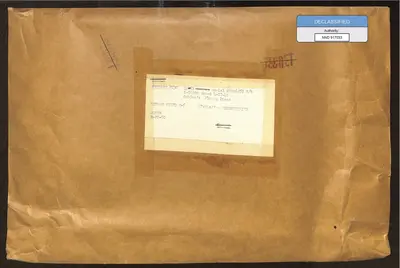
Historical Context
The year 1948 represented a period of significant transition in American aerospace surveillance and public perception of the skies. Following the summer of 1947, the United States entered a phenomenon often referred to by historians as the “saucer wave.” This era was characterized by a sudden surge in reports of unidentified aerial phenomena, catalyzed by the Kenneth Arnold sighting in June 1947 and the subsequent publicity surrounding the Roswell incident in July 1947. During this time, the U.S. Army Air Forces (USAAF) maintained various internal checklists to track and categorize anomalous aerial sightings, attempting to differentiate between known aeronautical developments and truly unknown phenomena.
The geography of the sighting, located near the Meter Department at Duke, places the event within a region of significant academic and scientific activity. During the post-war era, the expansion of research institutions in the American South contributed to a more dense network of observers capable of monitoring the upper atmosphere. The documentation of such events often relied on the diligence of military personnel and ground-based observers who were trained to identify deviations in standard flight patterns.
Case Documentation and Records
The specific event known as Incident #105 is documented within the “Check-List - Unidentified Flying Objects” series, a collection of military records archived in Box 7 of file 38_143685. This particular entry remains a primary source of interest due to its recent accessibility. The records were officially released by the Department of War on May 8, 2026, through the implementation of the Presidential Unsealing and Reporting System for UAP Encounters (PURSUE). This program was established to provide transparency regarding historical aerial anomalies that had previously remained classified or inaccessible to the public.
The contents of the form for Incident #105 are concise. The summary records that an unspecified observer reported a sighting in the vicinity of the Meter Department at Duke. While the document confirms the occurrence of the sighting and its classification by the USAAF, it lacks specific details regarding the trajectory, luminosity, or duration of the object. The entry serves primarily as a formal acknowledgment of an observed anomaly by the military authorities of the period.
Classification and Analysis
The case is categorized as a visual sighting reported by either ground or air observers. Within the taxonomy of mid-century aerial reports, visual sightings were the most common type of encounter, often involving descriptions of metallic or disc-shaped objects moving at high velocities.
The current status of the case remains officially unresolved. Under the mandates of the All-domain Anomaly Resolution Office, all records released via the PURSUE program are designated as unresolved. The federal government has maintained a neutral stance regarding the nature of the Duke encounter; it has neither concluded that the object was an anomalous phenomenon nor confirmed it to be a conventional craft. The possibility of either remains open in official archives.
When analyzing the 1947-1948 wave of sightings, researchers often consider several conventional candidates. These include the Project Mogul balloon flights, which were active over portions of the United States to detect Soviet nuclear testing, as well as the testing of experimental jet and rocket-powered aircraft. Other potential explanations for such reports include atmospheric optical effects, such as temperature inversions or light refraction, and the misidentification of astronomical objects or high-altitude weather balloons. Despite these potential explanations, the lack of a definitive conclusion for Incident #105 leaves it as a persistent entry in the historical record of unidentified aerial phenomena.