West Rindge, New Hampshire UFO Sighting (July 7, 1947) — FBI Files
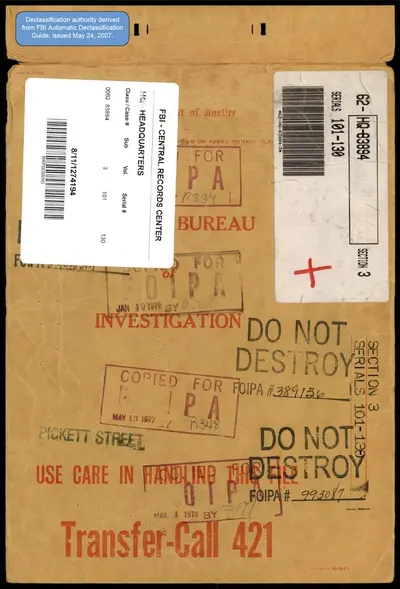
Federal investigators documented the discovery of heated cast iron fragments in West Rindge, New Hampshire, following an unidentified object sighting.
Historical Context
The summer of 1947 represents a pivotal moment in the history of modern ufology, characterized by a sudden surge in reports of unidentified aerial phenomena across North America. This period, often referred to as the first wave of “flying saucer” sightings, began in earnest following the Kenneth Arnold sighting in June 1947 and was further intensified by the events surrounding the Roswell incident in July 1947. During this era, the concept of extraterrestrial spacecraft was entering the public consciousness, though the scientific and governmental response remained largely focused on national security and the identification of potential Soviet technological advancements.
The geography of West Rindge, New Hampshire, provided a typical backdrop for such reports. Located within the Monadnock region, the area is characterized by rugged terrain and dense woodlands, which can often obscure or distort the visual perception of objects moving through the upper atmosphere. In the post-war landscape of the late 1940s, the United States was undergoing rapid advancements in aerospace technology, leading to a heightened state of vigilance regarding any unidentified objects entering domestic airspace.
The West Rindge Incident
On July 7, 1947, an unidentified-object incident occurred in West Rindge, New Hampshire. The details of this event were documented by U.S. government investigators and were later released to the public on May 8, 2026, as part of the Presidential Unsealing and Reporting System for UAP Encounters (PURSUE). The case was formally filed with the Federal Bureau of Investigation. Under the Bureau’s standing protocols for the protection of vital installations, various field offices, including those in Knoxville, Albuquerque, and Los Angeles, were responsible for routing such UFO reports to headquarters for centralized processing.
The primary physical evidence associated with this specific case involved the discovery of metal fragments near the site in West Rindge. These fragments were subjected to spectrographic analysis to determine their composition and origin. The laboratory results indicated that the fragments were composed of ordinary cast iron that had been subjected to a high degree of heating. Despite the thermal damage, the analysis revealed no evidence of any unusual or unknown alloys. Investigators further concluded that the fragments did not originate from a train and suggested that the material was likely part of a hollow cylinder. While the document contains details regarding the physical matter, the specific number of witnesses to the event is not specified in the released records.
Classification and Analysis
The West Rindge case is classified as a visual sighting reported by ground or air observers. In the context of mid-century investigations, such sightings were often scrutinized for signs of terrestrial or extraterrestrial origin. The presence of heated metal fragments provided a tangible element to the report, distinguishing it from purely optical sightings that lacked physical debris.
The status of the case remains officially unresolved. Under the protocols of the All-domain Anomaly Resolution Office (AARO), all records released through the PURSUE program are designated as unresolved by default. The federal government has maintained a neutral stance, neither concluding that the events were anomalous nor confirming that they were the result of conventional phenomena.
When evaluating sightings from this period, investigators frequently consider several conventional candidates. These include the presence of experimental aircraft, the deployment of weather balloons—specifically those associated with the Project Mogul series in the late 1940s—and various atmospheric optical phenomena such as sundogs or lenticular clouds. Additionally, astronomical objects like the Moon, Venus, or meteors positioned near the horizon are often evaluated as potential sources for unidentified lights. In the case of West Rindge, the investigation focused on the metallurgical properties of the recovered iron, yet the broader origin of the heated cylinder remains unconfirmed.