Flying Disc Reporting Procedure, July 1951 — FBI File
An FBI-documented unidentified object incident from July 1951 was released in 2026 as part of the federal PURSWE program for UAP encounters.
Background
On July 6, 1951, within the United States, U.S. government investigators recorded an unidentified-object incident that remained classified until its release to the public on May 8, 2026, as part of the Presidential Unsealing and Reporting System for UAP Encounters (PURSUE). This specific event occurred during a period of heightened national anxiety regarding aerial surveillance and unidentified aerial phenomena. The incident is categorized as part of the first wave of “flying saucer” reports that swept the United States following the Kenneth Arnold sighting of June 1947 and the Roswell incident of July 1947. During this era, the early Cold War atmosphere necessitated rigorous monitoring of the American airspace to detect potential incursions by foreign adversaries.
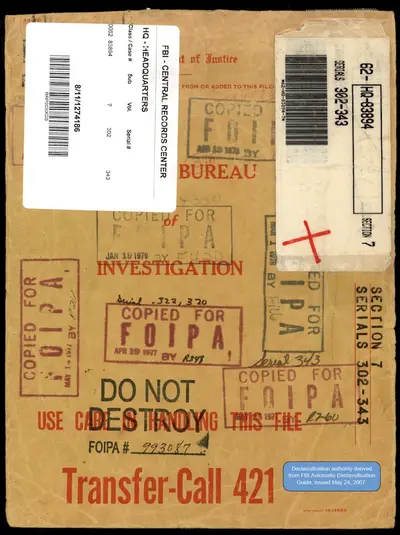
The administrative handling of the report reflects the bureaucratic landscape of the mid-twentieth century. The case was filed with the Federal Bureau of Investigation, which maintained a standardized procedure for managing such anomalies. Field offices in Knoxville, Albuquerque, Los Angeles, and other regional hubs were tasked with routing UFO reports to headquarters under the Bureau’s standing protocols for the protection of vital installations. This systematic approach ensured that any sighting that could potentially compromise the security of military bases, nuclear facilities, or sensitive communication networks was centralized for federal review.
Investigation and Documentation
Following the initial wave of reports in the summer of 1947, an investigator named Fawcett began a five-year investigation into flying saucers. This longitudinal study involved a comprehensive methodology, during which Fawcett interviewed numerous individuals, including pilots, scientists, and eyewitnesses, and collected reports from across the United States. The investigation sought to identify patterns in the behavior of these unidentified objects. Through this process, Fawcett also noted increasing reports of objects seen in groups and for longer durations, suggesting a shift in the nature or frequency of the phenomena being observed during the early 1950s.
While the investigation provided a broad overview of aerial anomalies during this period, the specific released document regarding the July 6, 1951, incident does not specify the number of witnesses involved. The lack of a precise witness count is a common characteristic of many declassified files from this era, where the focus of the reporting was often on the technical details of the sighting rather than a census of observers.
Classification and Analysis
The case is classified as a visual sighting reported by ground or air observers. This type of report was the most common form of UAP documentation during the mid-century, as it relied on the direct optical perception of individuals stationed at various points across the country.
The status of the July 6, 1951, incident remains officially undetermined. All records released under the PURSUE program are designated unresolved by the All-domain Anomaly Resolution Office (AARO) by default. The federal government has not concluded that the events were anomalous, has not concluded that they were conventional, and has not ruled out either possibility. This lack of a definitive conclusion is consistent with the broader scientific and governmental approach to UAP investigations, where the burden of proof for both extraterrestrial and terrestrial explanations remains high.
Conventional candidates for sightings of this period include experimental aircraft, weather balloons, particularly the Project Mogul series active in the late 1940s, and atmospheric optical phenomena such as sundogs and lenticular clouds. Additionally, astronomical objects including Venus, the Moon, and meteors near the horizon were frequently identified as the source of such sightings once closer scrutiny was applied. The 1951 FBI file remains a primary source for studying the intersection of national security protocols and the phenomenon of unidentified aerial objects.