Stamford, Connecticut UFO Sighting (July 7, 1947) — FBI Files
An FBI report from July 1947 details a theory regarding radio-controlled orbital weapons submitted by a scientist in Stamford, Connecticut.
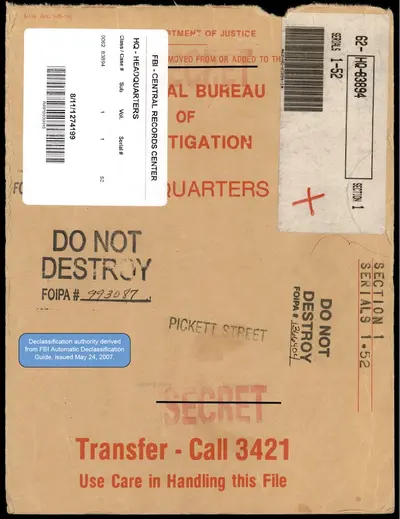
Historical Context
The summer of 1947 represents a pivotal moment in the history of modern unidentified aerial phenomena. During this period, the United States experienced a sudden surge in reports of unidentified flying objects, a phenomenon driven by the cultural and geopolitical climate of the early Cold War. The public consciousness had been primed by the Kenneth Arnold sighting in June 194
7, which introduced the concept of “flying saucers” into the mainstream lexicon, and the subsequent, highly debated events surrounding the Roswell incident in July 1947. As the nation transitioned from the mobilization of World War II to the tensions of the nuclear age, the possibility of advanced aerial technology—whether from foreign adversaries or unknown origins—became a central concern for both the public and the federal government.
During this era, the Federal Bureau of Investigation (FBI) maintained specific protocols for handling reports of unidentified objects. Because such sightings often occurred near sensitive military installations or critical infrastructure, field offices in cities such as Knoxville, Albuquerque, and Los Angeles were instructed to route UFO-related reports to headquarters. This systematic approach was intended to ensure the protection of vital installations and to monitor potential threats to national security.
The Stamford Incident
On July 7, 1947, in Stamford, Connecticut, U.S. government investigators recorded an unidentified-object incident. The details of this specific case were not made available to the general public until May 8, 2026, when they were released as part of the Presidential Unsealing and Reporting System for UAP Encounters (PURSUE). Unlike many contemporary reports that focused on visual descriptions of craft in flight, this entry is notable for its focus on theoretical implications regarding orbital technology.
The documentation focuses on a report provided by Edwin M. Bailey, a scientist employed at American Cyanamid. Rather than describing a direct sighting of a craft over Connecticut, Bailey presented a theory concerning the nature of the “flying saucers” that were being reported across the country. He proposed that these objects might actually be radio-controlled germ or atom bombs positioned in orbit around the Earth. This hypothesis reflected the era’s profound anxiety regarding biological and nuclear warfare.
To support this theory, Bailey cited a communication from his friend, Renatompechetti. According to the report, Renatompechetti allegedly observed these objects from an observatory located in Italy shortly after the conclusion of World War II. While the released document does not specify the number of witnesses involved in the underlying observations, the report serves as a significant record of how scientific professionals attempted to rationalize the sudden appearance of aerial anomalies through the lens of contemporary military technology.
Classification and Analysis
The Stamford case is classified as a visual sighting reported by ground or air observers. In the broader context of 1940s sightings, such cases often fall into a spectrum ranging from direct visual descriptions of movement to theoretical assessments of observed phenomena.
The official status of all records released under the PURSUE program is designated as unresolved by the All-domain Anomaly Resolution Office (AARO) by default. The federal government has maintained a neutral stance regarding the Stamford report, neither concluding that the events were anomalous nor confirming that they were the result of conventional means. The government has not ruled out either possibility.
When analyzing sightings from this specific period, investigators often consider various conventional candidates. These include the presence of experimental aircraft, the use of weather balloons—specifically those associated with the Project Mogul series in the late 1940s—and various atmospheric optical phenomena such as sundogs or lenticular clouds. Additionally, astronomical objects such as the Moon, Venus, or meteors appearing near the horizon are frequently evaluated as potential explanations for reported aerial anomalies.