St. Maries UFO Sighting (August 1947) — FBI Files
Government investigators documented a 1947 sighting of massive, shiny objects moving into the mountains near St. Maries, Idaho, later released via PURSUE.
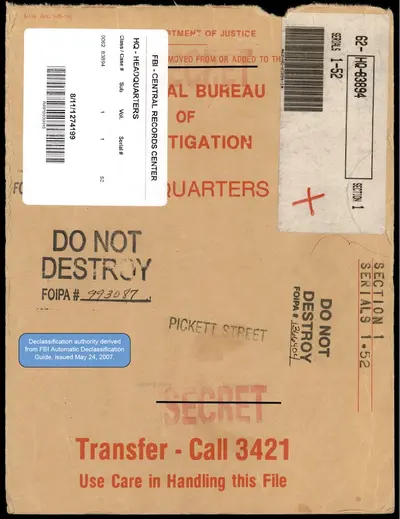
Background
In August 1947, in St. Maries, Idaho, and the surrounding Spokane, Washington, region, U.S. government investigators recorded an unidentified-object incident. The details of this event were later released to the public on May 8, 2026, as part of the Presidential Unsealing and Reporting System for UAP Encounters (PURSUE). This specific occurrence belongs to the initial wave of “flying saucer” reports that permeated the United States consciousness during the summer of 1947. This period of heightened public and governmental attention was precipitated by the Kenneth Arnold sighting in June 1947 and the subsequent Roswell incident in July 1947.
During this era, the phenomenon of unidentified aerial phenomena was increasingly viewed through the lens of national security. The case was officially filed with the Federal Bureau of Investigation. Under the Bureau’s standing protocols for the protection of vital installations, various field offices, including those in Knoxville, Albuquerque, and Los Angeles, were tasked with routing UFO reports to headquarters. This administrative structure suggests that the government treated such sightings as potential threats to sensitive infrastructure or as indicators of unauthorized aerial incursions.
The Incident
The documentation released through the PURSUE program details a specific sighting involving a woman and several other individuals. While on vacation in the vicinity of St. Maries, Idaho, these observers reported seeing large, shiny objects. The scale of these objects was described as being as big as a four or five room house. The witnesses observed these massive structures disappearing into the mountains near St. Maries.
The released document does not provide a specific number of witnesses involved in the sighting. The nature of the report is categorized as a visual sighting reported by ground or air observers. The movement of the objects toward the mountain range remains the primary recorded trajectory of the unidentified objects during the encounter.
Analysis and Classification
All records released under the PURSUE program are designated as unresolved by the All-domain Anomaly Resolution Office (AARO) by default. The federal government has maintained a neutral stance regarding the St. Maries incident, having neither concluded that the events were anomalous nor concluded that they were conventional. The possibility of either an unidentified origin or a known phenomenon remains open in the official record.
When evaluating sightings from the late 1940s, investigators often consider several conventional candidates. These include experimental aircraft developed during the early stages of the Cold War, or weather balloons, particularly those associated with the Project Mogul series active in the late 1940s. Other potential explanations involve atmospheric optical phenomena, such as sundogs or lenticular clouds, which can create the illusion of large, solid structures. Additionally, astronomical objects like Venus, the Moon, or meteors positioned near the horizon are frequently analyzed as potential sources for reports of bright, moving objects. The St. Maries case remains part of this broader historical context of mid-century aerial anomalies.