Springhaven, Pennsylvania UFO Sighting (July 9, 1947) — FBI Files
An FBI-documented report from July 1947 details a sighting of "flying saucers" in Springhaven, Pennsylvania, following the era's wave of aerial anomalies.
Historical Context
The summer of 1947 represents a pivotal era in the history of aerial anomaly documentation. Following the conclusion of World War II, the United States entered a period of intense technological competition and heightened atmospheric surveillance. This period saw a sudden surge in reports of unidentified aerial phenomena, a phenomenon often categorized by historians as the first wave of “flying saucer” sightings. This wave was catalyzed by the Kenneth Arnold sighting in June 194
7 and the subsequent events surrounding the Roswell incident in July 1947. During this time, the distinction between conventional aeronautical developments and anomalous objects was frequently blurred. The proliferation of high-altitude reconnaissance, the deployment of experimental surveillance balloons, and the increasing visibility of celestial bodies created a climate of heightened observation.
The geography of the Mid-Atlantic region, including areas such as Springhaven, Pennsylvania, placed such reports within a corridor of significant industrial and military interest. During the late 1940s, the federal government maintained rigorous protocols for monitoring any unidentified objects that might pose a threat to vital installations or national security. The Federal Bureau of Investigation (FBI) played a central role in this monitoring, utilizing its various field offices in cities such as Knoxville, Albuquerque, and Los Angeles to collect and route reports to headquarters.
The Springhaven Incident
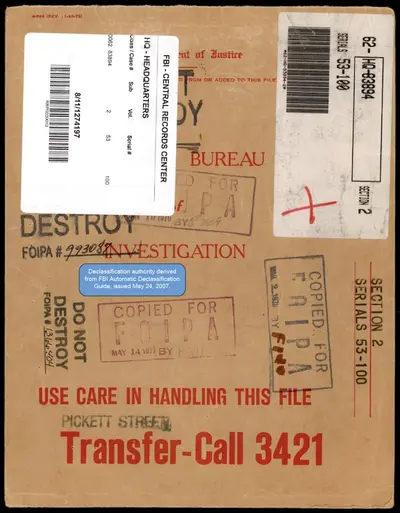
On July 9, 1947, an incident occurred in Springhaven, Pennsylvania, involving unidentified objects in the sky. The details of this specific event remained largely within government archives until they were released to the public on May 8, 2026, as part of the Presidential Unsealing and Reporting System for UAP Encounters (PURSUE). The documentation reveals that the report originated from a letter written by a Mrs. Anderson.
In her correspondence, Mrs. Anderson described observing what were referred to at the time as “flying saucers.” The FBI processed this communication and subsequently forwarded the content to the War Department for formal review. The Bureau’s internal notes indicated an appreciation for the witness’s initiative in sharing her observations with federal authorities. While the letter provided a description of the objects, the released documentation does not specify the total number of witnesses present during the sighting.
Investigative Classification
The Springhaven case is classified as a visual sighting reported by ground or air observers. Within the framework of the FBI’s standing protocols, such reports were handled with a focus on the protection of critical infrastructure. The nature of the reporting—a civilian letter being routed through the War Department—reflects the standard bureaucratic procedure for handling unidentified aerial phenomena during the mid-century period.
Under the current oversight of the All-domain Anomaly Resolution Office (AARO), all records released through the PURSUE program are designated as unresolved by default. The federal government maintains a neutral stance regarding the Springhaven sighting, having reached no definitive conclusion as to whether the objects were anomalous or conventional in nature.
The investigation of such cases during the 1940s often had to account for a variety of known aerial phenomena. Conventional candidates for sightings during this specific window of time include experimental military aircraft, the deployment of weather balloons—particularly those associated with the Project Mogul series—and various atmospheric optical phenomena such as lenticular clouds or sundogs. Additionally, astronomical objects like the Moon, Venus, or meteors appearing near the horizon were frequently cited as potential sources of misidentification in contemporary reports.