Scranton, Pennsylvania UFO Sighting (April 21, 1949) — FBI Files
In April 1949, an unidentified object reportedly caused a fire and an explosion at a Pennsylvania property, according to declassified FBI records.
Historical Context of the Post-War Era
The period following the Second World War was characterized by intense atmospheric and aerospace scrutiny within the United States. Following the June 1947 Kenneth Arnold sighting and the July 1947 Roswell incident, a phenomenon known as the “flying saucer” wave permeated American culture and government intelligence. During this era, the sudden appearance of unidentified aerial phenomena was often viewed through the lens of Cold War anxieties, as the public and military officials alike grappled with the possibility of advanced technology being deployed by foreign adversaries. The geography of Northeastern Pennsylvania, with its industrial importance and proximity to sensitive infrastructure, placed it within the sphere of interest for federal monitoring.
During the late 1940s, the United States government began implementing more formalized procedures for tracking anomalous aerial activity. The Federal Bureau of Investigation (FBI) maintained a structured protocol for handling such reports, particularly when they involved potential threats to vital installations. Field offices in cities such as Knoxville, Albuquerque, and Los Angeles were tasked with routing UFO-related intelligence to headquarters. This centralized approach was designed to protect national security interests and ensure that any unexplained aerial events were documented within the broader framework of domestic intelligence.
The Scranton Incident of April 1949
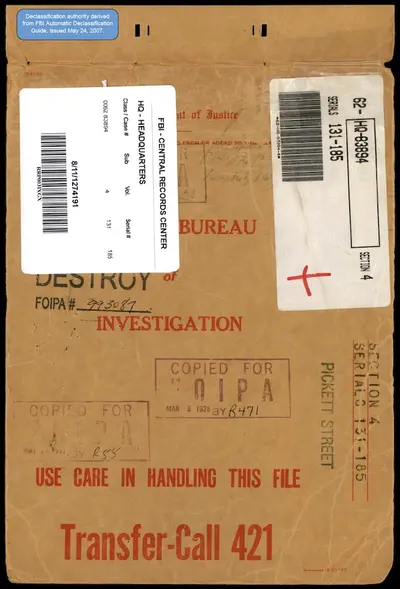
On April 21, 1949, an event occurred in Scranton, Pennsylvania, that prompted federal documentation. The incident involved a fire at a property owned by Frederic Marquardt, a man who had previously been employed by the Atomic Energy Commission. The nature of the event was recorded in files that remained shielded from public view for decades, eventually being released on May 8, 2026, as part of the Presidential Unsealing and Reporting System for UAP Encounters (PURSUE).
The primary evidence documented in the file consists of an ash sample sent to the Philadelphia Fire Marshal’s Office by Marquardt. In his report, Marquardt suggested that the fire at his property may have been the result of a military flare or a “flying saucer.” The physical effects of the event were described as highly unusual; the fire reportedly continued to burn for twelve hours after water had first been applied to the site. Furthermore, the documentation indicates that an object had entered the roof of the building, which caused an explosion and threw people out of bed. While the released documents do not specify the total number of witnesses present during the event, the physical damage and the subsequent investigation by the Fire Marshal’s Office highlight the significant impact of the occurrence.
Investigative Status and Anomalous Classification
The Scranton case is categorized as being associated with a military installation or nuclear facility, likely due to the background of the individual reporting the incident and the potential for aerial objects to impact sensitive energy-related infrastructure. Under the current guidelines of the All-domain Anomaly Resolution Office (AARO), all records released through the PURSUE program are designated as unresolved by default. This classification reflects a lack of definitive evidence to confirm or deny the anomalous nature of the event.
The federal government has maintained a neutral stance regarding the Scranton incident, neither concluding that the event was the result of anomalous phenomena nor confirming it as a conventional occurrence. In the broader context of 1940s aerial sightings, investigators often considered various conventional candidates. These included experimental aircraft, meteors near the horizon, or atmospheric optical phenomena such as sundogs and lenticular clouds. Additionally, the period saw the deployment of the Project Mogul series of high-altitude weather balloons, which were designed to detect Soviet nuclear tests and were frequently mistaken for unidentified objects. The Scranton incident remains a documented piece of this complex era of aerial uncertainty.